Endolift vs Forza Laser Lipolysis: What Is Actually Different?
Two endolaser platforms, similar principles, different technology — and why the name of the machine matters less than anatomy, patient selection and technique.
Patients often ask me whether Forza Laser is better than Endolift, or whether the two treatments are essentially the same.
The answer is more nuanced than the comparisons commonly found online.
I have worked with Endolift in my own practice and later transitioned to the Forza dual-wavelength platform. I did not make that change because Endolift “doesn’t work.” It can work very well in appropriately selected patients.
Both treatments belong to the broader family of minimally invasive subdermal fibre-laser procedures used for selected cases of skin laxity, facial contouring and localised adipose tissue.
The more useful question is therefore not:
“Which brand is better?”
It is:
“What are the technical differences, and which approach is most appropriate for my anatomy?”
Endolift vs Forza: Quick Comparison
| Endolift | Forza Laser | |
|---|---|---|
| Technology | Subdermal fibre laser | Subdermal fibre laser |
| Wavelength | Primarily 1470 nm | Dual wavelength: 980 nm + 1470 nm |
| Main principle | Controlled laser energy delivered beneath the skin | Controlled dual-wavelength laser energy delivered beneath the skin |
| Skin tightening | Yes — thermal stimulation can promote tissue contraction and remodelling | Yes — thermal energy is used for tissue contraction and remodelling |
| Localised fat reduction | Can be achieved in appropriately selected areas and protocols | Can be achieved in appropriately selected areas and protocols |
| Fat + laxity in the same patient | Can address both depending on technique and indication | Dual-wavelength platform gives the physician additional flexibility when treating both components |
| Typical areas | Jawline, submental area, face and selected body areas | Jawline, submental area, face and selected body areas |
| Number of sessions | Depends on anatomy, treatment objective and protocol | Depends on anatomy, treatment objective and protocol |
| Downtime | Variable; swelling, tenderness and bruising may occur | Variable; swelling, tenderness and bruising may occur |
| Scientific evidence | Published clinical literature exists, although protocols and study quality are heterogeneous | Evidence exists for laser-assisted lipolysis and the individual wavelengths; direct high-quality Forza-vs-Endolift trials are lacking |
| Is one proven superior? | No high-quality head-to-head evidence demonstrates superiority | No high-quality head-to-head evidence demonstrates superiority |
| What matters most? | Patient selection, anatomy, parameters and operator technique | Patient selection, anatomy, parameters and operator technique |
The short answer
Forza is not “better” because Endolift cannot reduce fat.
Endolift can produce adipose reduction as well as tissue tightening in appropriate settings, and published literature supports its use for both indications. A 2024 systematic review found promising results for skin laxity and adipose reduction, although it also called for larger controlled studies.
I use Forza because I prefer the additional technical flexibility of its 980 nm + 1470 nm dual-wavelength system for the types of facial and body contouring patients I treat. The manufacturer describes the platform as combining 980 nm and 1470 nm energy in the same system.
That is a very different claim from saying that one device has been scientifically proven to outperform the other.
It hasn’t.
What Is Endolift?
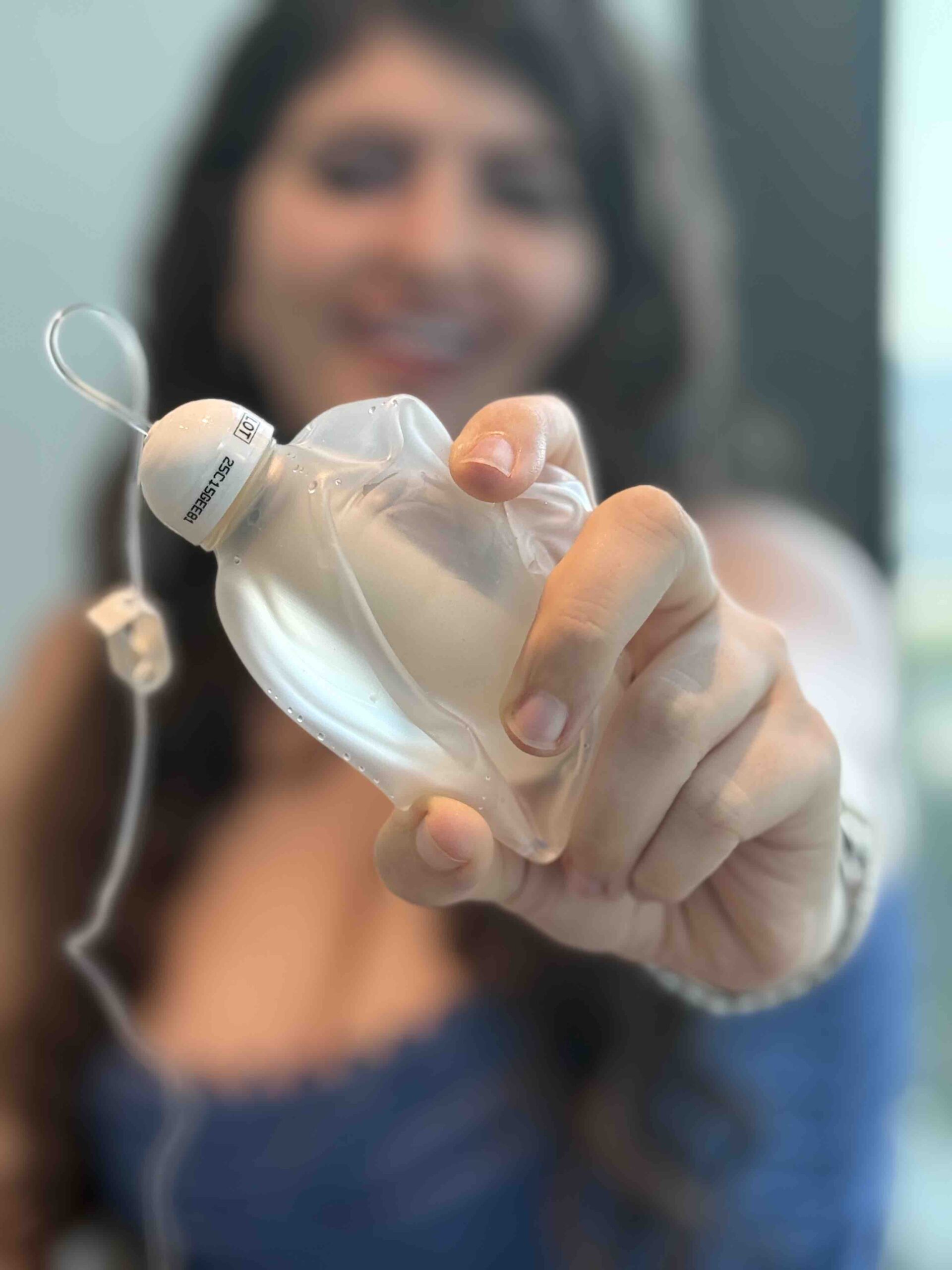
Endolift is a branded subdermal laser technique using a very fine optical fibre that is introduced beneath the skin.
The system is associated primarily with a 1470 nm diode wavelength.
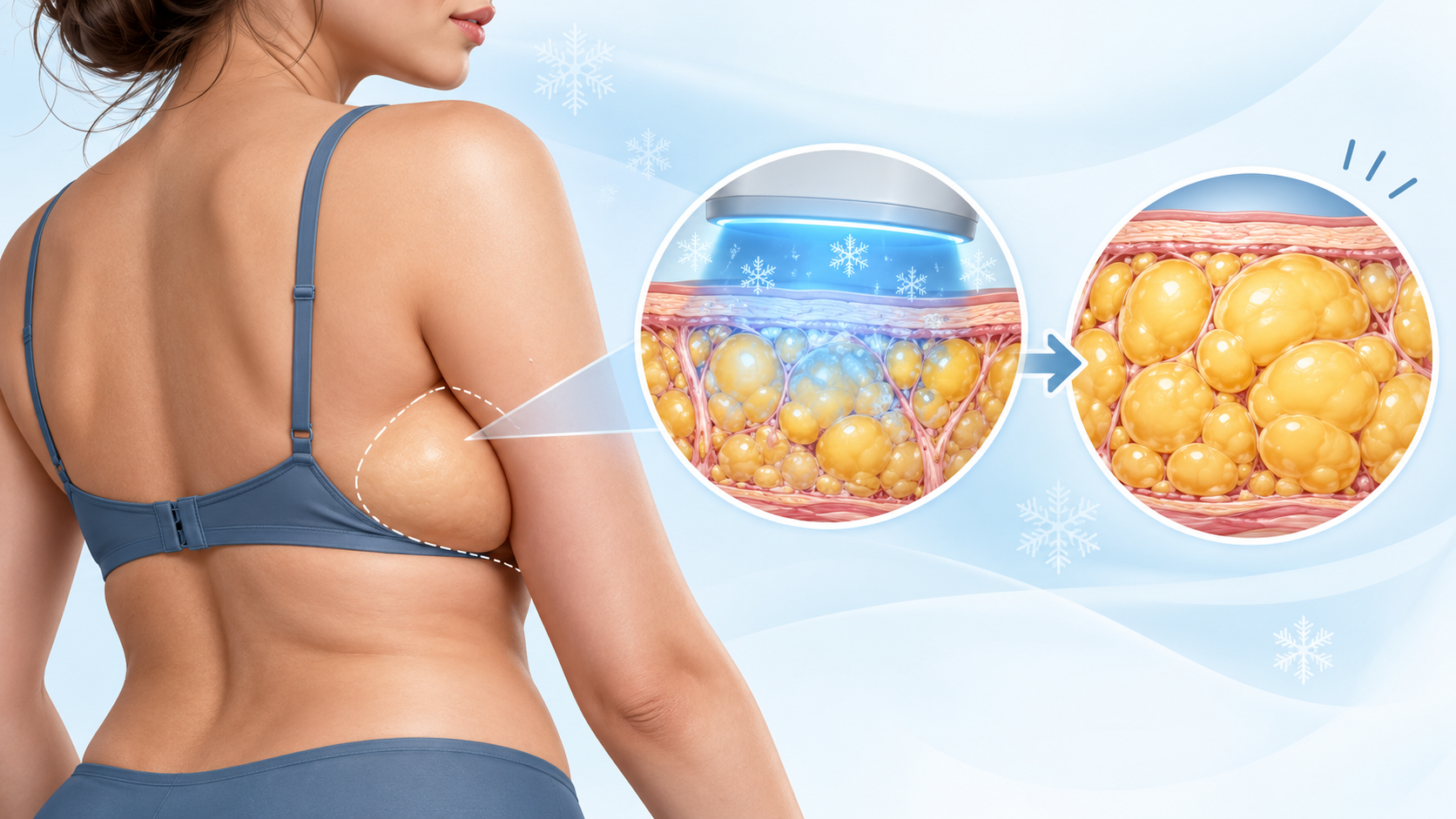
Laser energy is delivered within the subcutaneous tissue rather than simply being applied to the skin surface. Depending on the treatment plan, this controlled thermal effect can be used to influence:
superficial and subcutaneous tissue
collagen remodelling
tissue contraction
selected localised fat deposits
This is why describing Endolift simply as a “skin tightening treatment that cannot reduce fat” is inaccurate.
Published clinical literature has reported improvements in both laxity and localised adipose tissue. However, the quality of the evidence is not uniform.
A 2024 systematic review of 23 studies reported favourable outcomes across several aesthetic applications but acknowledged the need for larger controlled trials.
A separate systematic review published in 2025 was considerably more cautious, highlighting a high risk of bias, inconsistent treatment parameters and insufficient high-quality evidence to make broad claims about efficacy and safety.
I think patients deserve to hear both sides of that evidence.
What Is Forza Laser?
Forza belongs to the same broad family of fibre-based subdermal laser procedures, but the platform I use combines:
1470 nm + 980 nm
rather than relying on a single 1470 nm wavelength.
The manufacturer positions the two wavelengths as complementary: 1470 nm is used for its interaction with water-containing and adipose tissues and for thermal tissue remodelling, while 980 nm provides an additional wavelength with different optical absorption characteristics, including interaction with haemoglobin.
In practical terms, what interests me as a physician is not being able to advertise “two wavelengths instead of one.”
It is having more flexibility in how energy is delivered according to what I am actually trying to treat.
A patient with predominantly skin laxity is not the same as a patient with a significant submental fat compartment.
And neither of those patients is the same as someone whose apparent “double chin” is actually being influenced by anatomy such as:
- chin projection
- mandibular structure
- platysmal anatomy
- submandibular glands
- oedema
- skin quality
- superficial versus deeper adipose compartments
The device does not make that diagnosis.
The physician does.
Why I Changed From Endolift to Forza
I worked with Endolift before moving to Forza, so my preference is based on clinical experience with both approaches rather than simply comparing brochures.
I did not stop using Endolift because I considered it ineffective.
I changed because I preferred the dual-wavelength flexibility of Forza for the way I approach facial and body contouring.
My treatment philosophy has also evolved.
I am less interested in asking:
“Which machine can tighten this area?”
and much more interested in asking:
“What anatomical structure is actually creating what this patient sees?”
That distinction matters enormously, particularly around the jawline and submental area.
Forza vs Endolift for a Double Chin
This is where the comparison becomes particularly misunderstood.
A “double chin” is not a diagnosis.
Two patients can look very similar in a photograph and require completely different treatment.
For example, fullness underneath the chin can be caused predominantly by:
Localised submental fat
In the right patient, subdermal laser lipolysis may be useful for reducing a relatively localised fat compartment while simultaneously creating thermal tissue contraction.
Skin laxity
A slim patient may have very little excess fat but a poorly defined jawline because the skin and connective tissue have lost support.
Removing more fat in that patient may actually make the result worse.
Both fat and laxity
This is common.
In these patients I may want to address adipose tissue while also creating controlled thermal stimulation of the surrounding connective tissue.
Chin or jaw projection
Sometimes the apparent double chin is partly an issue of facial proportion.
A retruded or under-projected chin can make the cervicomental region appear heavier even when the amount of fat is relatively modest.
Deeper anatomy
Not every fullness beneath the jaw is superficial fat.
Muscle, deeper fat compartments, glands and other anatomical structures can contribute.
This is precisely why choosing a treatment from a photograph or social-media advertisement is not ideal.
First identify the problem. Then choose the technology.
[Internal link: Double Chin Treatment in Dubai — Why the Cause Matters]
Does Endolift Melt Fat?
Yes, it can.
This is one of the misconceptions I specifically want to correct.
Endolift is not exclusively a collagen-tightening procedure.
Published studies have reported adipose-tissue reduction in areas including the jowl and body, and 1470 nm diode laser technology has also been studied as part of laser-assisted lipolysis protocols.
That does not mean every Endolift treatment should be performed as a fat-reduction treatment.
The indication, fibre position, energy delivery, anatomy and treatment objectives matter.
The same principle applies to Forza.
So What Does the Additional 980 nm Wavelength in Forza Do?
It is tempting to simplify this into:
1470 nm = collagen
980 nm = fat
or the reverse.
Biology is not that tidy.
Laser wavelengths have different absorption characteristics within water, haemoglobin and other tissue chromophores, and the clinical effect also depends on factors including:
- delivered power
- total energy
- fibre position
- movement
- tissue depth
- exposure time
- treatment endpoint
The Forza system combines 980 nm and 1470 nm, allowing the physician to work with two different optical profiles within one platform.
That flexibility is one of the reasons I personally prefer the system.
It should not, however, be interpreted as proof that a dual-wavelength device will automatically give a better result than a well-performed treatment using a different platform.
Is Forza Scientifically Proven to Be Better Than Endolift?
No.
And I think this is important to say clearly.
At present, I am not aware of robust, independent, high-quality head-to-head clinical trials demonstrating that Forza produces superior aesthetic outcomes to Endolift.
Therefore I would not tell a patient:
“Forza has been scientifically proven to be better.”
What I can say is:
I have experience with both platforms, and Forza is the platform I currently prefer for my own treatment protocols.
Those are not the same statement.
This distinction is important in aesthetic medicine, where manufacturer claims can easily become repeated as if they were independent clinical evidence.
What Does the Research Say About Endolaser Treatments?
There is a growing body of literature around subdermal laser treatments and laser-assisted lipolysis.
Some studies report encouraging improvements in:
- localised fat
- skin laxity
- tissue contraction
- facial and body contouring
However, protocols vary considerably between studies.
A 2024 review of Endolift literature was generally favourable but still concluded that larger controlled studies were needed.
A 2025 systematic review reached a more cautious conclusion, citing methodological limitations, inconsistent parameters and high risk of bias among much of the available literature.
This doesn’t mean the treatment “doesn’t work.”
It means we should avoid pretending the evidence is stronger or more standardised than it currently is.
That is how I prefer to discuss aesthetic medicine with my patients:
evidence where we have it, clinical experience where evidence is still evolving, and no need to exaggerate either.
Can Forza or Endolift Replace Liposuction?
Not necessarily.
These treatments are particularly interesting for patients seeking a minimally invasive approach to relatively localised concerns.
They should not automatically be positioned as replacements for surgical liposuction.
A patient with:
- substantial adipose volume
- significant skin excess
- marked structural laxity
- anatomy requiring surgical correction
may achieve a more appropriate result with surgery.
Conversely, performing surgery on someone who only requires modest contour refinement may also be unnecessary.
The objective is not to choose the least invasive treatment at all costs.
It is to choose the treatment that makes sense for the problem.
How Many Sessions Are Needed?
I don’t like giving every patient a predetermined number before assessing them.
Some patients may achieve their desired improvement after one appropriately performed treatment.
Others may require additional treatment or may benefit more from a different modality altogether.
The number of sessions depends on:
- degree of laxity
- amount and location of fat
- treatment area
- tissue quality
- age and healing response
- previous treatments
- realistic treatment goals
More treatment is not automatically better.
What Is Recovery Like?
Both Endolift and Forza are minimally invasive procedures, but minimally invasive does not mean zero recovery.
Depending on the area and extent of treatment, temporary effects can include:
- swelling
- bruising
- tenderness
- firmness
- temporary irregularity
- inflammatory changes within treated tissue
The recovery experience varies substantially between patients and treatment areas.
Results also continue to evolve after the initial swelling settles because tissue remodelling is not instantaneous.
Which One Would I Choose?
In my own practice, I currently use Forza.
But if you ask me:
“Would I choose an excellent physician using Endolift or an inexperienced physician using Forza?”
I would choose the experienced physician.
Every time.
Technology matters.
Diagnosis, anatomy, patient selection, energy control and technique matter more.
The best laser in the world cannot compensate for treating the wrong structure.
# Which Matters More: The Device or the Practitioner?
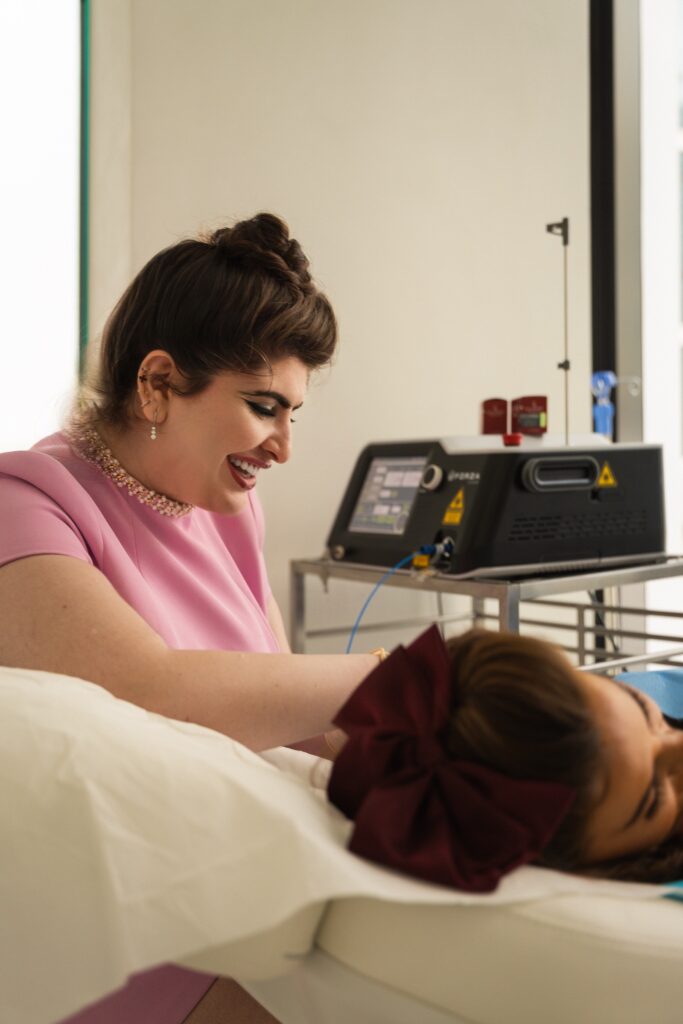
At the end of the day, the device comes second to the experience, judgement and technique of the practitioner using it.
This is especially true with endolaser treatments.
Laser-assisted procedures are highly technique-dependent. The same platform can produce very different outcomes depending on:
- patient selection
- understanding of the underlying anatomy
- fibre depth and positioning
- energy settings
- total energy delivered
- speed and pattern of fibre movement
- treatment endpoint
- choice of treatment area
- aftercare and follow-up
For this reason, having a poor experience with a particular laser does not necessarily mean that the device itself is ineffective.
Sometimes the problem is the indication.
Sometimes it is the treatment plan.
And sometimes it is simply the way the energy was delivered.
The reverse is also true: an excellent device cannot compensate for poor judgement or inappropriate technique.
This is why I would be very cautious about choosing a treatment purely because one clinic advertises a particular brand.
I have worked with different endolaser platforms, and while there are genuine technical differences between them, I consider the physician’s understanding of the anatomy and their ability to adapt the treatment to the individual patient far more important than the logo on the machine.
This principle applies to lasers broadly, not only to Endolift or Forza.
Two practitioners can use the same device, with the same nominal settings, and still produce very different clinical results.
For me, the real question is not:
“Which laser is best?”
It is:
“Is this the right treatment for this anatomy, and is it being performed with the right technique?”
If you’re looking for the best laser fat reduction & skin tightening treatment, Forza Laser Lipolysis is the clear winner over Endolift and other endolaser devices.
 Book a consultation today with Dr. Shiva, Dubai’s expert in Forza Laser Lipolysis & facial contouring!
 Call / WhatsApp: +971523286185 Location: Apogee Clinic, Dubai
 Email: shiva@drshivaf.com
 Website: www.drshivaf.com