
Home / Services / Lip Fillers
Lip Filler Dubai | Natural Lip Enhancement | Dr Shiva
SHAPE • SUPPORT • PROPORTION • CORRECTION
Lip Filler in Dubai
A lip can need volume, structure, correction — or nothing at all. Those are four different consultations and only one of them ends with a syringe of filler being emptied into the lip body.
I place lip filler for patients who are good candidates for it, and I spend a growing share of my time undoing lip filler placed in people who were not: product that has migrated above the border, firm papules along the wet–dry line that only show on smiling, and lips that have quietly become heavier across several years of “just a small top-up”.
If you have had filler before, the first thing I do is find out what is actually in there.
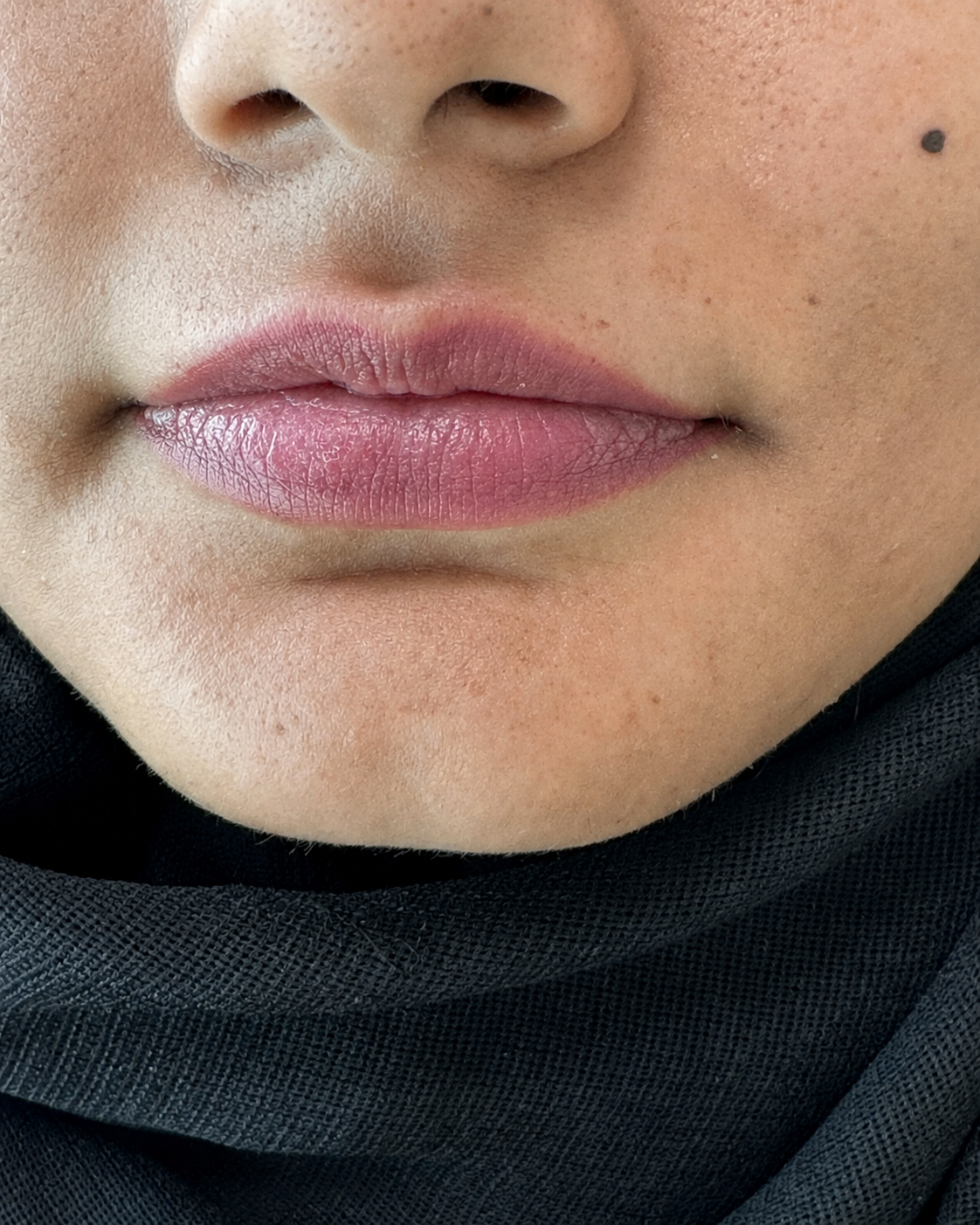
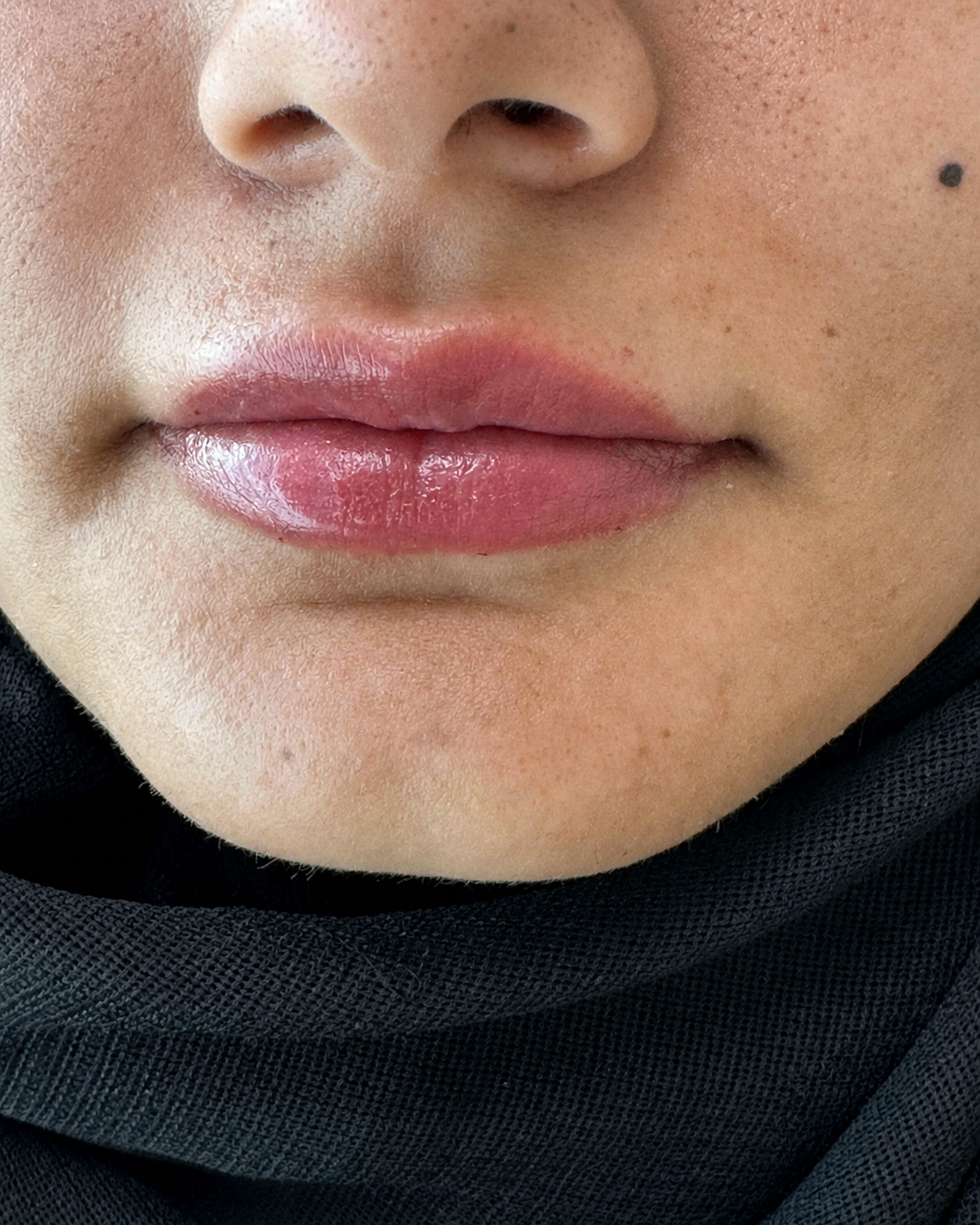
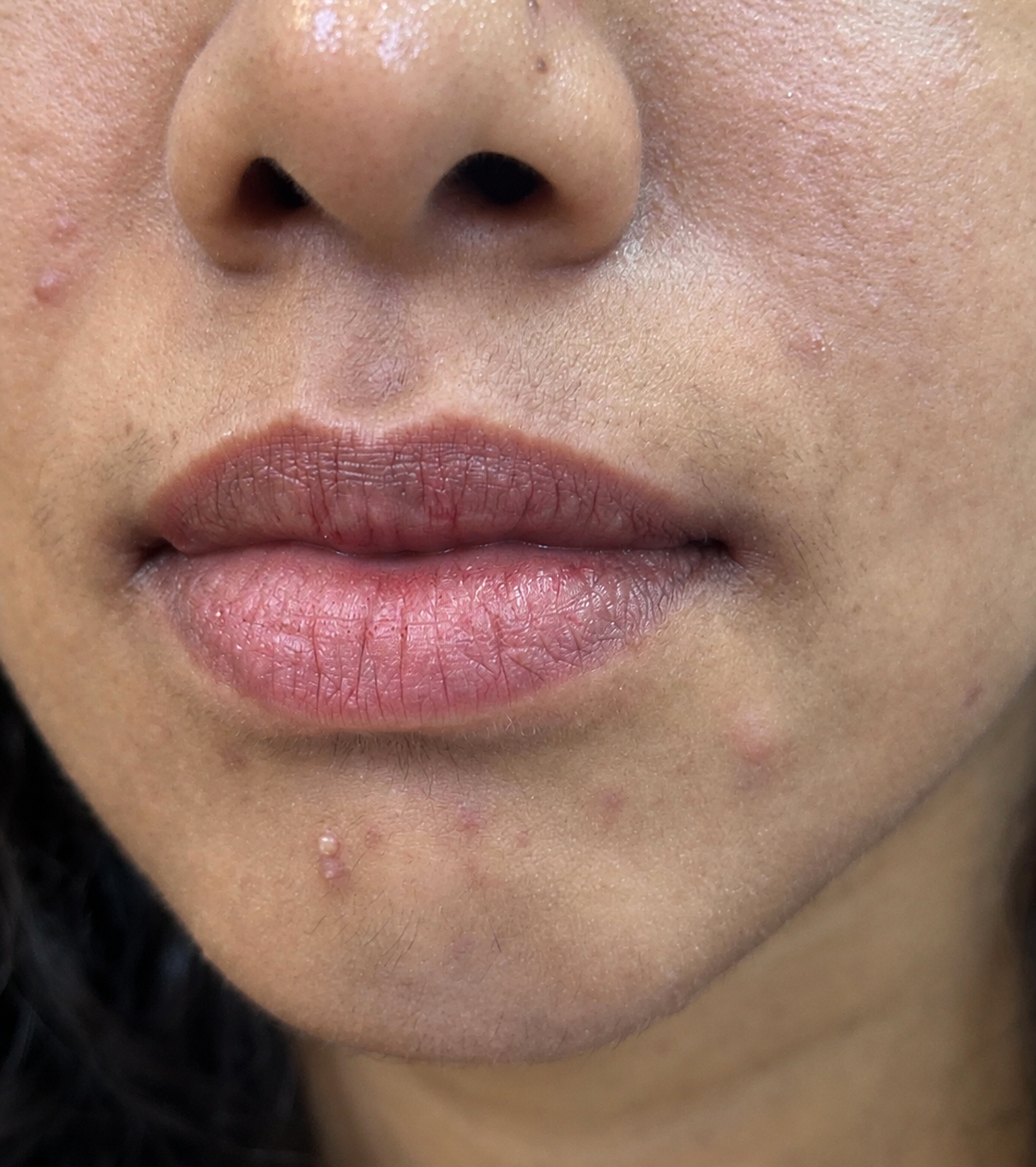
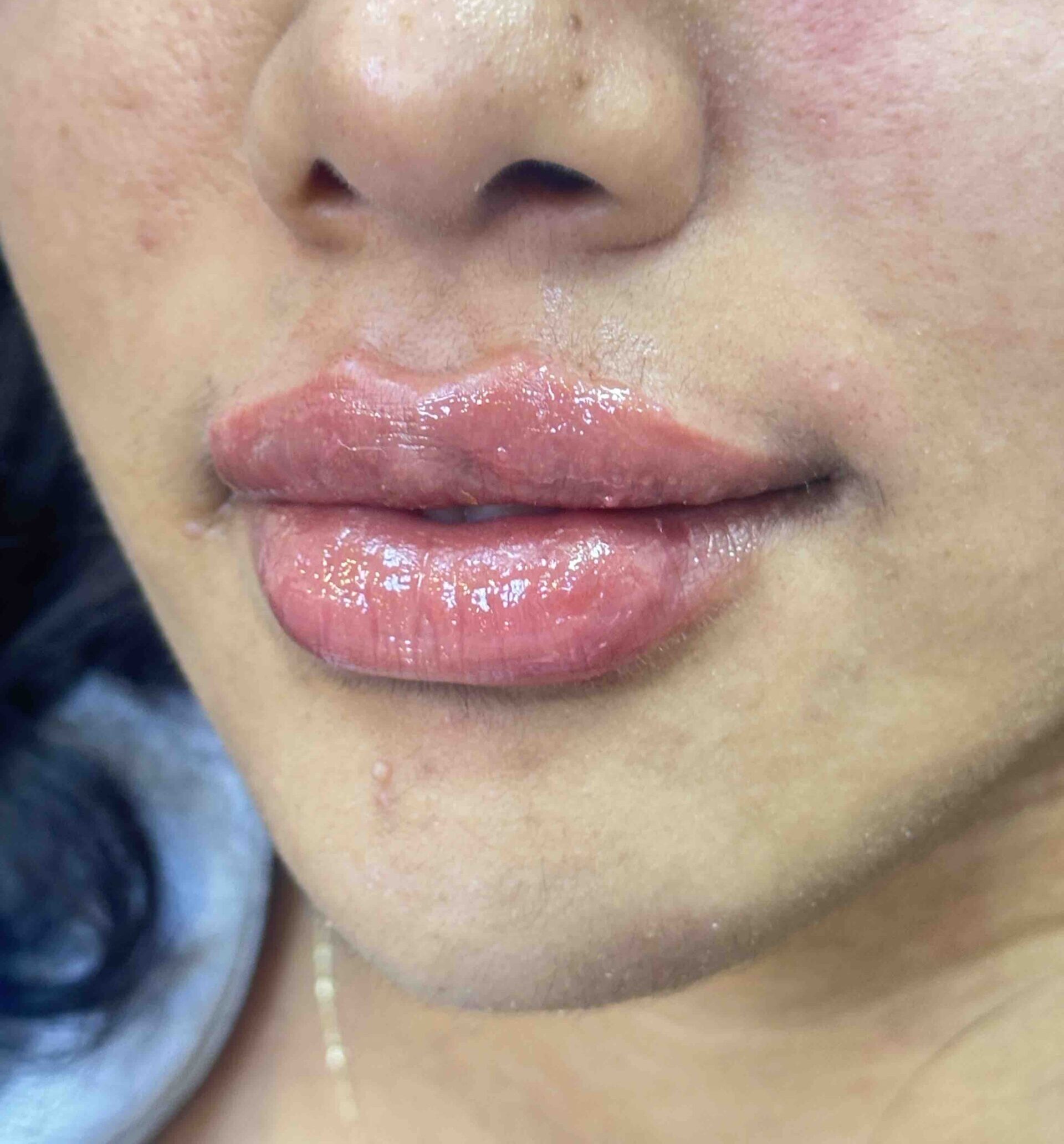
Volume, Structure, Correction — or Nothing
Almost every lip page in Dubai answers one question: how much filler do you want? That is the wrong first question, and it is why so many lips in this city look like they were treated by the same person.
Four different things can be true of a lip in front of me:
It needs volume. The vermilion is genuinely small relative to the face, or has thinned with age. Product in the body of the lip is the right answer.
It needs structure, not volume. The lip has enough bulk but has lost its architecture — a soft border, a flattened Cupid’s bow, no central support, corners turning down. Very small amounts placed precisely change the shape without changing the size.
It needs correction. There is already product in it, in the wrong place or in the wrong quantity, and nothing good happens until that is dealt with. See §9.
It needs nothing. The lip is in proportion and adding to it will make the face worse, not better. This is a real outcome of a real consultation and I will say it plainly. See §6.
Most patients arrive expecting the first. A meaningful proportion need the second, third or fourth.
Filler is also, honestly, a beautification treatment. Most of what I do puts back what has been lost. Lip filler mostly changes proportion — it makes a face more balanced rather than younger. There is one genuine ageing exception, covered in §5, and it is treated with less volume, not more.
Migration and heaviness are not bad luck. They are largely a function of what was injected, how much, in which plane, and whether anyone checked what was already there.
How I Plan and Inject lips?
01
Ultrasound first, where there is previous filler.
High-frequency ultrasound shows what is already in the lip: how much, which layer, whether it has moved above the border, and whether what you can feel is old product, scar tissue or your own anatomy. Patients are routinely told their filler “will be gone in six months”; on the scan it is often still there years later.
What ultrasound gives me is information, not immunity. It tells me what is in the tissue and where the anatomy has been changed by previous treatment. It does not make an injection safe, it does not replace anatomical knowledge or careful technique, and I will not tell you it does. What it does do is turn an unknown lip into a known one before I decide anything — which is why I use it in patients who have been treated elsewhere and cannot say what was used or where.
02
Product chosen for the job, not for the price list.
For lips I use premium hyaluronic acid products selected for lower water uptake. Product that draws a lot of water swells more in the first days, sits heavier long-term and is more prone to spreading beyond where it was placed. All of it is hyaluronic acid, which matters for one specific reason: it is reversible. If we do not like the result, or if something needs to be corrected, it can be dissolved. That is not true of every injectable and it is a large part of why HA is the right material for this area
03
Placement, plane and restraint.
Migration is what happens when product goes in too superficially, too close to the border, or in a volume the tissue cannot hold. The correct answer is often less product than you expected, placed more precisely, with a second appointment if more is genuinely needed
04
Why 1 mL is not a treatment plan.
“One syringe” is a unit of stock, not a clinical decision. It tells you nothing about which component of the lip is being treated, in which plane, or in what proportion between upper and lower. Two patients given “1 mL of lip filler” can end up with results that look nothing alike and age nothing alike.
The plan should describe what is being treated and why — body, border, Cupid’s bow, corners, one side more than the other — and the volume falls out of that. Sometimes it is well under a syringe. A lip built across two sessions will look better in year three than a lip built in one, because the tissue tells you what it will hold and you get to respond to that.
05
What this does and does not promise.
Careful assessment, appropriate product and precise placement reduce swelling, reduce bruising and reduce the chance of complications. They do not eliminate them. Bruising and swelling after lip filler are normal and should be expected. Complications are less likely with careful technique — they are not impossible, and any clinic telling you otherwise is selling rather than consenting you.
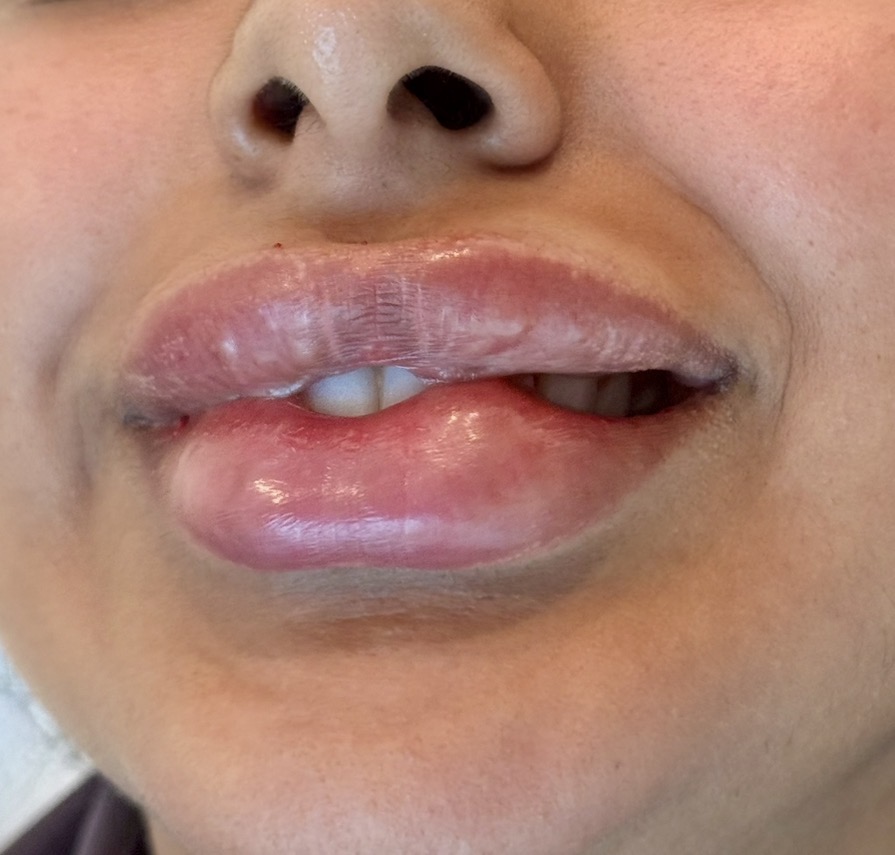
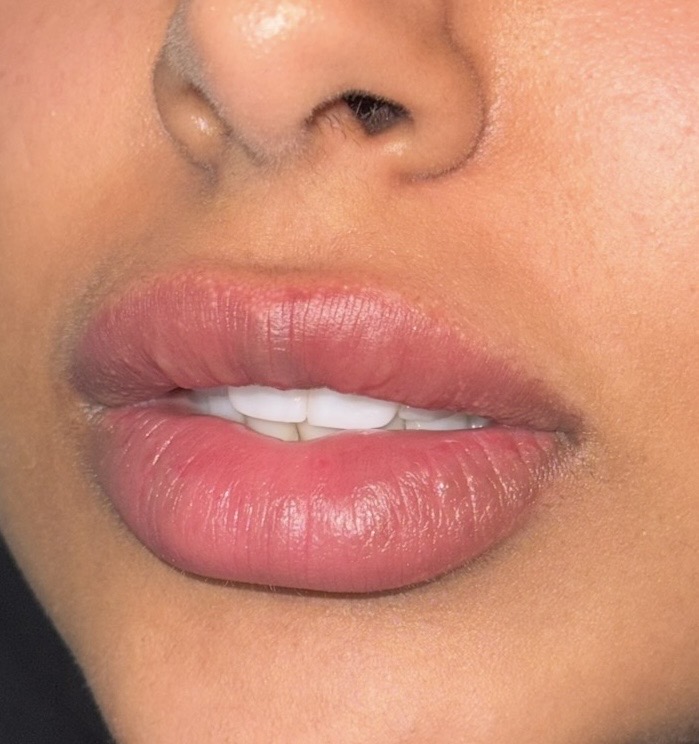
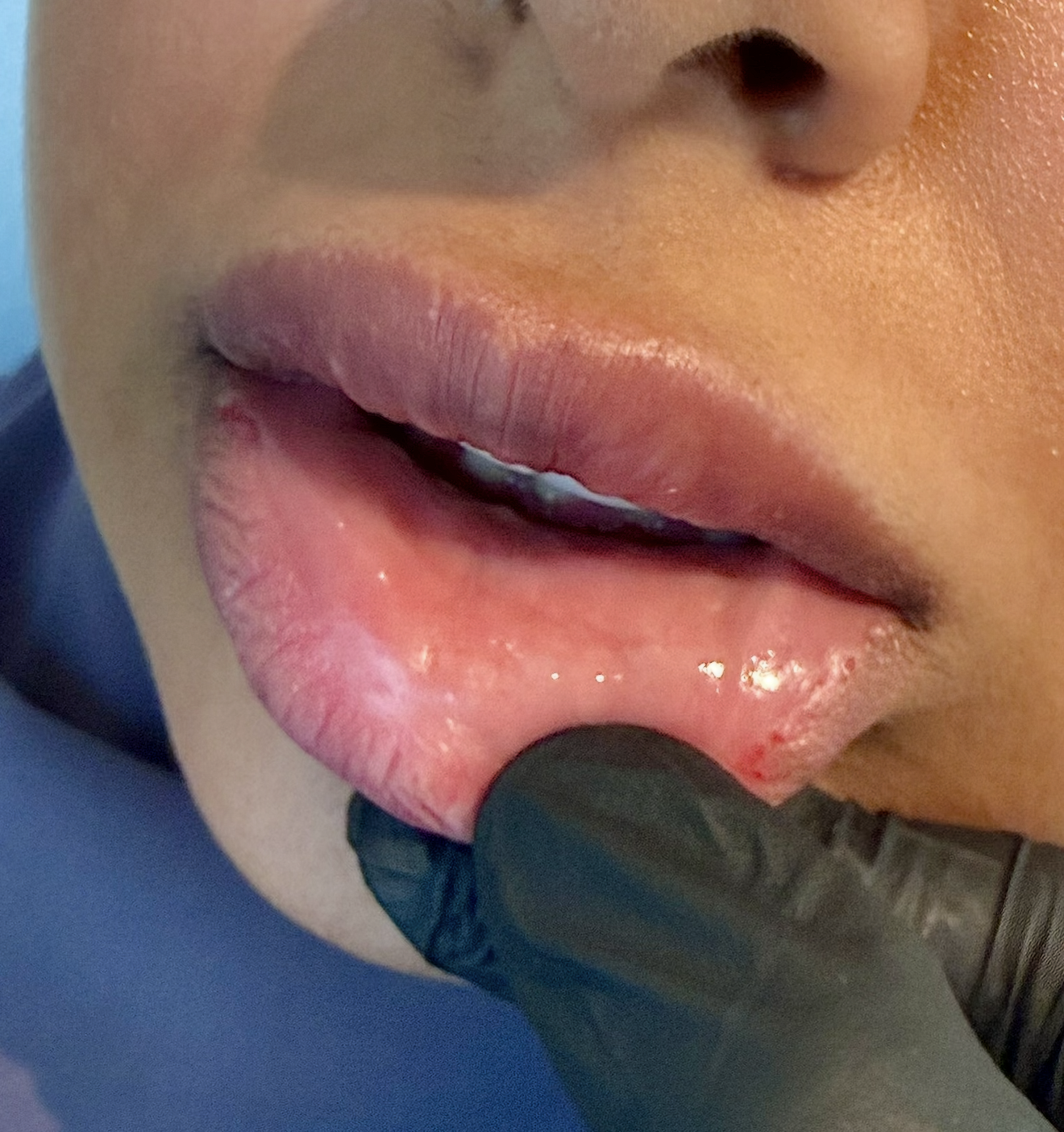
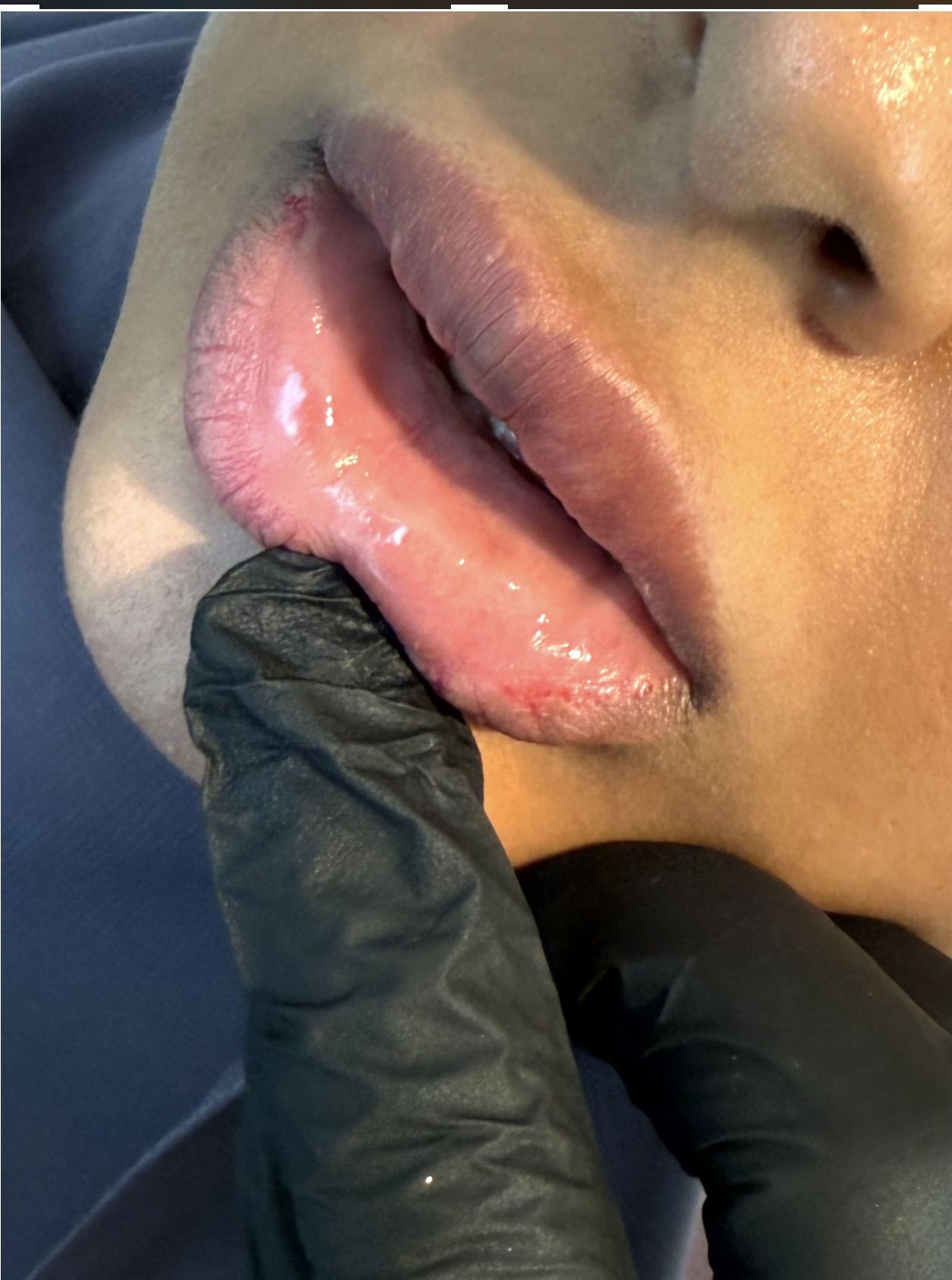
Sometimes the Best Lip Filler Is Dissolving the Old One First
This is a large and growing part of my practice, and it is the section other lip pages in this market do not have.
Migration, and the “filler moustache”.
Product that has moved beyond where it was placed — most often upward, above the vermilion border into the skin of the upper lip. It creates a shelf or a shadow, a lip that appears to start higher than it should, and a loss of the crisp edge between lip and skin. Patients usually describe it as looking “puffy” or “duck-like” rather than fuller, and often assume it is swelling that never went down. It is not. It does not resolve on its own, and it does not improve by adding more.
Papules along the wet–dry border.
Small firm lumps along the line where the wet inner lip meets the dry outer lip. Frequently invisible at rest and obvious on smiling, which is why patients notice them in photographs first. They are old product, walled off by the body.
Old filler you were told had gone.
Hyaluronic acid in the lip is slow to break down and repeated small top-ups accumulate faster than they clear. A lip topped up twice a year for four years is usually carrying a great deal more product than anyone involved believes.
How it’s assessed and treated.
Ultrasound first. Where the product is, which plane, how much, and whether what you are feeling is filler, fibrosis or your own anatomy. Those are different problems with different treatments and you cannot tell them apart by touch.
Hyaluronidase, in stages. Hyaluronic acid is dissolved with an enzyme. I do it in stages, reassessing between sessions, because dissolving is easier to add to than to undo. Expect swelling afterwards. Expect the lip to look temporarily smaller than your own natural baseline. Expect it to recover over the following weeks.
Then decide. Once the lip is clear we reassess — and a meaningful number of patients find they need much less than they thought, or nothing at all, because what they disliked was the old product rather than the size of their lip.
The order matters. Adding fresh filler on top of unassessed old filler is the single commonest reason lips end up heavy, lumpy and migrated. Where there is a lot of old product, dissolving first and treating second is not a delay — it is the treatment.
I Don’t Treat Lips in Isolation
This is the section that most changes what people leave with, and the recommendation they least expect.
A patient asks for “more upper lip”. Four times out of ten, the upper lip is not the problem. What is throwing the profile off is one of these:
Chin projection. The lip is read in profile against the chin. In a face with a recessed or short chin, adding projection to the lip does not make it look fuller — it makes the mouth look like it protrudes, and it makes the chin look weaker than before treatment. In a good proportion of lip consultations, the single treatment that most improves the mouth is a small amount of structural filler in the chin, either instead of lip filler or planned alongside it.
Dental and skeletal support. The lip sits on the teeth and the bone behind them. Where that support is set back, or has changed with age or orthodontic history, the lip has less to sit against and looks flatter regardless of how much volume is in it. Filler does not change that, and recognising it is the difference between a plan and a series of disappointing treatments.
Age-related perioral change. A lengthened upper lip, a flattened philtrum and creased perioral skin change how a lip reads far more than a millimetre of volume does. Treating the lip while ignoring the skin around it produces a full lip in an old-looking mouth.
Previous filler. Sometimes what looks like a lip that “needs more” is a lip that already has too much, in the wrong plane, pulling the shape out of true. Nothing works until that is addressed.
So the assessment looks at the profile, the chin, the perioral skin and the history — not just the lip. Where the answer is the chin, I will tell you, and it is usually less expensive than what you came in for.


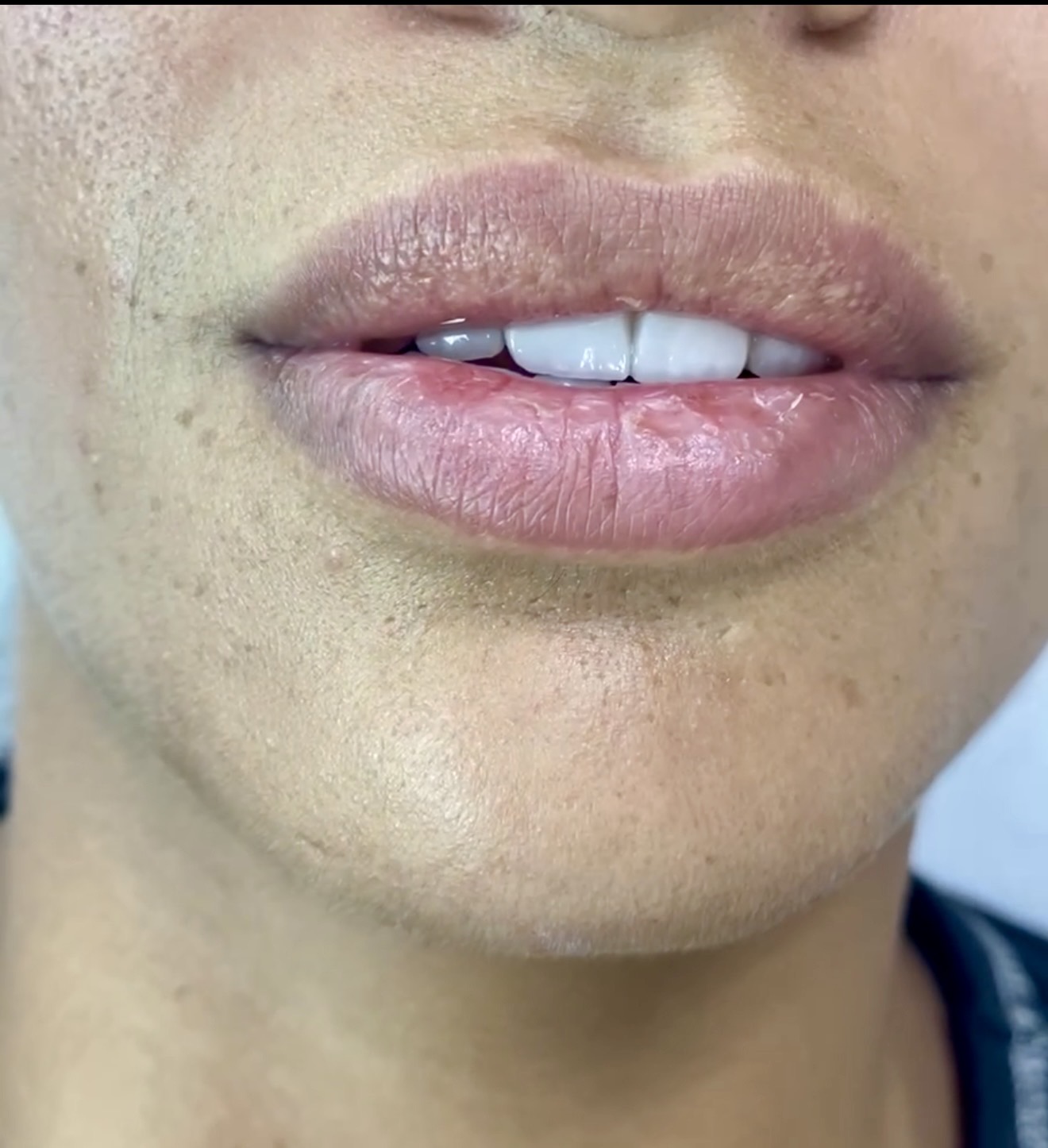
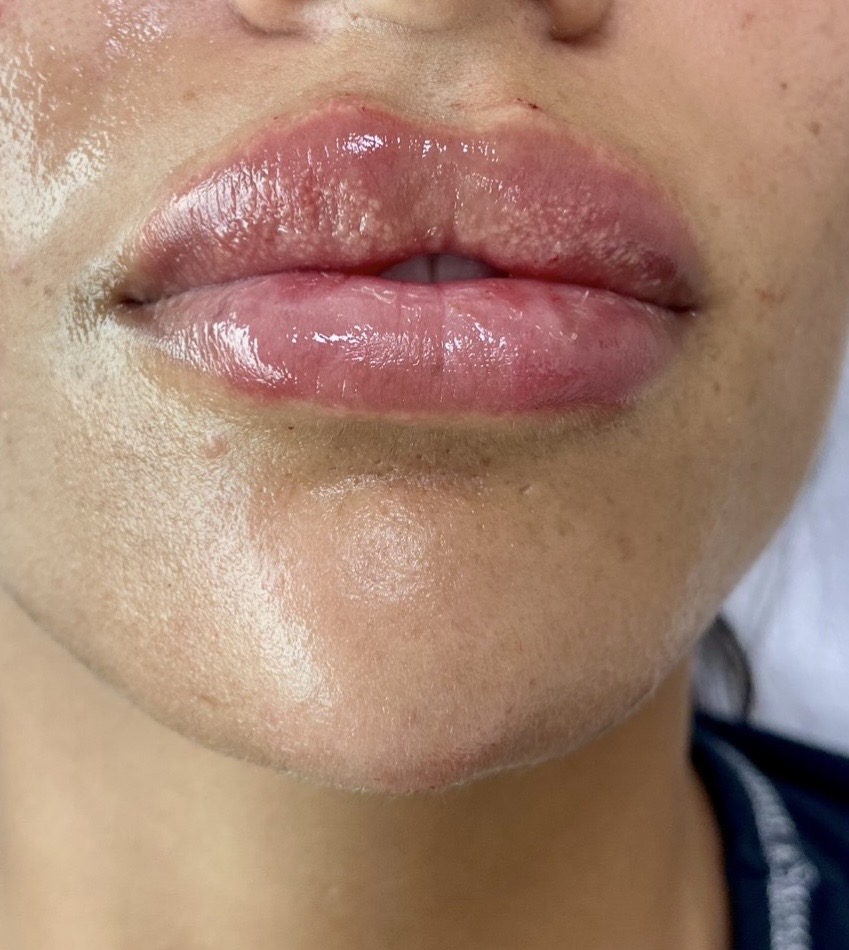
“Russian Lips”: A Trend, Not a Product
Russian lips are heavily advertised right now, usually as though they were a proprietary technique only certain clinics possess. They are not.
It is a placement technique: product delivered in fine vertical columns from the inner lip outward, building height in the body of the lip rather than projection forward, to produce a flat-fronted, lifted, heart-shaped lip with a pronounced Cupid’s bow — the “doll” or “keyhole” look.
Vertical placement is already part of how lips are properly injected. What I do differently from the technique in its purest form is work with the anatomy in front of me rather than impose a template: the look depends on your existing lip height, your philtral columns and your tooth show, and forcing it onto a lip that will not carry it is how you get the flattened, over-projected upper lips you can identify across a room.
The honest answer: it is achievable if that is specifically what you want, and it is not a natural look. It is a stylised one, and like all stylised looks it will date. If you want it, ask and we will discuss whether your anatomy will carry it. If you want to look like yourself, this is not the technique for you.
Permanent Fillers: The One Absolute No
If you have permanent or semi-permanent filler in your lips — silicone, polyacrylamide, polyalkylimide, or any product described to you as “permanent”, “long-lasting” or “never needs topping up” — I will not inject anything on top of it, and it cannot be dissolved. Hyaluronidase acts only on hyaluronic acid. It has no effect on permanent products.
Why it matters even if the lip currently looks and feels fine.
Permanent filler remains in the tissue for life and the body never fully stops reacting to it. Years after an uneventful treatment, a delayed inflammatory reaction can be triggered by an infection, a dental procedure, an illness, a vaccination, or a change in general health such as developing diabetes. The lip can swell, harden, become painful, form abscesses, or in the worst cases break down. This can happen decades after placement and it can happen without warning.
That is why I regard permanent lip filler as a liability to be addressed rather than a result to be maintained.
What I do instead.
Removal of permanent filler is a surgical problem, not an injectable one, and it is outside my scope of practice. I will assess the lip, image it, tell you plainly what I can see, and refer you to our plastic surgeon for a surgical consultation. I will not add product around it, dissolve around it, or treat the lip as though the permanent product were not there.
If you are not sure what was injected into your lips, bring whatever records you have and we will scan them. Not knowing is common and it is not a reason to avoid finding out
Lips That Aren’t About Volume
Two lip complaints have nothing to do with size, and filler is the wrong answer to both.
Barcode lines and creases above the lip
The fine vertical lines above the upper lip — often called smoker’s lines, though plenty of people who have never smoked get them. They come from repeated muscle movement, loss of collagen in the perioral skin, and the structural changes of ageing around the mouth.
This is the one genuinely age-related lip indication, and note what it is not: it is not fixed by a bigger lip. Filling the lip body while the lines above it remain leaves a full lip beneath creased skin, which reads as older rather than younger.
I treat it two ways, usually together:
- Skin boosters and mesotherapy into the perioral skin, to improve hydration, collagen and the quality of the tissue the lines sit in. This is the foundation and it works across a course.
- Fine filler placed directly into the individual lines, superficially and in very small amounts, for creases still visible at rest once the skin quality has improved.
Sequence matters: treating the skin first means less product is needed in the lines, and less product in this area is always the better outcome.
Dark lips and lip pigmentation
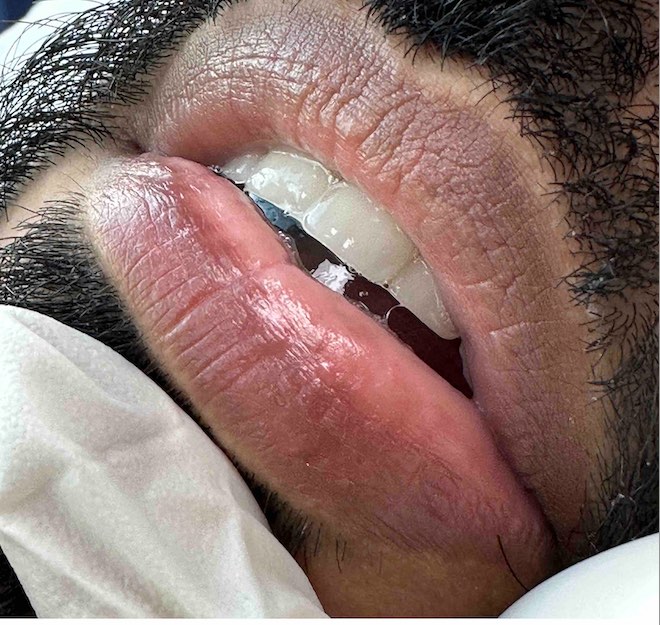
Lips darken for reasons worth identifying before treating: smoking and shisha, sun exposure without lip SPF, friction and habitual lip-biting, certain medications, iron deficiency and other systemic causes, and simply your own baseline pigmentation, which is genetics rather than a problem.
Where there is a treatable cause, I treat the lip directly with microneedling and injectable skin boosters into the lip and vermilion — improving the quality, hydration and light reflection of the tissue rather than bleaching it. Results build across a course rather than appearing after one session.
Two honest caveats. It works alongside removing the cause, not instead of it — continued smoking will undo it. And naturally deeper lip colouring is not a medical condition; I will say so rather than sell you a course for it.
Why the Lip Is a High-Attention Area
Worth saying plainly rather than burying in a consent form.
The lips carry their own arterial supply. The superior and inferior labial arteries run within the lip itself, their depth and course vary between individuals, and they do not follow the textbook reliably. That makes the lip an area where knowing the plane you are in matters, and where previous filler — which changes the anatomy since the last person injected it — makes that harder rather than easier.
Three things reduce risk in practice, and none of them is a guarantee:
- Knowing what is already in the tissue. This is what ultrasound contributes in a previously treated lip. It is information, not immunity.
- Injecting in the correct plane, slowly, in small amounts.
- Using a reversible product. Hyaluronic acid can be dissolved. That is not a small advantage in an area like this — it means an unsatisfactory result, a misplacement or an emerging complication has a route back.
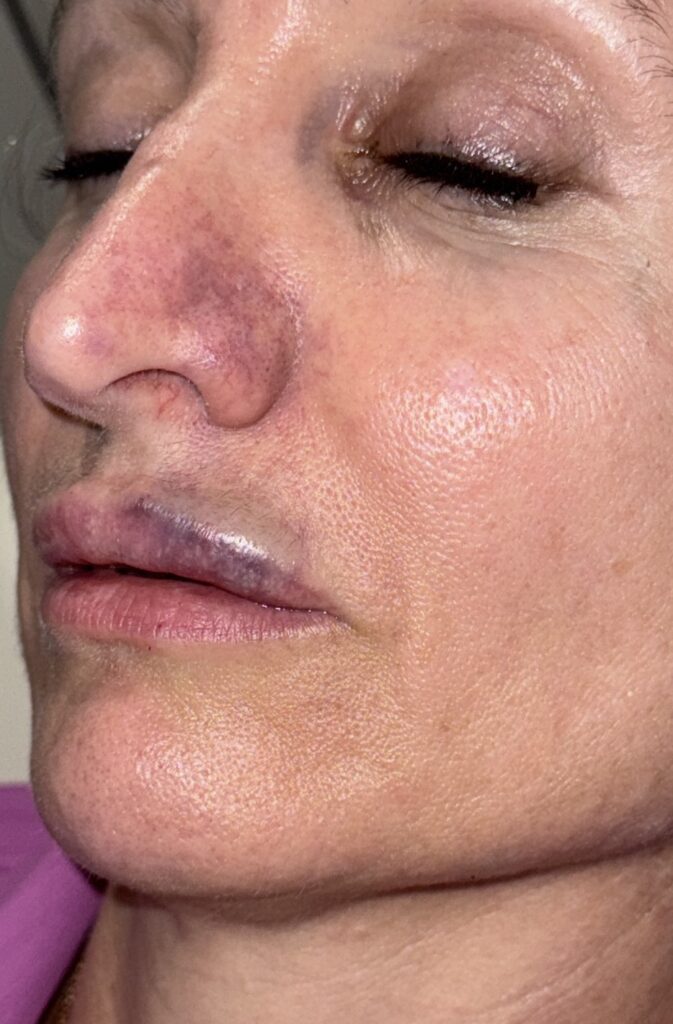
Bruising and swelling are expected. Serious complications are rare and are not impossible, and anyone advertising otherwise is not consenting you properly
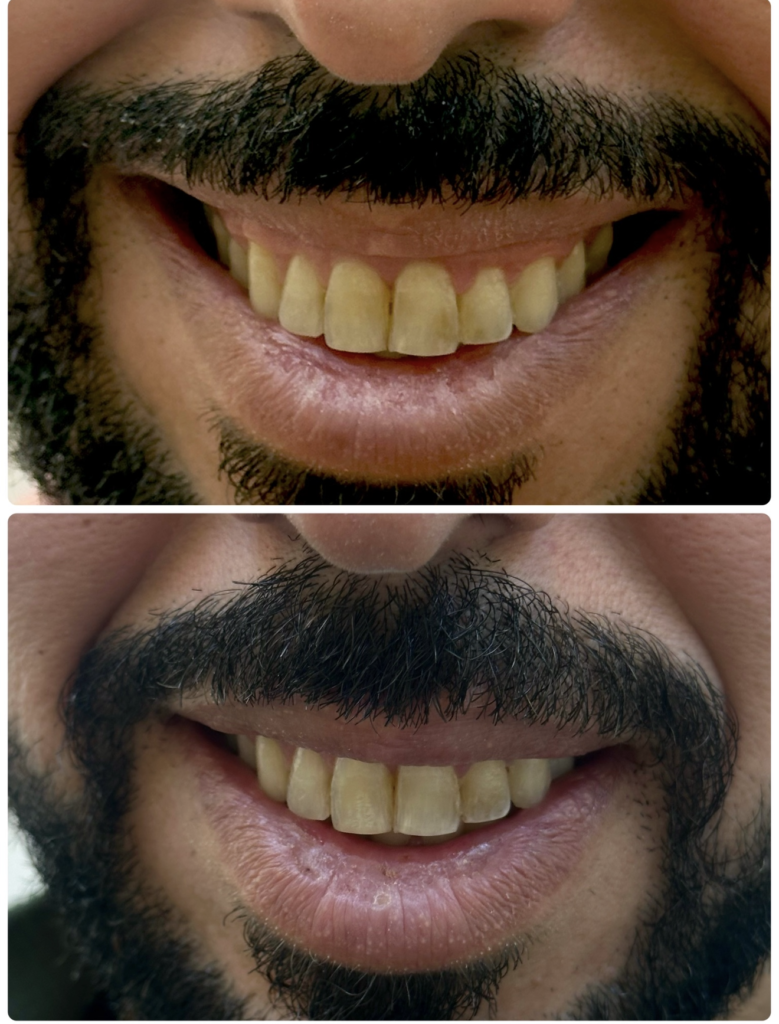
— The Muscles Around the Mouth
Not everything about a lip is the lip. Two muscular patterns change how the mouth looks and neither responds to filler.
Gummy smile. If a strip of gum shows above the upper teeth on smiling, the elevator muscles of the upper lip are pulling it higher than the lip length can cover. Small, precisely placed doses of botulinum toxin reduce that pull so the lip covers more. This is the correct treatment for a “disappearing upper lip” caused by muscle rather than volume — and adding filler to that lip makes the gum show more noticeable, not less.
Downturned mouth corners and chin dimpling. The muscles pulling the mouth corners down, and the chin muscle producing a pebbled or dimpled surface, are both treated with botulinum toxin. They change the expression the lower face defaults to at rest, which patients describe as looking less tired or less cross without being able to say what changed.
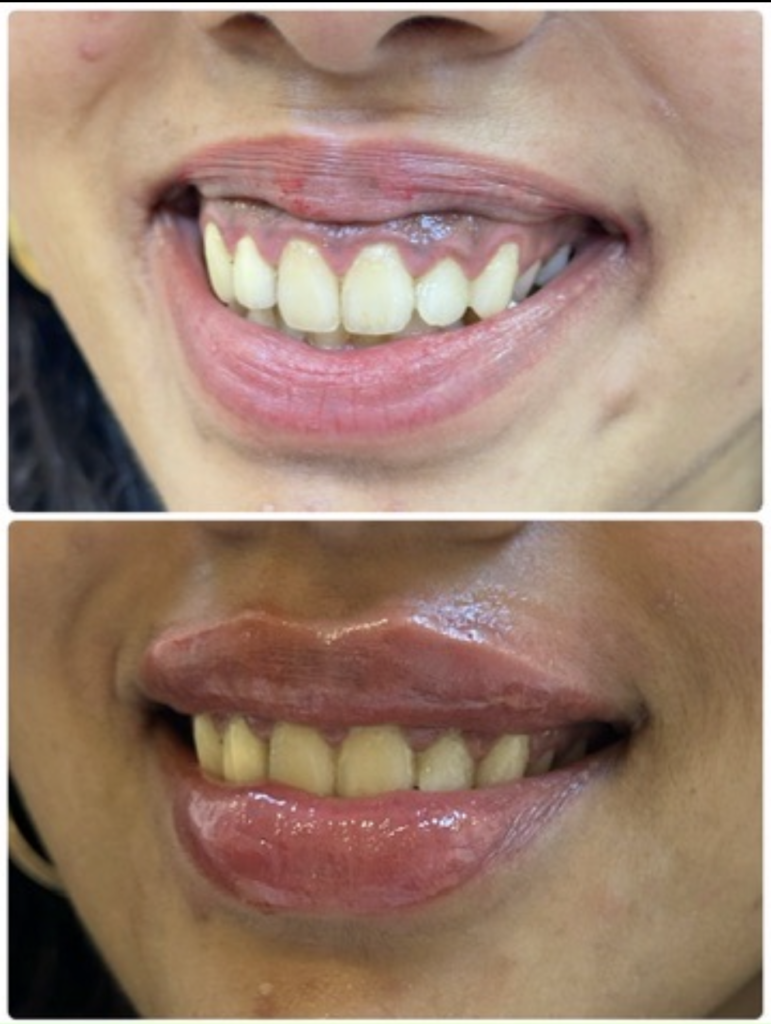
Swelling, and Why Day-One Lips Are Not the Result
Section intro:
The lip swells more than any other area of the face. This is the single most misunderstood thing about the treatment.
Treatment | Straight away | Final result |
Lip filler (HA) | Immediate change, with swelling on top of it | Swelling settles over the first days; judge the true result at about two weeks |
Hyaluronidase (dissolving) | Visible change within days | Settled at around two weeks, then reassessed before deciding whether to replace anything |
Skin boosters / microneedling (perioral skin, pigmentation) | Little immediately | Builds across a course over weeks to months |
Fine filler into barcode lines | Immediate softening | Settles over about two weeks |
Botulinum (gummy smile, corners, chin) | Nothing on the day | Begins at several days, full effect at around two weeks |
On day one your lips are bigger than the treatment. On day three they are often smaller than you expected, because swelling is leaving faster than you can recalibrate. At two weeks you are looking at the actual result.
Judging your lips in the first 48 hours is the commonest reason patients ask for more product than they need — and asking for more at that point is exactly how a lip becomes overfilled. Plan a fortnight before an event, not a weekend.
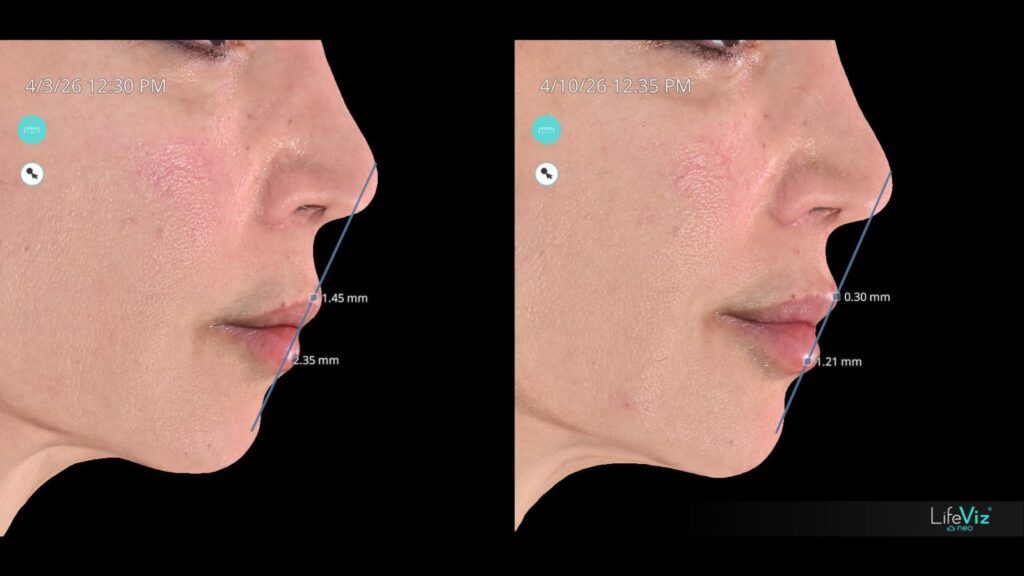
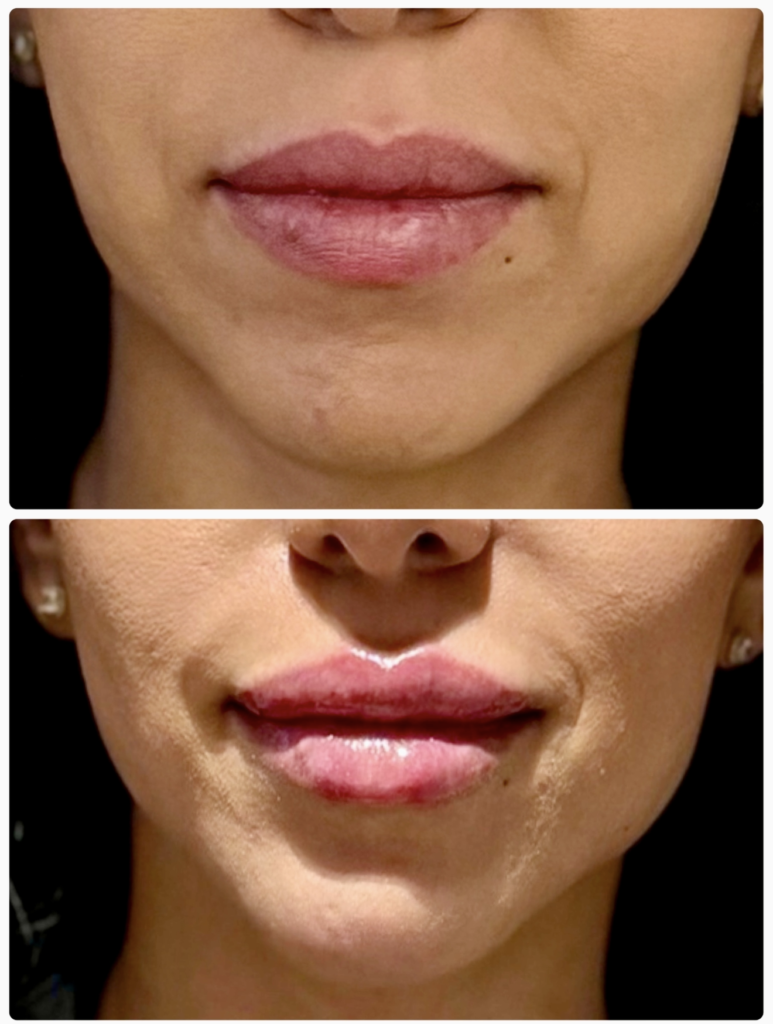
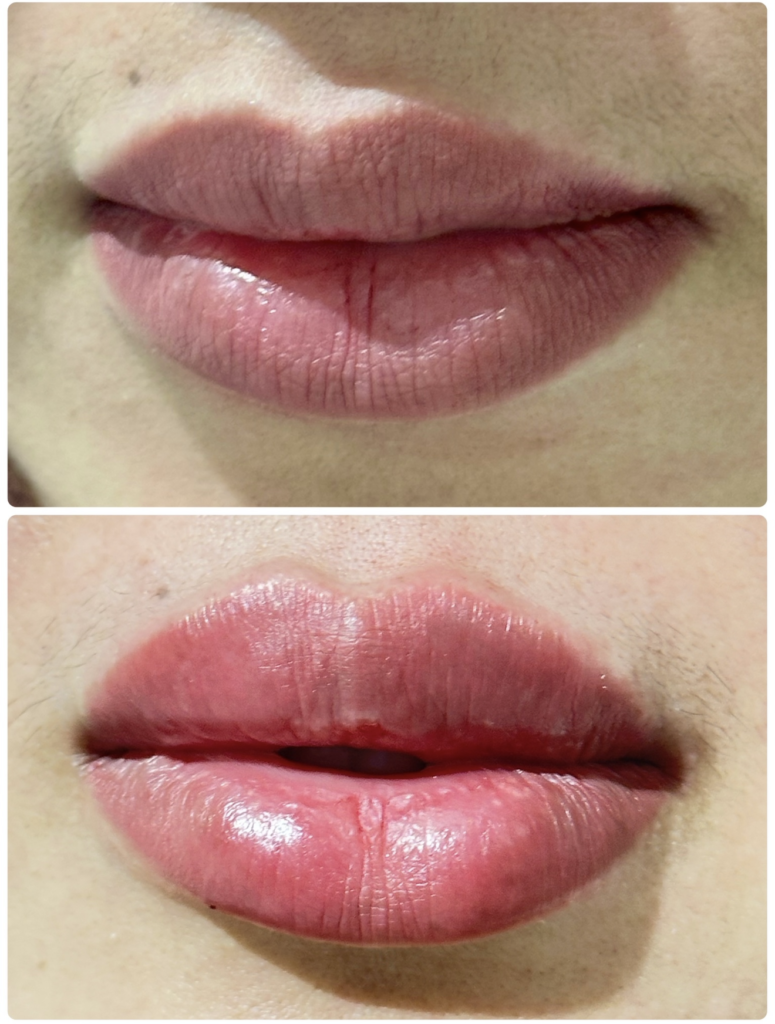
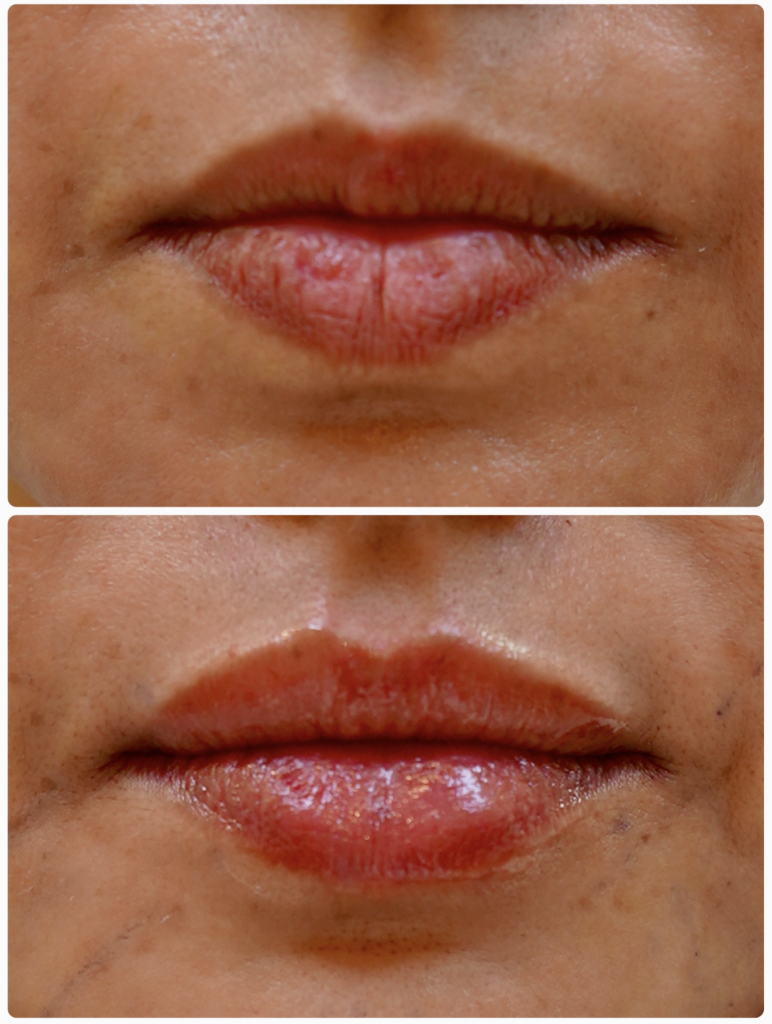


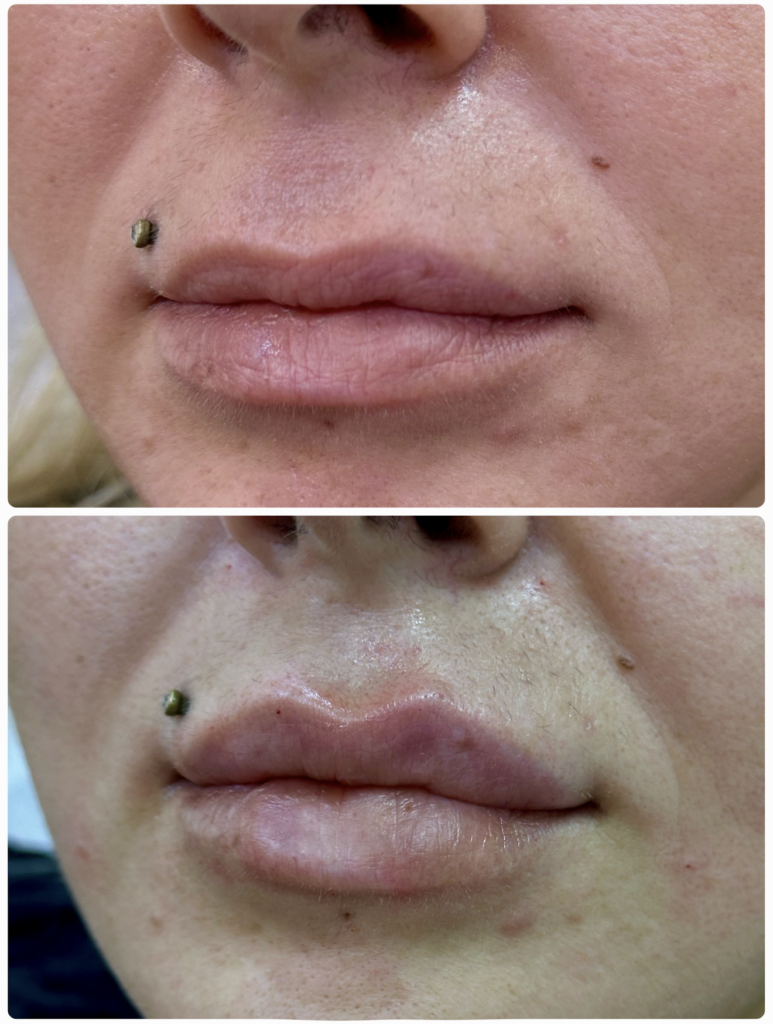
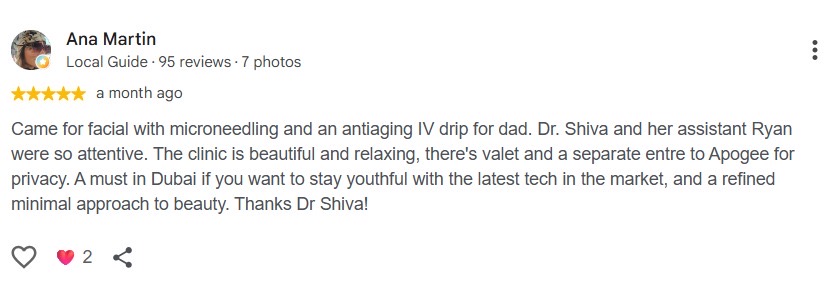
Testimonial













We’ve Got You Covered!
Curious? Start Here
Not every face. It works best where the upper and middle thirds of the face are strong and the mouth is out of proportion with them, where the upper lip disappears on smiling, or where upper and lower lip are markedly disproportionate. Where the lip is already in proportion, adding volume unbalances the face rather than improving it — and sometimes what is throwing the profile off is the chin rather than the lip. That is what the assessment establishes, and I will tell you if the answer is no.
Yes, and it is mostly a question of how much, placed where, and how often it is repeated. Natural results come from small volumes placed precisely, a second session rather than one large one, and enough time between treatments for the previous product to actually be gone. Most unnatural lips are not one bad treatment; they are six reasonable ones stacked on top of each other.
“One syringe” is a unit of stock, not a plan. What matters is which part of the lip is being treated — body, border, Cupid’s bow, corners — in which plane, and in what proportion between upper and lower. Once that is decided the volume follows, and it is frequently less than a full syringe. If a clinic quotes you a volume before examining your lip, they are selling product rather than planning treatment.
It is a placement technique, not a product: filler in fine vertical columns to build height rather than forward projection, producing a flat-fronted, lifted, heart-shaped lip. Vertical placement is part of how lips are properly injected anyway, and I adapt it to your anatomy rather than applying a template. The full stylised version is achievable if that is specifically what you want — but it is not a natural look and it does not suit every lip, which is a conversation to have beforehand.
Hyaluronic acid filler, yes — with hyaluronidase, an enzyme that breaks it down. That reversibility is one of the main reasons HA is the right material for the lip. I dissolve in stages, reassessing between sessions, because it is easier to dissolve more than to put back what was dissolved unnecessarily. Expect swelling afterwards, and expect the lip to look smaller than your own natural baseline for a period before it recovers. Permanent fillers cannot be dissolved at all.
That is migration — product that has moved past the vermilion border into the skin, creating a shelf or shadow above the lip and blurring the edge between lip and skin. People often call it a filler moustache. It is assessed with high-frequency ultrasound and treated by dissolving the migrated product with hyaluronidase, in stages. It does not resolve on its own and it does not improve by adding more filler.
An assessment and an ultrasound scan first, so we know how much is there, where it sits and whether it has migrated. Then a plan: dissolve some or all of it, in stages, and reassess once the lip has settled. A number of patients find at that point that their own lip is considerably better than they remembered and choose to have nothing replaced.
Not with injectables. Permanent and semi-permanent products cannot be dissolved — hyaluronidase has no effect on them — and I do not inject on top of them. They can trigger delayed inflammatory reactions years later, sometimes set off by an infection, a vaccination, a dental procedure or a change in general health, and adding product makes that harder to manage rather than better. I will assess and image your lips, tell you what I can see, and refer you to our plastic surgeon, because removal is surgical.
Usually the opposite. A gummy smile is caused by the muscles that lift the upper lip pulling it higher than its length can cover, and it is treated with small, precisely placed doses of botulinum toxin rather than filler. Adding volume to that lip tends to make the gum show more noticeable. If your upper lip “disappears” when you smile, this is one of two possible causes and the assessment distinguishes them.
The lip is sensitive and it is numbed before treatment. Bruising and swelling should be expected rather than hoped against — the lip swells more than any other area of the face, most of it settles within the first days, and the true result is judged at about two weeks. Careful assessment and technique reduce bruising and reduce the chance of complications; they do not remove either risk. Plan a fortnight before an event, not a weekend.

Dr Shiva Faramarzi, MD
Aesthetic & Longevity Physician · DHA licence 43705219
Apogée Clinic, Address Beach Resort, JBR, Dubai
WhatsApp or call: +971 52 328 6185
Last medically reviewed: August 2026
This page is general medical education and does not replace individual assessment. Treatment suitability, expected outcomes and regulatory status vary by patient and by therapy.