Home / Services / Regenerative medicine
Regenerative medicine at a glance: stem-cell therapies, autologous versus donor-derived approaches, exosome/cell-signalling therapies, how treatment selection is made, and the importance of physician oversight + regulated/GMP-standard laboratory processing.
Regenerative Medicine in Dubai
Patients considering regenerative medicine often ask me one very simple question:
“Once the stem cells enter my bloodstream, what actually happens to them?”
It is a good question because the answer is very different from the way stem-cell treatment is sometimes presented online.
An intravenous stem-cell treatment does not simply refill a depleted reservoir of stem cells in your body. The cells do not enter the bloodstream, permanently settle throughout your organs and become replacement cells for everything that has aged or been damaged.
The biology is much more interesting than that.
Most of the research surrounding intravenous regenerative cell therapy today focuses on mesenchymal stromal cells, commonly called MSCs. Although the term “mesenchymal stem cell” is widely used, “mesenchymal stromal cell” is often the more scientifically accurate description.
Current evidence suggests that much of their potential biological effect comes not from permanently replacing your own cells, but from communication.
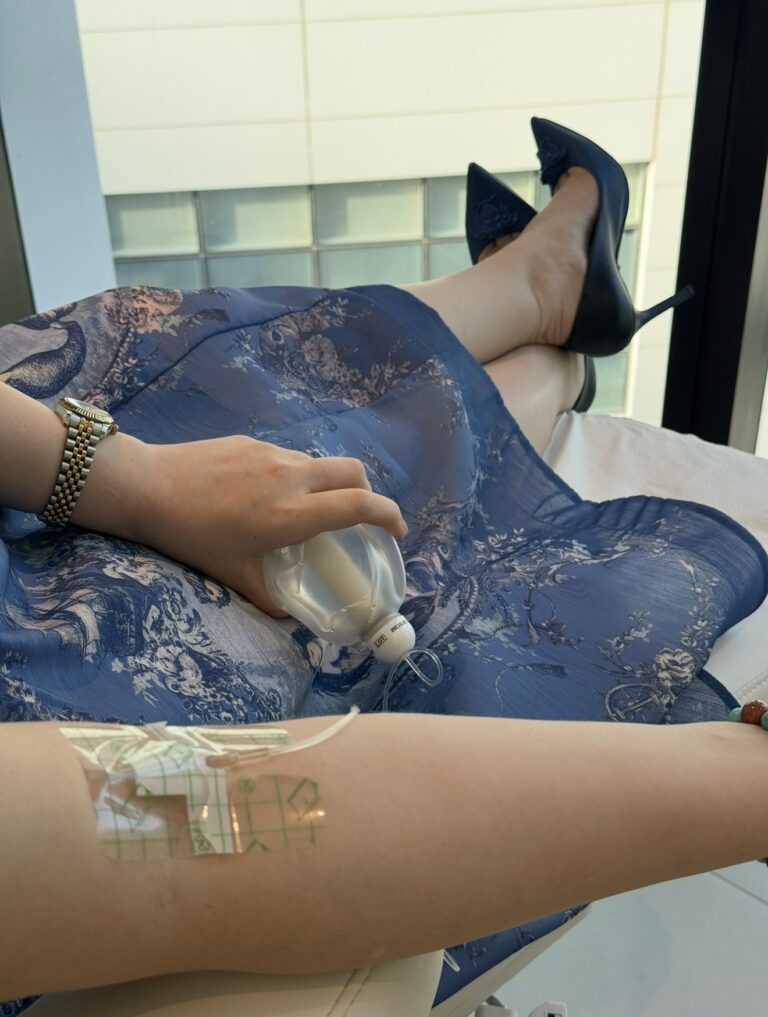
I describe them as temporary signalling agents
When I explain MSCs to patients, I sometimes call them undercover signalling agents.
It is obviously an analogy rather than a literal scientific description, but it helps explain an important point.
MSCs interact with their surrounding environment and can release a wide range of biologically active signals, including cytokines, growth factors, chemokines and extracellular vesicles.
These signals can interact with immune cells and other tissues and are being studied for their roles in inflammation, immune regulation and tissue-repair pathways.
In other words, researchers increasingly believe that the interesting part of MSC biology may be less about the cells physically becoming new liver, muscle or skin cells — and more about what the cells communicate while they are present.
This is known as a paracrine effect.
Reviews of MSC biology describe paracrine signalling and immunomodulation as major proposed mechanisms behind many of the effects being investigated in regenerative medicine.
What happens immediately after an IV infusion?
This is another area where the internet tends to oversimplify things.
You may have read claims that stem cells are infused into a vein and then automatically “find” whichever part of the body needs healing.
That is not quite how intravenous delivery works.
Once MSCs enter the venous circulation, they travel toward the heart and then encounter the lungs.
Because MSCs are relatively large compared with many circulating blood cells, a significant proportion can initially become temporarily retained within the small vessels of the lungs. This phenomenon is known as the pulmonary first-pass effect.
Studies tracking MSC distribution after intravenous administration have consistently found the lungs to be an important initial site of accumulation. Over time, some cells or their biological signals may subsequently be detected in tissues including the liver, spleen and kidneys.
So I would not describe intravenous MSCs as having a perfect internal GPS system.
Their distribution is influenced by many factors, including:
- the type and source of cells
- cell size
- dose
- manufacturing and culture conditions
- route of administration
- the patient’s biology
- inflammatory signals within the body
A systematic review of MSC biodistribution found that intravenous administration commonly results in initial pulmonary accumulation followed by redistribution to other organs
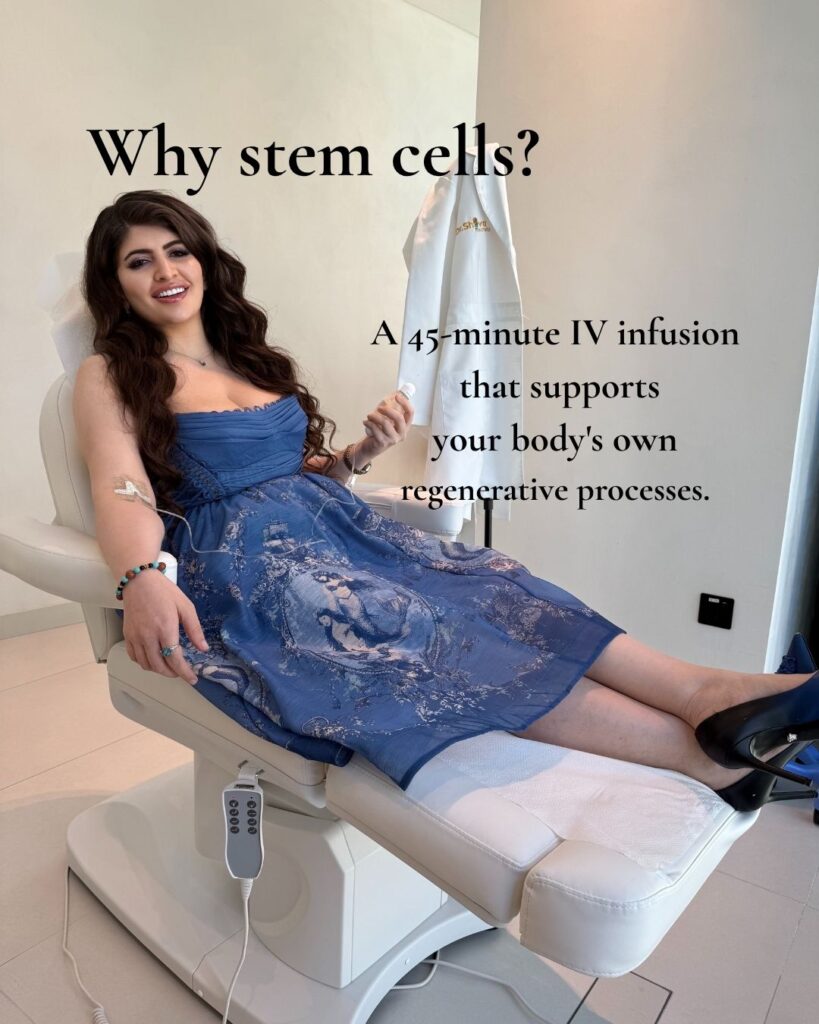
So they do not become part of my own stem-cell reservoir?
Not in the way many patients imagine.
An IV MSC infusion should not be thought of as filling a biological tank with new stem cells.
The current understanding of MSC therapy focuses substantially on temporary biological signalling, cell-to-cell interaction and immune modulation, rather than long-term replacement of the body’s own stem-cell population.
That distinction is important because it also helps set realistic expectations.
Regenerative medicine is not a switch that suddenly makes the body younger.
Biology works through pathways, signalling and cellular responses — and those processes vary enormously between individuals.
Do stem cells actually travel to injured tissue?
The concept is called homing.
Damaged and inflamed tissues can produce chemical signals that influence the migration and behaviour of circulating cells. MSCs possess receptors involved in these signalling pathways, which is one reason researchers continue to investigate their potential role in tissue repair.
But this needs to be explained carefully.
It would be inaccurate to say:
“The cells simply detect every problem in your body, travel there and repair it.”
The reality is more complicated.
Homing efficiency can vary significantly, and many intravenously administered MSCs do not persist for long periods in the body.
This is actually one reason the paracrine theory has become so important.
A cell may not need to permanently engraft inside a tissue to influence biological processes. Temporary interactions and the molecules released by the cells may themselves affect nearby immune and repair pathways.
What are MSCs actually releasing?
This is one of the most fascinating areas of regenerative research.
The collection of substances released by cells is sometimes called the secretome.
It can contain:
- cytokines
- chemokines
- growth factors
- proteins
- lipids
- extracellular vesicles
Those extracellular vesicles include structures commonly discussed as exosomes.
You can think of an extracellular vesicle as a microscopic package used in communication between cells.
Rather than being a cell itself, the vesicle can carry biological cargo — including proteins, lipids and nucleic acids — from one cell toward another.
This is one reason exosomes have become such an active field of research: scientists are investigating whether some of the signalling properties associated with MSCs could eventually be delivered without administering the cells themselves.
That does not, however, mean that every commercial product labelled “exosomes” has established therapeutic effectiveness. Manufacturing methods, purification, characterization, dose and clinical indication all matter enormously.
Human extracellular-vesicle research is growing, but studies continue to emphasize the need for better standardisation and stronger clinical evidence.
Are intravenous MSCs safe?
There is no responsible way to answer the safety of every “stem cell IV” with one word.
Cell source, dose, manufacturing quality, patient selection, indication and administration protocol all matter.
That said, the accumulated clinical-trial literature studying intravascular MSC administration has generally reported a reassuring safety signal.
An updated systematic review of randomized trials involving 2,696 participants found an increased frequency of transient fever but did not identify increased rates of infection, thromboembolic events, death or malignancy compared with controls.
More recent work continues to study infusion safety and emphasizes appropriate cell preparation, patient monitoring and protocols for managing potential complications.
What is the difference between autologous and donor-derived cells?
Another common question is:
“Wouldn’t cells from someone else be rejected by my body?”
There are two broad concepts to understand.
Autologous cells
Autologous means the cells originate from your own body.
Depending on the treatment and regulatory framework, cells may be collected from sources such as adipose tissue or bone marrow and subsequently processed.
Because the biological material originates from the same patient, immune compatibility is fundamentally different from donor-derived therapy.
Allogeneic cells
Allogeneic means the cells originate from another person.
MSCs have interesting immunological properties. Compared with many other cell types, they may express lower levels of certain immune-recognition and co-stimulatory molecules and possess immunomodulatory behaviour.
But they are not invisible to the immune system.
This is an important correction to something patients sometimes hear.
There is no universal process whereby laboratories simply “remove the HLA” and therefore make donor MSCs impossible for the recipient’s immune system to recognise.
Research shows that allogeneic MSCs can generate immune responses, including donor-specific antibodies in some recipients, although the clinical significance of these responses varies.
A 2024 review concluded that allogeneic MSCs have relatively low immunogenicity but can nevertheless be subject to recipient immune attack.
The correct question therefore isn’t simply:
“Are donor cells rejected — yes or no?”
It is:
What cell product is being used, how was it manufactured and tested, for what indication, under what regulatory authorization, and in which patient?
That is a much more medically meaningful discussion.
Are stem-cell treatments established or experimental?
This is where I think patients deserve much more precise language.
“Stem-cell therapy” is not one treatment.
Hematopoietic stem-cell transplantation for certain blood disorders, for example, has been part of established medicine for decades.
Other cell products and indications remain investigational.
The regulatory status depends on:
- the type of cell
- whether it is autologous or allogeneic
- how extensively it has been processed
- whether its intended use is homologous or non-homologous
- the indication being treated
- the route of administration
- the specific regulatory approval
In Dubai, the DHA Standards for Stem Cell Services, effective 28 February 2026, provide a detailed framework for the collection, manufacturing, storage and clinical use of human cell products.
The current standard specifically distinguishes approved clinical uses from investigational applications and requires appropriate regulatory authorization for advanced cell products.
Expanded mesenchymal stromal-cell products and extracellular vesicle/exosome therapies are among the products subject to these advanced regulatory pathways.
So the accurate answer is neither:
“Stem cells are experimental.”
nor:
“Stem cells are already proven for everything.”
The answer is:
It depends entirely on which cell therapy and which indication we are discussing.
What should you ask before considering any cell-based treatment?
If you are considering regenerative therapy, I think these questions matter far more than the words written on a clinic brochure:
What exactly is being administered?
Is it an MSC preparation, another cellular product, extracellular vesicles, or something else?
Where did it come from?
Is it autologous or donor-derived?
How was it processed?
Manufacturing conditions, sterility testing, characterization and traceability matter.
What is the evidence for my particular goal?
Evidence for one disease or indication cannot automatically be transferred to another.
What is its regulatory status for this use?
The existence of a scientific study does not by itself mean a product is approved for routine treatment.
And finally:
What don’t we know yet?
In regenerative medicine, that may be one of the most important questions a doctor can answer.
The way I explain it to my patients
If I had to reduce the entire subject to one paragraph, I would say this:
Do not imagine an IV of MSCs as topping up your body’s stem-cell tank. Think of the cells more as temporary biological signalling agents. After entering the circulation, many initially encounter the lungs, while their interactions with the immune system and the molecules they release may influence biological pathways elsewhere in the body. These mechanisms are scientifically fascinating, but clinical effectiveness depends on the exact cell product and the condition being treated.
That is less dramatic than many descriptions of regenerative medicine.
But it is closer to what the science actually tells us.
And for me, that is a much better place to start.
We’ve Got You Covered!
Curious? Start Here
Current evidence does not support thinking of intravenous MSCs as permanent replacement cells that simply become part of your existing stem-cell reserves. Much of their investigated biological activity appears related to temporary interactions and signalling.
Inflammatory and injury-related signals may influence MSC migration and behaviour, a phenomenon called homing. However, it is not accurate to describe the cells as having a perfect ability to locate and repair every damaged tissue.
A significant proportion of intravenously administered MSCs initially encounters the pulmonary circulation. Studies have subsequently detected redistribution to other organs, but biodistribution varies according to the cell product and administration conditions.
Yes. Stem-cell and cellular therapies in Dubai are regulated by the Dubai Health Authority, with requirements covering the healthcare facility, physician, laboratory processing, product quality, traceability and the specific clinical use.
For patients, this is why choosing where to have treatment matters. Regenerative therapies should not be approached as an ordinary IV drip. Before proceeding, I recommend confirming exactly what cellular product is being administered, where it was manufactured, whether the laboratory operates to appropriate GMP standards, what testing and traceability are provided, and whether that particular treatment is authorized for its intended use.
In my practice, I work only within the applicable UAE regulatory framework and with established laboratories that provide the required quality-control and traceability documentation.
No. Exosomes are extracellular vesicles involved in cell-to-cell communication. They contain biological cargo but are not themselves living stem cells.
About the Author
Dr Shiva Faramarzi, MD
Aesthetic & Longevity Physician
Apogée Clinic, Address Beach Resort, JBR, Dubai
DHA Licence No. 43705219
Dr Shiva Faramarzi’s clinical interests include regenerative medicine, ultrasound-guided aesthetic procedures and the diagnosis and management of injectable complications.
Last medically reviewed: 21 August 2026
This article is provided for medical education and does not constitute individual medical advice. The suitability, regulatory status, risks and expected outcomes of any cell-based therapy depend on the specific product, indication and patient.
References
- Dubai Health Authority. Standards for Stem Cell Services. DHA/HRS/HPSD/ST-68. Effective 28 February 2026.
- Fischer UM, et al. Pulmonary passage is a major obstacle for intravenous stem cell delivery: the pulmonary first-pass effect. Stem Cells Dev. 2009.
- Salvadori M, et al. Biodistribution of Mesenchymal Stromal Cells after Administration in Animal Models and Humans: A Systematic Review. Stem Cells Transl Med. 2021.
- Mesenchymal Stem/Stromal Cells and Their Paracrine Activity — Immunomodulation Mechanisms and How to Influence the Therapeutic Potential. 2022.
- Li Y, et al. Unveiling the immunogenicity of allogeneic mesenchymal stromal cells: Challenges and strategies for enhanced therapeutic efficacy. Biomed Pharmacother. 2024.
- Thompson M, et al. Cell therapy with intravascular administration of mesenchymal stromal cells continues to appear safe: An updated systematic review and meta-analysis. EClinicalMedicine. 2020.
Regenerative Medicine Consultation
Discuss your goals, medical history and the available regenerative treatment options with Dr Shiva. Treatment suitability, cell source, laboratory documentation and the regulatory status of the intended therapy are reviewed before proceeding.