Home / Services / | PDO Threads & Facial Lifting
Thread Lift in Dubai
VECTORS • FIXATION • PATIENT SELECTION • LIMITS
Thread Lift in Dubai
A thread lift can reposition selected soft tissue and improve facial contour in the right patient. It cannot remove significant excess skin, it cannot replace surgical lifting, and it cannot correct every kind of facial heaviness.
Which of those applies to you is an anatomical question, and it is answered before any thread is chosen. Most of this page is about how that question gets answered — what descends, what deflates, what accumulates, and which of those a thread can actually hold
A Thread Lift Is Not a Mini Facelift
The most useful thing I can tell you about threads is what they are not.
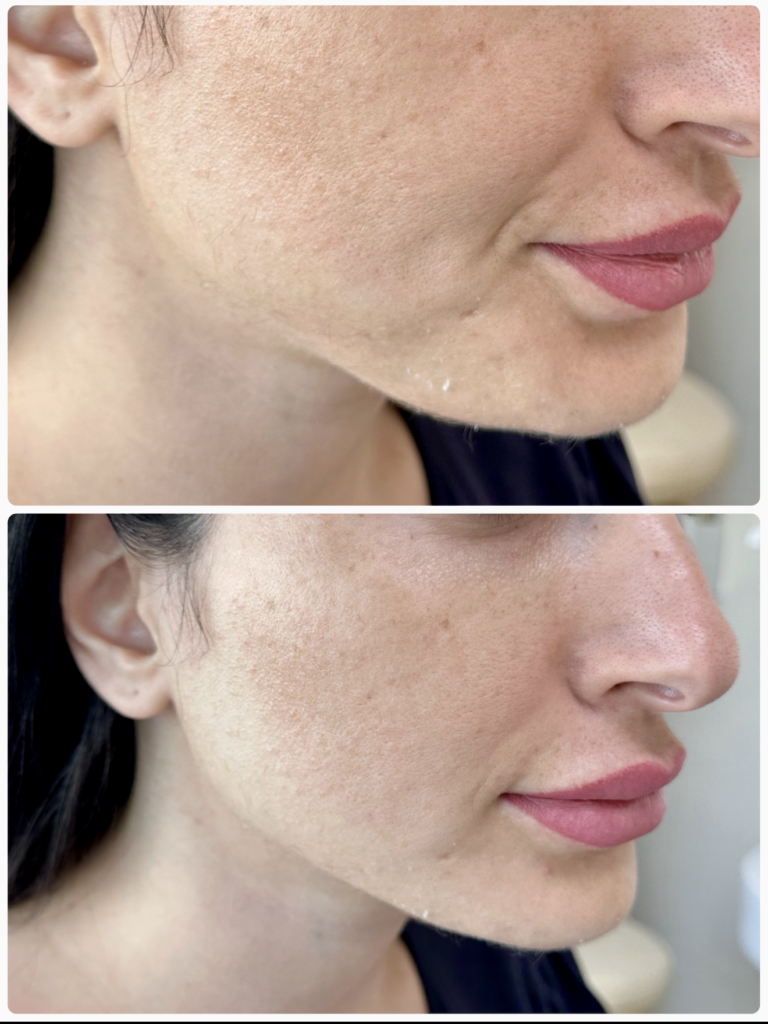
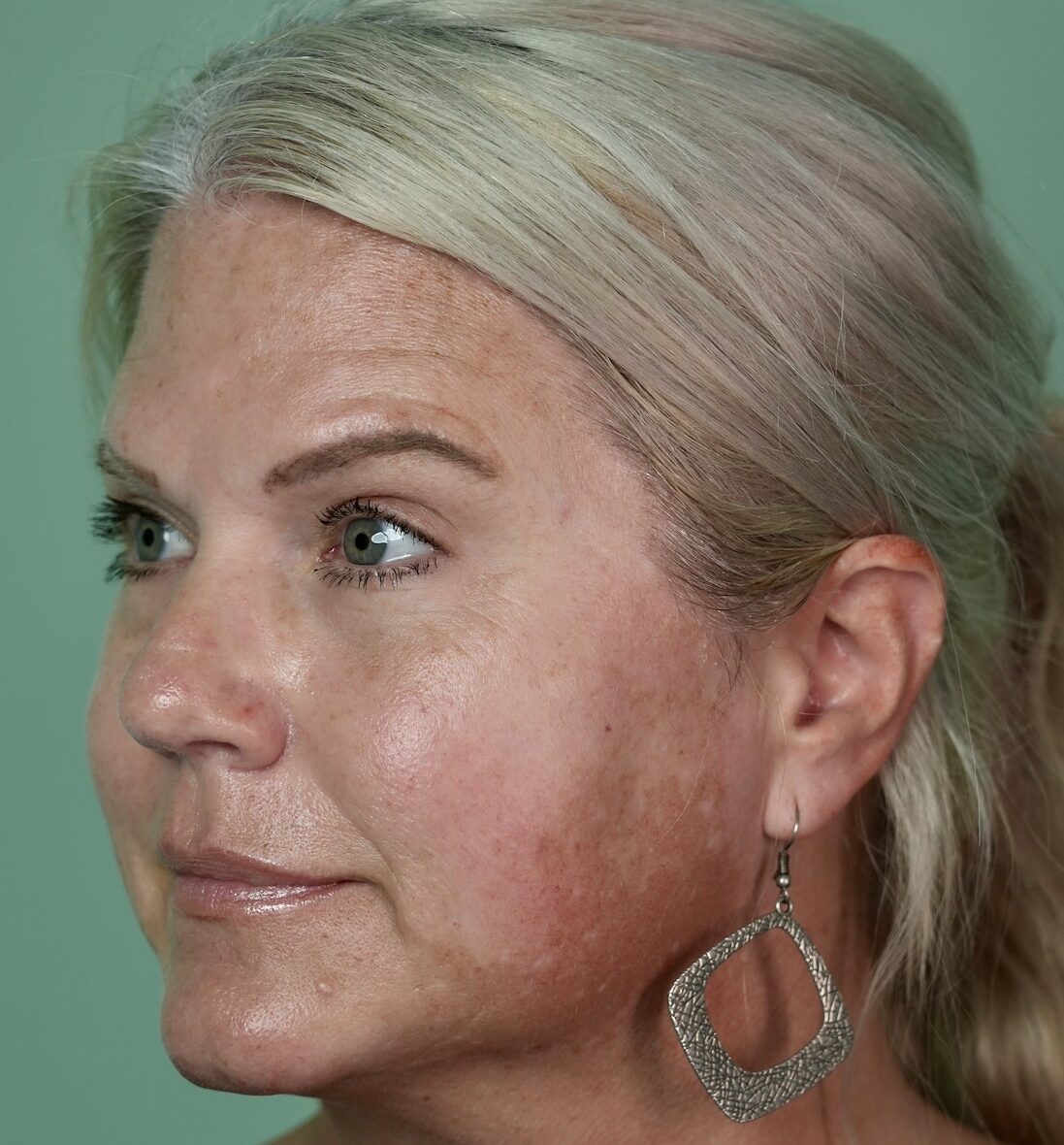
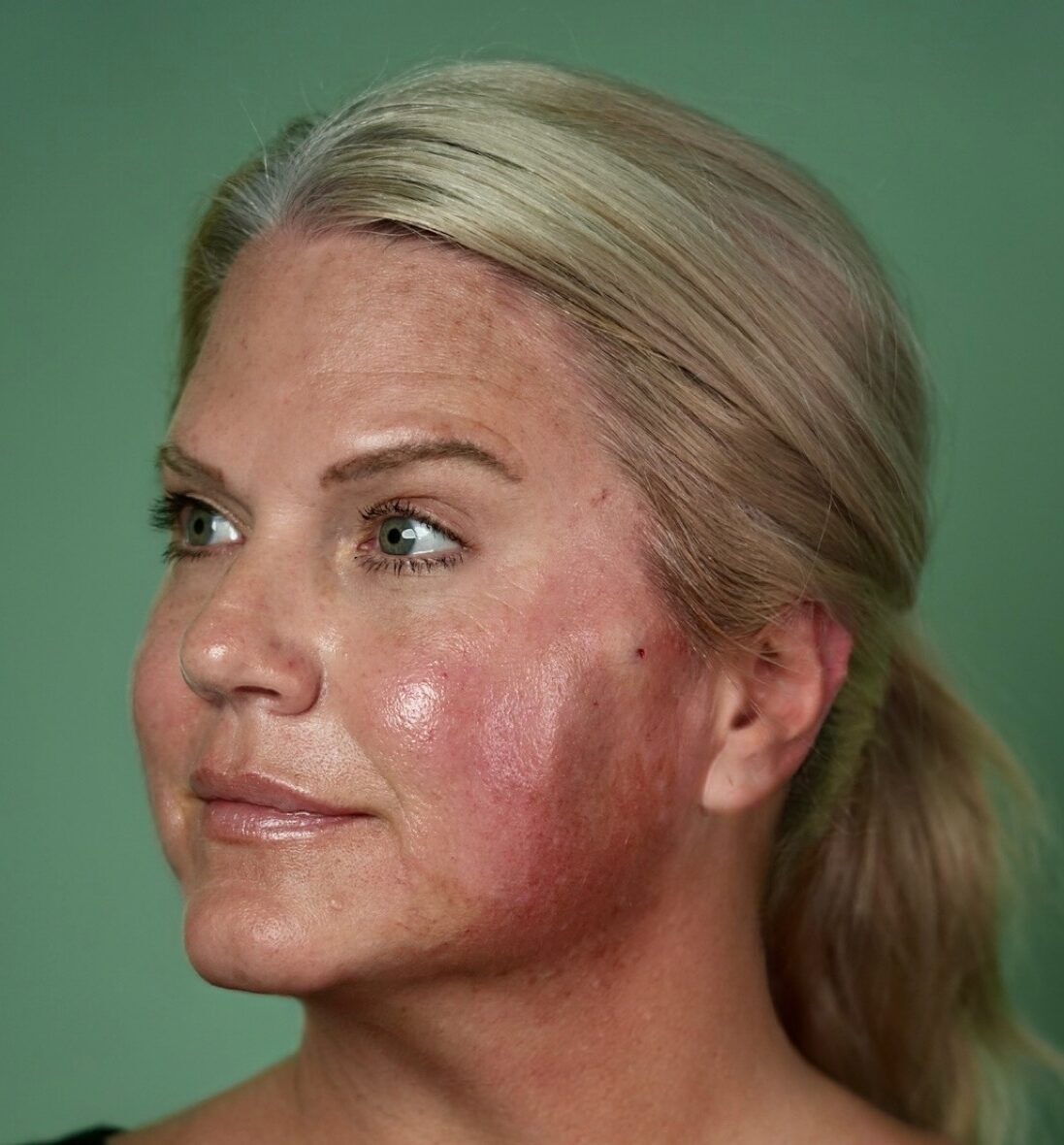
Threads can: reposition selected soft tissue along a planned direction, improve contour in a face with mild to moderate descent, and stimulate collagen along the line of each thread over the following months.
Threads cannot: remove significant excess skin, reproduce the deep-plane repositioning of a surgical facelift, replace lost volume, or reduce a substantial fat compartment.
And this is the part that matters most: The result depends less on the number of threads used and more on what is being lifted, where the tissue needs to move, and whether the tissue can actually be supported by a thread.
About the phrase “non-surgical facelift”. It is the term almost everyone searches for, so it belongs on this page — but it is a marketing term, not a clinical one. A facelift is an operation that releases, repositions and excises. A thread lift is a suspension procedure performed through small entry points with an absorbable material. They are not equivalent procedures, they do not produce equivalent results, and they are not chosen for the same patient. Anyone offering you one as a substitute for the other is describing a price point, not an anatomical plan.
What threads also do, which is easy to miss. Beyond the suspension itself, an absorbable thread provokes a fibrotic and collagen response along its track. This is worth understanding properly, because it is the part of the result that outlasts the thread material itself.
It is also why I think of threads as sitting in the same family as the injectable collagen stimulators — with one meaningful difference. A liquid biostimulator distributes into the tissue and, over the months that follow, can settle and redistribute. A thread is placed along a defined line and stays on it, because it is a solid object with fixation at one end. It is a collagen stimulus you can direct. That directionality is the actual clinical argument for threads, and it is the one nobody makes, because it sells less easily than the word facelift.
Almost everyone who comes in asking for a lift is describing the same visual complaint — the lower face has changed, the jawline is less defined, something looks heavier than it did. The complaint is one. The anatomy behind it is at least five different things, and they are not interchangeable. This is the whole assessment, and it takes longer than the procedure.
Five Reasons Somebody Asks for a “Lift”, and Only One of Them Is a Thread Problem
01
Tissue descent
The soft tissue has moved inferiorly relative to the underlying skeleton. Ligamentous laxity, loss of fascial support, the ordinary mechanics of time. Contour is lost because things are in a lower position than they were, not because there is less of them.
This is the thread problem. Repositioning is exactly what a suspension thread does. When descent is the dominant finding and the tissue has enough integrity to hold a thread, threads make sense.
02
Heavy lower face from subcutaneous fat
. The heaviness is volume in the wrong compartment — jowl fat, submental fullness, a thickened lower face. Lifting this does not resolve it. You are asking a thread to suspend a load it was not designed to carry, and the thread either fails early or produces a distorted contour because the weight pulls unevenly along it.
03
Volume loss.
The face has not so much fallen as emptied — deep fat compartment atrophy, bone resorption at the maxilla and along the mandible, loss of midface projection. The skin envelope is now larger than its contents, which reads as descent but is not.
Repositioning cannot replace missing structure. Pulling a deflated envelope tighter produces a face that is both flat and tight. What this needs is structural support, and that is a different treatment. →Cheek & Midface · Face & Jawline · Renuva
04
Skin excess.
There is genuinely more skin than there is face to cover. The tissue does not simply sit lower; there is redundancy.
Threads reach their limit here, and I will say so early. A thread can gather excess skin; it cannot remove it. In a face with real redundancy, the gathered tissue has to go somewhere, and the result is bunching or a visible fold rather than a smoother contour. This is a surgical problem, and referring it is not a failure of the consultation — it is the point of the consultation.
05
Previous filler distorting the anatomy.
The face is heavy because of what is already in it. Product placed over years, product that has migrated, product accumulating in compartments that were not designed to hold it, and an anatomy that no longer matches the textbook because someone else has already changed it.
Adding threads over an unassessed filler problem is not intelligent practice. You are suspending a face whose weight distribution you do not understand, through tissue planes that have been altered. The first step is finding out what is in there. → Filler Complication Management
In practice most faces are a mixture. The job is not to pick one label but to rank them — which finding is dominant, which is secondary, and whether the dominant one is something a thread can address at all.
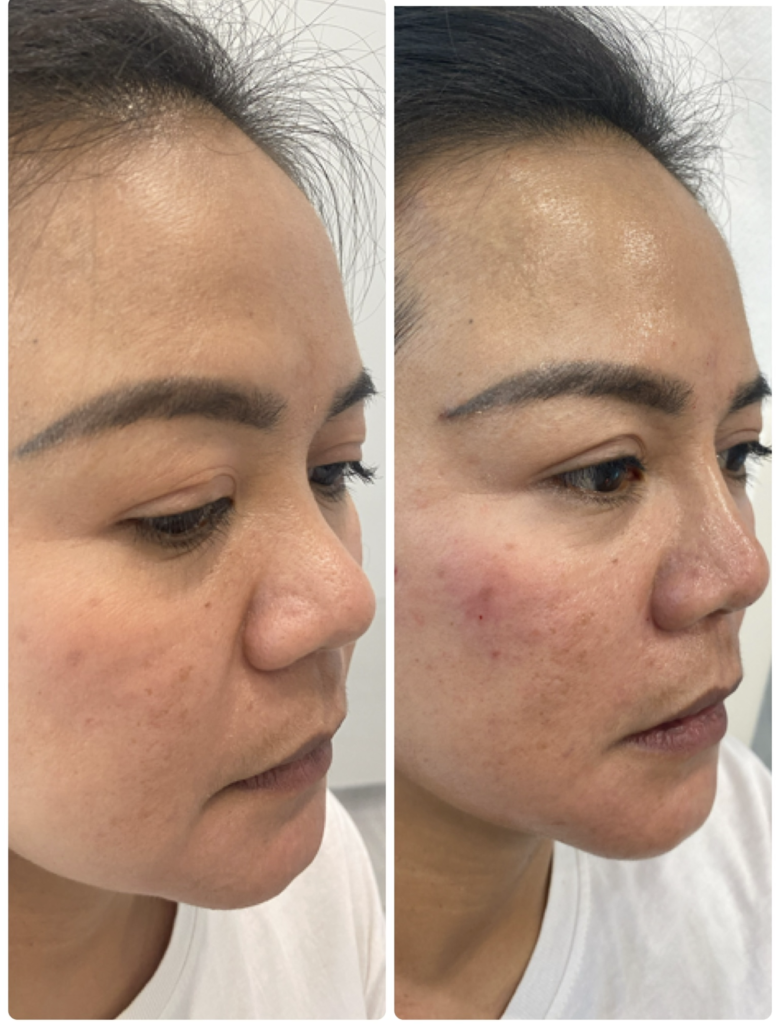
What Determines Whether Tissue Can Hold a Thread
Even where descent is the dominant problem, not every tissue will support suspension. Three things decide it.
Tissue weight. The heavier the segment being lifted, the greater the load on each fixation point and the shorter the mechanical result. Weight is the reason a jowl loaded with fat behaves completely differently from a jowl that is simply descended.
Tissue quality. A thread needs something to grip. Skin and subcutaneous tissue with reasonable collagen content and thickness holds a barb or cone; thin, atrophic or heavily photodamaged tissue may not, and it is also the tissue most likely to show surface irregularity where the thread engages.
The plane you are working in. A thread placed too superficially dimples, may become visible, and has poor purchase. Too deep and it does not engage the tissue you intended to move. The correct plane varies by region, and knowing where it changes across the face is most of the technical skill in this procedure.
If any one of these is against you, more threads will not fix it.
Thread Selection: Configuration Follows the Plan
Thread choice is the last decision, not the first. Once the vector, the load and the fixation are settled, the thread that suits them is mostly obvious.
Smooth (mono) threads. No barbs, no suspension capacity. They do not lift, and a mono thread sold as a lift is a misrepresentation rather than a technique difference. They are used for tissue quality — laid as a mesh to stimulate collagen in an area, including in tissue that will later be asked to hold a suspension thread.
Barbed / cogged threads. The lifting instrument. Barbs engage tissue along the vector; the geometry and density of the barbs determine how much purchase there is per centimetre of thread.
Bidirectional and double-arm configurations. A single-arm thread pulls from one end and loads one fixation point. A double-arm configuration engages tissue in two directions from a central point, which distributes the load along the vector rather than concentrating it. In practice that means better distribution of tension, a smoother contour with less puckering at the point of maximum pull, easier side-to-side symmetry, and a mechanical result that relaxes more slowly. This is my usual choice where genuine lift is the goal.
Cone-based PLLA threads (Silhouette Soft). A different material and a different fixation principle — suspension and anchoring rather than grip along the length, with a poly-L-lactic acid body that contributes more on the collagen side. A considered choice for particular vectors and particular faces, not a default.
Materials. PDO is the workhorse — the same polymer as absorbable surgical suture, well characterised, absorbed over months while the induced collagen remains. PLLA-based threads absorb more slowly and contribute more biostimulation. The material affects duration and tissue response; it does not rescue a poorly chosen vector.
On numbers, and why I do not sell packages. Threads are quoted in this market as products — four-thread, eight-thread, twelve-thread. That is inventory pricing, not treatment planning. The number of threads is an output of the plan: how many vectors are needed, how much tissue each vector has to move, how much load each fixation point can take. It falls out of the assessment; it does not precede it.
Under-threading is real and it is common, and a face given too few threads for the vectors it needed will not hold. But the answer to that is not a bigger number in the package — it is a plan that states what is being moved and in which direction, with the number following from it.
What I Am Not Going to Claim
A short block, deliberately placed before the treatment areas.
- I will not tell you a thread lift is equivalent to surgery.
- I will not tell you it has no downtime. It has bruising, swelling, tightness and a settling period, and I would rather you plan around them.
- I will not tell you a specific number of threads gives a specific number of millimetres of lift. Tissue is not that predictable and anyone quoting it is guessing.
- I will not tell you that threads are risk-free because I have trained other doctors in them. Experience changes the probability of a good result. It does not change the fact that this is a procedure with complications, and lists them.
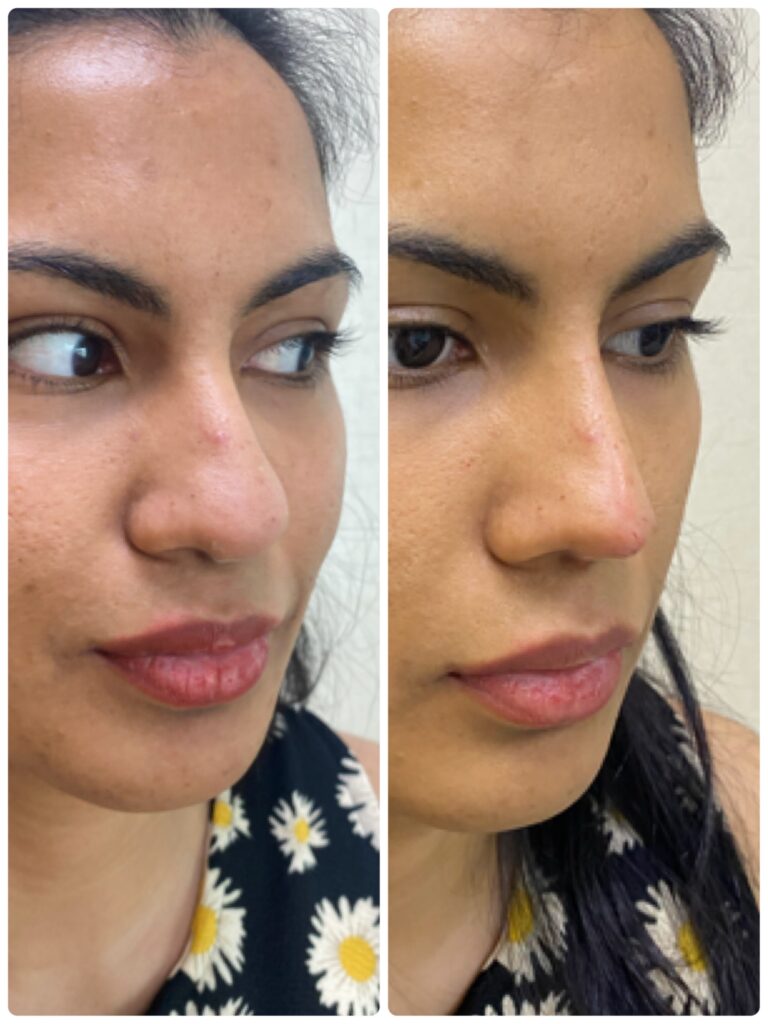
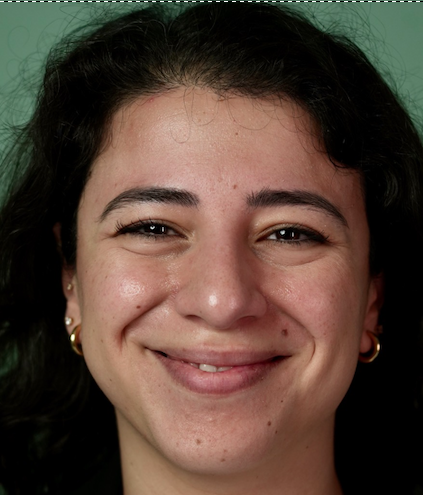
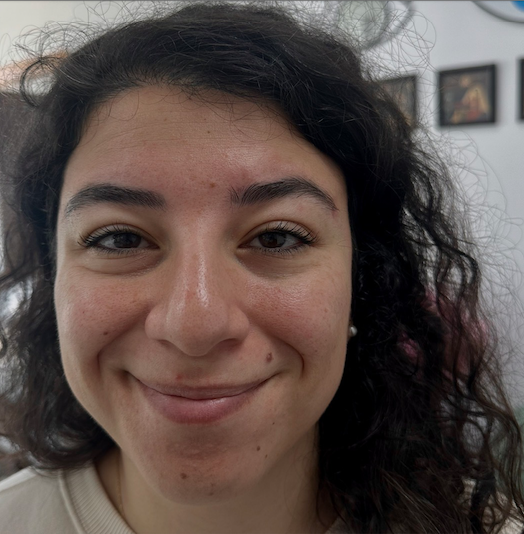
Treatment Areas
Four areas, in order of how well threads perform in them. Anything not listed here is not listed because I do not think threads are the right answer for it, or because I do not treat it — not because the keyword was unavailable.
Lower face and jowls
The strongest indication, and the one where the anatomy and the instrument match best.
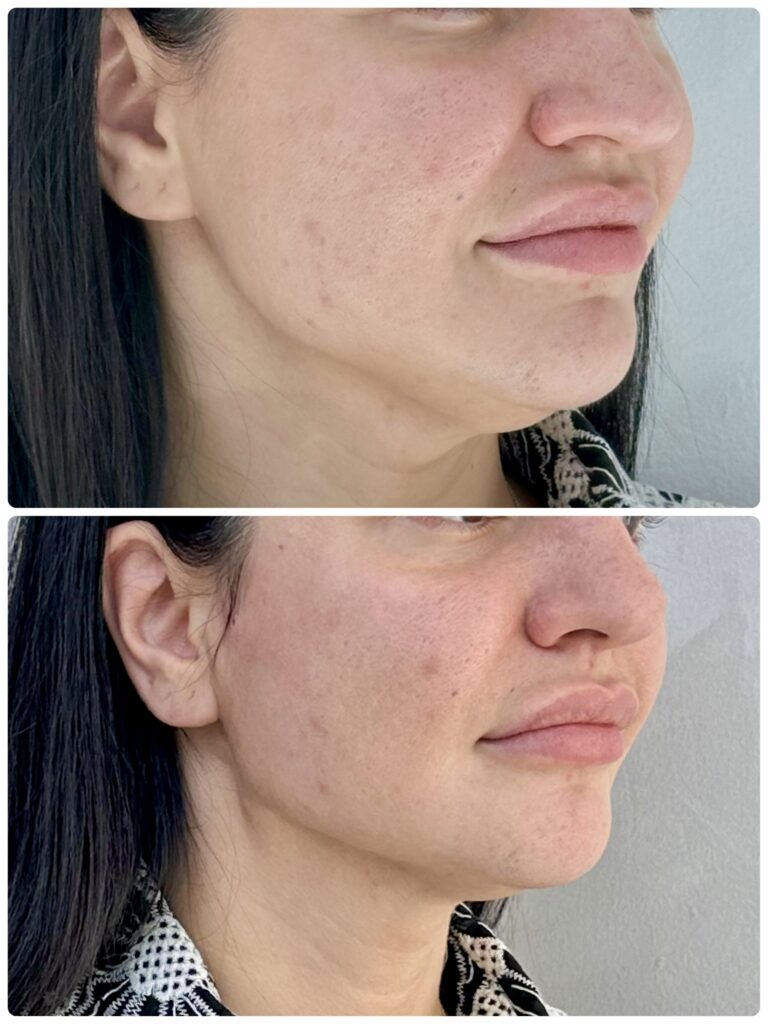
Early to moderate jowling, where the mandibular border has softened because tissue has descended over it rather than because fat has accumulated beneath it. The vector runs from the jowl superiorly and posteriorly toward a preauricular or temporal fixation — the tissue has to travel back as well as up, which is precisely the movement a purely vertical pull fails to produce.
The distinction that decides everything here is A descended jowl lifts well and holds. A heavy one loads the thread, relaxes early, and would have been better served by reducing the load first.
Midface and cheek descent
Genuine indication, with a limit that has to be stated.
Where the malar fat pad has descended and the transition from cheek to nasolabial region has deepened, a superolateral vector to a temporal fixation repositions it and softens the fold from above rather than filling it from below.
The limit: this is not deep-plane repositioning and it should not be described as though it were. A surgical midface lift releases ligaments and repositions a deeper layer. A thread repositions what it can engage. The improvement is real, it is modest, and the honest comparison is against not treating rather than against surgery.
The midface is also the region where vector error is most visible, because it is the region with the most natural convexity to lose.
Jawline definition and support
Distinct from the jowl, and often the reason a jowl reads as worse than it is. Where the mandibular contour has softened, threads placed along the jawline improve definition of the border — but only where the underlying skeletal support exists. Where the mandible or chin is genuinely deficient, no amount of suspension creates a jawline that the bone does not support, and structural work comes first or instead.
→ Link: Face & Jawline
Lateral brow
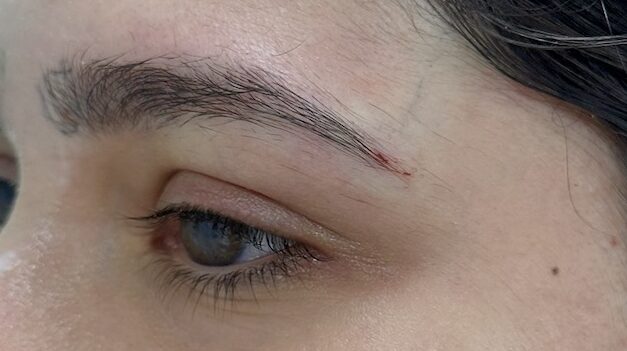
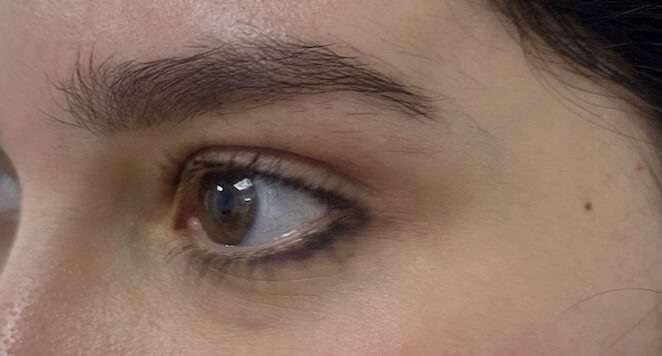
I do treat the lateral brow with threads, and it is one of the few areas where the change is immediately obvious.
The vector is short, strongly superolateral, and anchored in the temporal region. Symmetry tolerance here is smaller than anywhere else on the face — a two-millimetre difference between the sides is visible in every photograph the patient will ever take, so this is planned upright and marked before anaesthetic.
Longevity is shorter here and I want that said plainly. Expect roughly six months to a year, against the roughly two-year interval most of my lower-face patients keep. The tissue is thinner, the region is under constant muscular load from the orbicularis and the brow depressors, and the fixation has less to hold. That is a real trade-off to weigh against the price, not a detail to discover afterwards.
Where brow position is driven by depressor activity rather than descent, botulinum toxin gives a smaller change more cheaply and is worth trying first.
→ Link: Under-Eye & Eye Rejuvenation

When I Would Not Recommend Threads
Section intro: This section exists because it is the most useful thing on the page.
I don’t recommend threads simply because somebody wants a “non-surgical facelift.”
If the face is heavy because of subcutaneous fat, if the main problem is volume loss, if there is significant skin excess, or if previous filler has altered the anatomy, another treatment — or surgery — may make considerably more sense.
In practice, I decline or redirect when:
- Heaviness is fat, not descent. Reduce the load first and reassess. Sometimes nothing needs lifting afterwards. → Endolaser & Laser Lipolysis
- The dominant problem is volume loss. Structure has to be restored before repositioning means anything. → Cheek & Midface · Renuva
- There is real skin redundancy. Threads gather; they do not excise. This is a surgical conversation and I will have it honestly.
- Previous filler has changed the anatomy. Assess and, where indicated, address that first. → Filler Complication Management
- The tissue will not hold a thread — thin, atrophic, heavily photodamaged. See §5.
- Expectations are set at a surgical result. No technical decision fixes this, and proceeding anyway produces a disappointed patient and a treatment that was never capable of satisfying them.
On surgery. Where a facelift is the right operation, saying so is not a loss of a patient — it is the correct clinical answer, and I would rather refer you than take payment for a procedure that cannot do what you came for. Threads are not an inferior facelift. They are a different intervention with a different indication, and knowing which one you are looking at is the point of the assessment.
What to Expect: The Day, and the Following Three Months
Planning. Vectors marked upright, before anaesthetic. Photographs at standardised angles. Anaesthetic. Local infiltration and entry-point anaesthesia. Most patients describe pressure and traction rather than pain. It is not a lunchtime treatment and I do not describe it as one. Placement. Threads passed along the planned vectors through small entry points, engaged, tensioned and fixed. Immediately after. Tightness, an over-corrected appearance in some areas, visible entry points, and often some puckering along the vectors.
The immediate pull is not the result. This is the single most misread thing about the procedure. What you see in the mirror on the day is suspension plus tissue oedema plus acute traction — all three of which change. Over the first two to three weeks the tissue settles onto the threads, the acute tightness releases, and the appearance relaxes toward the true mechanical position. Patients who were not warned about this interpret week two as failure.
Stage | What is actually happening |
Day 0 | Suspension + swelling + acute traction. Over-tight, sometimes puckered. Not the result |
Weeks 1–3 | Oedema resolves, tissue settles onto the threads, acute traction releases. Appearance relaxes |
Weeks 6–12 | Collagen response develops along each thread track. Contour firms; tissue quality improves |
Ongoing | Lower face: most patients return at around two years. Lateral brow: six months to a year |
Assess the result at three months. Anything judged before that is being judged against swelling.
The first two weeks matter mechanically, not decoratively:
• Sleep supine, head elevated
• No facial massage, facials, or treatments involving pressure on the face
• Avoid wide mouth opening — including dental appointments; schedule them outside this window
• Minimise exaggerated expression
• No strenuous exercise for 7–10 days
• No sauna, steam or significant heat
• Do not palpate or test the lift with your hands
Threads are engaging tissue during this period. This is when they displace.
Combining Threads With Other Treatments
Combination is common in my practice and it is also the easiest thing in aesthetics to do badly.
I combine treatments when I can identify two different problems — not because combining more treatments automatically produces a better result.
Threads + structural filler. Two findings: descent and deficient support. Repositioning restores where tissue sits; structural filler restores what it is sitting on. Order matters — where skeletal or deep support is markedly deficient, restoring structure first changes the vector you would have planned.
Threads + endolaser. Two findings: descent and fullness or laxity. This is the combination I use most in the lower face. Reduce the load and tighten from the deep surface, then reposition what remains once the tissue has settled — the endolaser result continues developing for around three months, and I want to plan vectors against a shape I can see rather than one I am predicting.
And the counter-case. Where I can only identify one problem, I treat one problem. A combined plan for a single finding is a bigger invoice, not a better result, and it removes the ability to know which treatment did what.
→ Links: Face & Jawline · Cheek & Midface · Renuva · Endolaser & Laser Lipolysis · Filler Complication Managemen
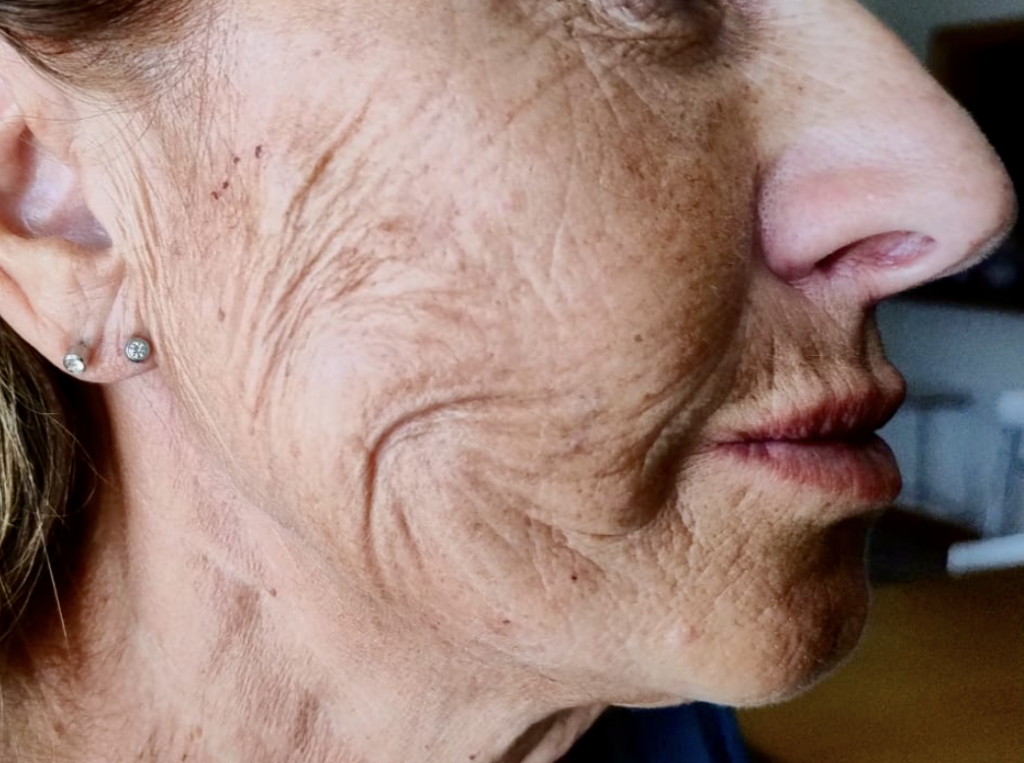
— Managing Thread Complications
Dimpling and puckering — the commonest thing, and usually the easiest. Small dimples or puckers along the vector or at an entry point are common in the first days. Most settle on their own as the acute traction releases, and the right thing to do in that first week is generally nothing.
If a dimple is still there at about a week, it is being held by tethering between the skin and the thread, and waiting longer does not reliably resolve it. At that point I release it — subcising the tether so the skin sits flat again. It is a small procedure, done in clinic, and it does not usually mean losing the lift.
So: give it the first week. If it has not gone by then, come and let me release it rather than living with it or hoping.
When it is more than dimpling: assess with ultrasound. Where there is swelling, redness, tenderness or a lump — rather than a simple surface pucker — the first job is to establish what it actually is. High-frequency ultrasound shows whether there is a collection, where the thread material sits, and whether what you are feeling is fluid, inflammatory tissue, or the thread itself. Those are different problems with different management, and they cannot reliably be told apart by examination alone.
Infection without a collection. Where there is infection but no abscess, the treatment is appropriate antibiotics with close monitoring and review — not immediate intervention. Many settle on antibiotics alone, and the reassessment interval matters more than the first prescription.
Abscess. The general surgical principle applies: where there is an abscess around a foreign material, the material has to come out. Antibiotics alone will not reliably resolve a collection that is sitting around a retained implant, and continuing to treat medically while the thread stays in place tends to prolong the problem rather than solve it. So an abscess around a thread means drainage and removal of the thread.
How threads are removed. Usually through an entry point, which is why placement and entry-point planning matter beyond the day of treatment.
Two honest caveats:
- Timing changes the difficulty. Threads are most straightforwardly removed in the early period — in the first couple of weeks, before the tissue has grown into and around them. Later, as fibrosis develops along the thread track, removal becomes harder and may be partial rather than complete.
- Where there has been significant inflammation, scarring is possible — from the inflammatory process itself as much as from the removal. That is a real outcome and I would rather name it than discover it with you afterwards.
If your threads have not settled the way you wanted at two weeks, get them looked at. Not in six months. Not after another clinic has placed more threads over the top. At two weeks the acute swelling and traction have resolved (§11), so what you are looking at is real — and it is also the window in which a thread is most easily adjusted or removed if it needs to be.
And I mean looked at by someone, not necessarily by me. If you were treated elsewhere and you are not being heard, get a second opinion. If you were treated by me, come back and tell me — a patient who waits quietly because they do not want to make a fuss is the one who ends up with the harder problem, and I would far rather see you for something that turns out to be nothing.
A closing honesty. Threads are placed into living tissue, and tissue responds on its own terms. I plan the vector, choose the thread, control the depth and the tension — and then I am asking your body to do something. Most of the time it agrees. Occasionally it does not, and when that happens the job is to recognise it early and act, rather than to insist the plan was right.
If you were treated somewhere else. I see patients with thread problems who were treated by other practitioners. Bring whatever records you have — what was used, how many, when. If you do not know, that is common and it is not a reason to stay away; the scan tells us a good deal of it.
What I am offering, and what I am not. An assessment, an ultrasound where it is needed, a plain explanation of what I can see, and the options — including the option of doing nothing, which is sometimes right. What I cannot offer is a guarantee that I will be able to fix it. Some thread problems are outside what I can help with, some need a surgeon, and some are better left to settle than intervened on. If yours is one of those I will tell you at the assessment and, where I can, tell you who to see instead.
Being seen is not the same as being treated, and I would rather you came in knowing that.
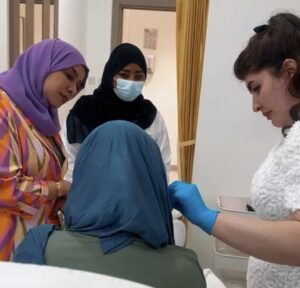
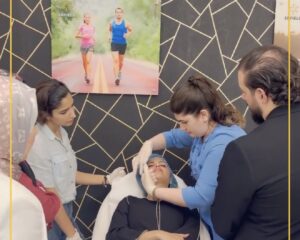
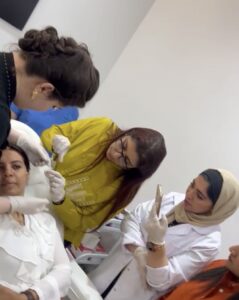
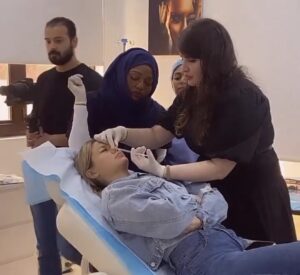
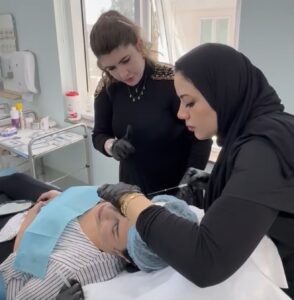
I have trained physicians in thread-lifting techniques for several years. Teaching threads changes the way you look at them clinically: you have to understand not only how to place a thread, but why a vector works, why another one fails, and how to recognize when a patient should not be threaded at all.
We’ve Got You Covered!
Curious? Start Here
No. A facelift is an operation that releases, repositions and excises tissue. A thread lift suspends selected soft tissue through small entry points using an absorbable material. Threads can reposition tissue and improve contour in the right patient; they cannot remove significant excess skin or reproduce a surgical result. “Non-surgical facelift” is a marketing phrase rather than a clinical description, and treating it as a promise is how patients end up disappointed by a technically competent procedure.
By identifying what is actually causing the change you are seeing. Descent of soft tissue is the thread indication. Heaviness from fat, loss of volume, genuine skin excess, and distortion from previous filler are four different problems, and threads are the wrong answer to all of them — sometimes the wrong answer before another treatment, sometimes instead of one. That is what the assessment establishes, and it is the reason I decline a meaningful number of thread requests.
Because the direction tissue is moved decides the shape of the result. A thread does not simply pull upward — facial tissue descends downward and medially, so a vertical vector compresses tissue rather than repositioning it, flattening the natural curve of the cheek and widening the midface. The right vector follows the anatomy and the pattern of descent in your face. Adding more threads along a poorly chosen vector produces more of the wrong movement.
Whichever the plan requires. Smooth (mono) threads for tissue quality — they do not lift, and anyone selling them as a lift is misrepresenting them. Barbed and cogged PDO threads for suspension. Sillhuette Soft or Double-arm configurations where the load needs distributing along the vector rather than concentrating at one point, which is my usual choice for genuine lift. Cone-based poly-L-lactic acid threads for particular vectors. Thread selection is the last decision in the plan, not the first.
For the lower face, most of my patients return at around two years. For the lateral brow it is shorter — six months to a year — because the tissue is thinner and under constant muscular load. The thread material itself absorbs well before either interval; what persists is the collagen laid down along the thread track, which is why duration is really a question about tissue response rather than about the thread
Different problems. Filler restores volume and structural support where they have been lost. Threads reposition tissue that has descended. Filling a descent problem adds weight to tissue that is already falling; threading a volume problem tightens an envelope that is empty. Where both findings are present I may use both, in a deliberate order — but I combine treatments when I can identify two problems, not because combining is automatically better.
It depends entirely on why it is heavy. If the heaviness is descended tissue, yes. If it is subcutaneous fat, threads are being asked to suspend a load they were not designed for — the mechanical result relaxes early and the contour can distort along the loaded vector. In that case reducing the fullness first and reassessing afterwards is the better sequence, and frequently much less needs lifting than it appeared.
Yes, hair fall treatments are designed to be effective for all hair types. During a consultation,Dr Shiva will tailor the treatment plan to suit your specific needs and goals and do furthur assessments to rule out secondary causes of hair fall.
Expect bruising, sometimes marked, swelling, tenderness along the thread lines and a tight or pulling sensation, more noticeable on movement. For two weeks: sleep on your back with your head elevated, no facial massage or facials, avoid wide mouth opening including dental appointments, no strenuous exercise for the first week to ten days, no sauna or steam, and do not test the lift with your hands. Those restrictions are mechanical, not decorative — that fortnight is when threads displace
Because what you are seeing on the day is suspension plus swelling plus acute traction, and all three change. Over the first two to three weeks the swelling resolves and the tissue settles onto the threads, so the appearance relaxes toward its true position. From six to twelve weeks the collagen response develops along each thread. Judge the result at three months; anything assessed before that is being assessed against oedema.
Usually, and the first week is the one to be patient through. Small dimples and puckers along the vector or at an entry point are common early and most settle on their own as the acute traction releases. If a dimple is still there at around a week, it is being held by tethering between the skin and the thread, and waiting longer tends not to resolve it — at that point I release the tether in clinic, which is a small procedure and does not usually cost you the lift. So give it the first week, then come and be seen rather than living with it.
Usually yes, and timing matters. In the first couple of weeks a thread can generally be removed through an entry point, before the tissue has grown around it. Later, as fibrosis develops along the thread track, removal becomes more difficult and may be partial. Where there has been significant inflammation, scarring is possible — from the inflammation itself as much as from the removal. This is one of the reasons I ask you to tell me at two weeks if something is not right, rather than waiting.
It depends on whether there is a collection. I assess with high-frequency ultrasound, because infection without an abscess and infection around an abscess are managed differently and cannot be told apart reliably by examination. Infection without a collection is treated with appropriate antibiotics and close review. Where there is an abscess around a thread, the general principle is that the foreign material has to come out — antibiotics alone will not reliably resolve a collection sitting around a retained implant.
Usually yes, and timing matters. In the first couple of weeks a thread can generally be removed through an entry point, before the tissue has grown around it. Later, as fibrosis develops along the thread track, removal becomes more difficult and may be partial. Where there has been significant inflammation, scarring is possible — from the inflammation itself as much as from the removal. This is one of the reasons I ask you to tell me at two weeks if something is not right, rather than waiting.
Yes, for an assessment. I see patients with thread problems who were treated by other practitioners, and establishing what is actually in the tissue is a large part of it. Bring any records you have — thread type, number, date; if you do not have them, that is common and not a reason to avoid finding out. What I can promise is an honest assessment and your options, not that I will be able to fix it — some problems need a surgeon and some are better left to settle. And I will not place new threads on top of an unassessed problem.
Yes. Where there is genuine skin excess or descent beyond what suspension can address, a facelift is the correct operation and threads are not a cheaper version of it.

Dr Shiva Faramarzi Babadi, MD
Aesthetic & Longevity Physician · DHA licence 43705219
Apogée Clinic, Address Beach Resort, JBR, Dubai
WhatsApp or call: +971 52 328 6185
Last medically reviewed: August 2026
This page is general medical education and does not replace individual assessment. Treatment suitability, expected outcomes and regulatory status vary by patient and by therapy.