
Hair Treatment
DIAGNOSE · TEST · TREAT · MAINTAIN
Hair Loss Treatment in Dubai
First we find out why. Then we treat it.
Hair loss is not one condition. Shedding that started three months after an illness, a hairline that has been retreating since your twenties, a smooth round patch that appeared in a fortnight, and a part line that has quietly widened over five years are four different diagnoses with four different treatments — and injecting all four of them with the same thing is why so many people spend a year on hair treatments and finish where they started.
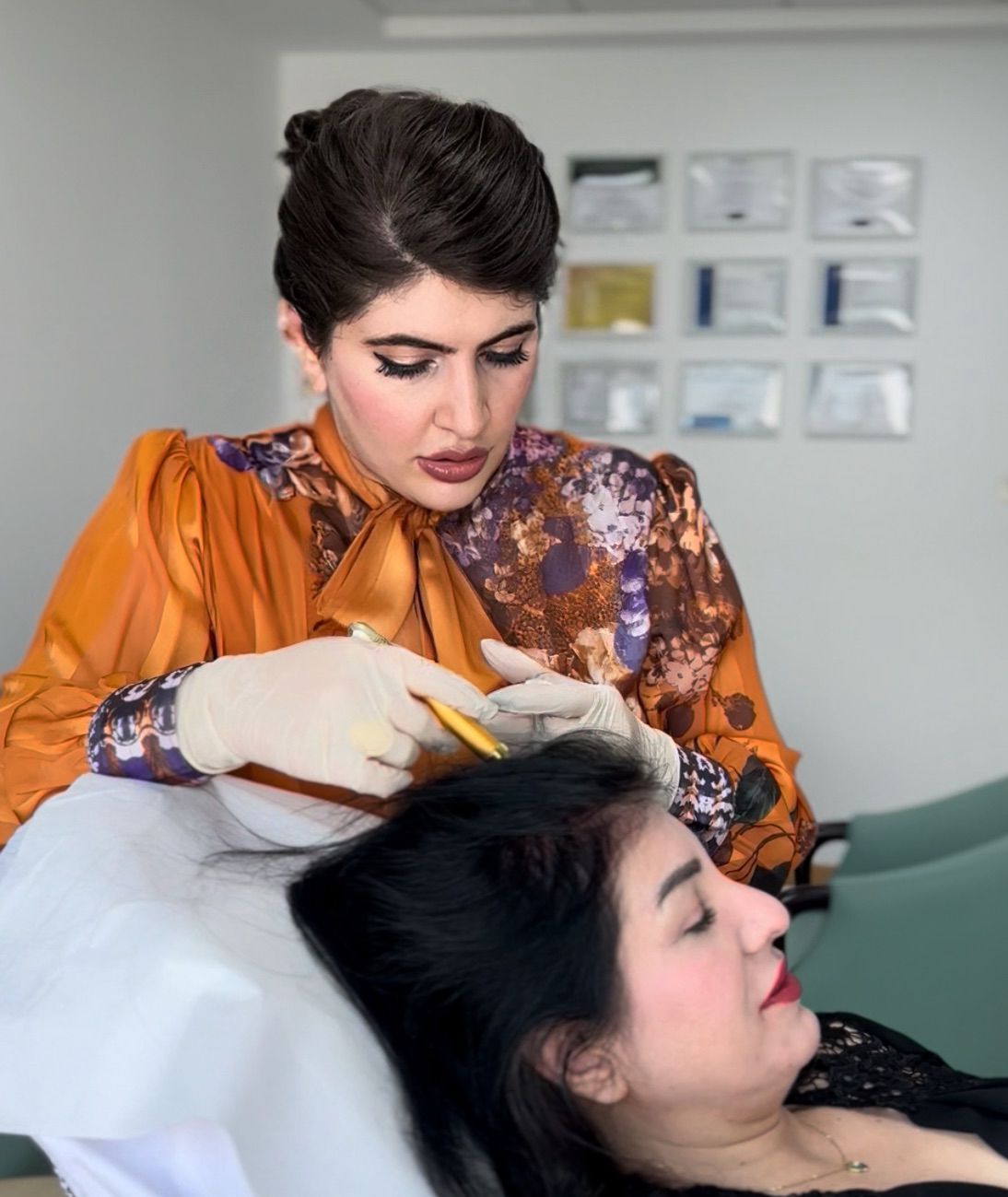
So the first appointment is an assessment, not a treatment. I look at the scalp, at the pattern, and at what your hair was doing before it started doing this — and in most recent cases I want blood tests before I treat anything, because a proportion of the hair loss walking into aesthetic clinics in this city is a thyroid or an iron problem wearing a cosmetic disguise.
Then we treat it, with a plan that has a number of sessions and a date at which we judge it.

· What I treat, and what each one actually is
Androgenetic alopecia — pattern hair loss
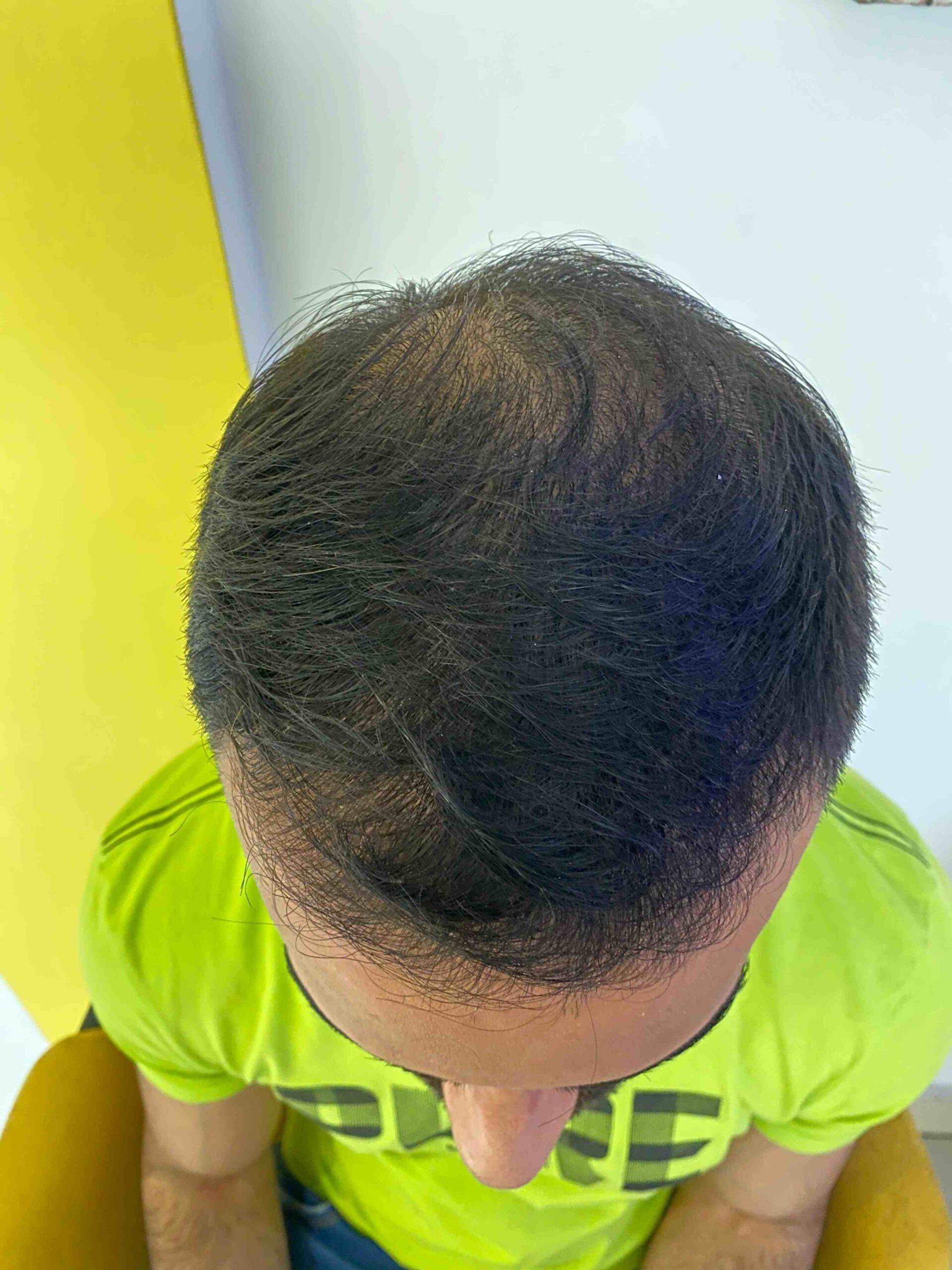
The common one, in both sexes. Follicles that are genetically sensitive to a hormone derived from testosterone produce shorter, finer, lighter hairs each cycle until they stop producing a visible hair at all. It is progressive: the hair you have today is the most hair you will have without treatment. In men it shows at the temples and crown; in women it is usually a widening part with the front hairline preserved. It responds best early, while the follicle is small rather than gone — which is the argument for starting while you are still being told you are imagining it.
Men: see Men’s Hair Loss Treatment in Dubai. Women: see Hair Fall & Thinning in Women.
Telogen effluvium — shedding after a trigger
A large proportion of the follicles on your head are pushed out of their growing phase at once, and roughly two to three months later they shed together. The trigger is usually identifiable: illness or high fever, surgery or general anaesthetic, childbirth, rapid weight loss, severe stress, iron deficiency, thyroid disease, or starting or stopping certain medications. It is frightening, because the volume lost is dramatic and fast. It is also usually self-limiting once the cause is dealt with. The clinical job is to identify the trigger, correct what is correctable, and establish whether there is a pattern loss underneath that the shed has simply made visible — which there often is.
Alopecia areata
An autoimmune condition in which the immune system attacks the hair follicle, producing smooth, well-defined round or oval patches of complete loss, usually appearing over a few weeks. It can affect the scalp, the beard, the eyebrows or the lashes. It is not caused by stress, although stress is what usually gets blamed.
I treat alopecia areata, and it is worth saying plainly, because most aesthetic clinics in Dubai will not touch it and most patients are sent in a circle before anyone examines them properly. The follicle is not destroyed in this condition, which is why regrowth is possible — but the course is unpredictable, the right treatment depends on how much scalp is involved and how fast it is moving, and it is not a condition to treat with a general course of growth injections. It needs a diagnosis first, then a treatment chosen for the extent and the activity of the disease, then review. Where the disease is extensive, rapidly progressive or long-standing, that treatment plan is made alongside dermatology rather than instead of it.
Traction alopecia
Loss caused by sustained pull on the follicle: tight ponytails, buns and braids, extensions, weaves, and pins holding a headscarf in the same position every day. It shows at the hairline and temples, or wherever the tension sits. Caught early it is reversible. Left for years it becomes permanent, because sustained traction eventually scars the follicle. It is common here and under-diagnosed, largely because nobody wants to be told the answer is to change how they wear their hair.
Scarring alopecias — and why they are the reason to be examined
A group of inflammatory conditions in which the follicle is destroyed and replaced with scar tissue. The front hairline variety is increasingly common in women and is routinely mistaken for an ordinary receding hairline — including by clinics. It matters more than anything else on this list for one reason: growth-stimulating treatment is the wrong treatment for it. These conditions need the inflammation controlled, and they need it early, because everything lost is lost permanently. If your scalp is itching, burning, tender or visibly red where the hair is going, say so at the assessment
Hair loss is a diagnosis before it is a treatment
Almost every hair page in Dubai opens with a list of treatments. That is the wrong end of the problem, and it is why patients arrive here having already paid for three courses of something. Four questions decide what you actually need, and none of them can be answered from a price list.
01
Is it shedding, or is it thinning?
These feel the same to the patient and they are opposite problems. Shedding is hair leaving the head faster than normal — you see it in the shower, on the pillow, in the brush, and the volume drops quickly. Thinning is hair getting finer where it stands: the same number of hairs, progressively smaller, over years. Shedding usually has a trigger you can find and often a cause you can correct. Thinning is a follicular process that has to be treated continuously. A great many patients have both at once, which is why the shedding gets treated and the thinning underneath it does not.
02
What is the pattern?
Diffuse across the whole scalp, concentrated at the crown and temples, widening along the part, in discrete round patches, or along the front hairline where it is pulled. The pattern is most of the diagnosis, and it is visible in thirty seconds to someone who is looking for it.
03
How long, and what happened three months before it started?
The hair cycle runs on a delay. A shed that begins today is usually reporting on something that happened eight to twelve weeks ago — an illness, a fever, surgery, a general anaesthetic, childbirth, a crash diet, a bereavement, a new medication. Patients almost never connect the two, because by the time the hair falls the event has been forgotten.
04
Is the follicle still there?
This is the question that determines whether anything can grow. A miniaturised follicle is alive and can be pushed back towards producing a normal hair. A follicle that has been scarred over is gone, and no injection, drip or laser recovers it. Telling these two apart before selling someone a course of treatment is the whole job.
05
The tests I run before I treat
If your hair has started falling recently, or the shed does not fit a clear pattern, I will usually want blood tests before we plan anything. Not because it sounds thorough, but because several of the commonest causes of hair loss here are correctable, and treating a scalp while the cause is still running is money spent holding a door closed against a draught.
Iron stores. The most common finding and the one most often missed, because a standard blood count can be entirely normal while iron stores are depleted. Hair is metabolically expensive and it is one of the first things the body stops funding. Common in menstruating women, in vegetarians, after pregnancy and after bariatric surgery.
Thyroid function. Both an underactive and an overactive thyroid cause hair loss, and both produce a diffuse thinning that looks nothing like a pattern. Thyroid disease is common, frequently undiagnosed, and treatable by someone other than me — which is exactly why it is worth finding.
Androgens, in women. Where there is thinning along the part with acne, irregular cycles, or unwanted facial and body hair, the androgen picture matters and can point towards polycystic ovary syndrome. That changes the treatment plan substantially, and it is a finding worth having regardless of your hair.
Vitamin D and nutritional markers, where the history suggests it.
If something abnormal comes back, correcting it is part of the plan and sometimes the whole of it. I am not going to sell you a six-session package to treat an iron deficiency. Where a result needs specialist management, you are referred, and we treat the hair alongside rather than instead.
What I actually use
Each of these is a different tool for a different situation, and most plans use more than one. I combine treatments when I can identify two different problems — not because combining more treatments automatically produces a better result.
01 · Exosome therapy — fresh and lyophilised
Exosomes are the packets cells use to send instructions to each other: signalling molecules and growth factors packaged inside a membrane. Delivered into the scalp, the intention is to signal the follicle and the tissue around it towards a growth phase and away from the shortening cycles of pattern loss. This is my usual first-line regenerative treatment for hair, and most hair plans in this clinic are built around it.
I work with two forms, and the difference is worth understanding because clinics rarely tell you which one you are getting:
Fresh exosomes are supplied in suspension and used as supplied, cold-chain handled from the laboratory to the scalp. They are the more involved option logistically — they have to be scheduled around delivery — and I use them where I want the strongest signalling input, typically in longer-standing loss or alongside a stem cell procedure.
Lyophilised exosomes are freeze-dried to a powder and reconstituted in the clinic immediately before the treatment. Freeze-drying is a standard pharmaceutical method of stabilising a biological product: it makes the material stable in storage and consistent between vials, so the dose is known and reproducible, and it is the practical choice for a course of four or more sessions spaced across the hair cycle.
Which one you have is decided at the consultation on the diagnosis and the plan — not on what happens to be in the fridge.
02 · Dermapen microneedling — the delivery route
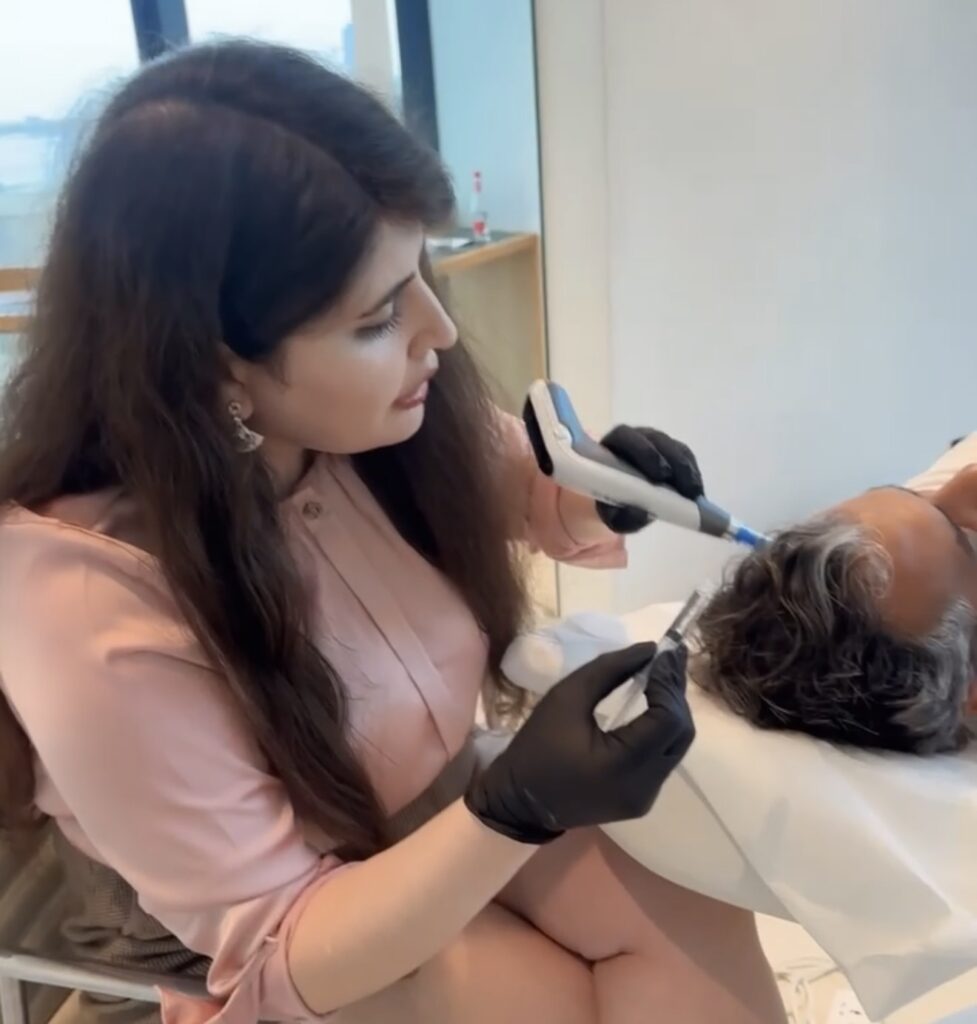
Exosomes and mesotherapy solutions are usually delivered into the scalp with a Dermapen rather than by needle injection alone. Two things happen in the same pass: the micro-channels take the product into the scalp evenly and at the depth it is wanted, and the controlled micro-injury itself triggers a wound-healing response that recruits growth signalling to the follicle. It is a delivery route and a treatment at once, and it is more comfortable and more even across a whole scalp than injecting the same volume point by point.
03 · Mesotherapy cocktails
Small-volume delivery of solutions built for the scalp — nutrients, amino acids and cofactors the follicle needs to build a hair shaft — put directly where they are wanted rather than swallowed and distributed around the body. Used in courses, usually alongside one of the above rather than on their own. Which cocktail is chosen follows the diagnosis: a shedding scalp being supported through a telogen effluvium and a miniaturising scalp in pattern loss are not given the same solution.
04 · Anti-androgen scalp mesotherapy
For androgenetic pattern hair loss — particularly thinning through the crown and mid-scalp — one of the most important steps is treating the androgen pathway itself, rather than only adding growth-supporting treatments around it.
Dihydrotestosterone (DHT), produced from testosterone by the enzyme 5-alpha-reductase, is a key driver of follicular miniaturisation in genetically susceptible hair. Dutasteride blocks this pathway by inhibiting 5-alpha-reductase, thereby reducing DHT signalling at the follicle. Dutasteride has established efficacy in androgenetic alopecia, and intradermal/mesotherapy approaches have also shown improvement in clinical studies.
In suitable patients, I incorporate a dutasteride-based scalp treatment into the plan alongside regenerative treatment, particularly when the pattern of loss is clearly androgen-driven.
It is a prescription medicine and it is used by this route off-label. It is not appropriate for everyone — in particular it cannot be used in women who could become pregnant. Whether it belongs in your plan is a consultation conversation with a proper consent discussion, not a menu item.
05 · Hair filler — peptide-based
Hair filler is not the same thing as the fillers used on the face. The product I use is DR.CYJ Hair Filler, a peptide and hyaluronic acid injectable developed specifically for the scalp and CE-marked as a class III medical device.
Two components doing two different jobs. The hyaluronic acid holds water in the tissue around the follicle and improves the environment it is growing in. The peptide complex is the active part — short biomimetic sequences designed to mimic the signalling the follicle uses to hold a longer growing phase, formulated to release gradually rather than all at once. That slow release is why it is given as a short course rather than a single treatment.
It is injected into the scalp rather than delivered by Dermapen, with topical anaesthetic first and a very fine needle, and it is given as a course of four sessions roughly two weeks apart, then reviewed.
Where it fits. It works on the follicle and the tissue around it, not on the hormonal mechanism of pattern loss — so it is part of a plan rather than a treatment for pattern loss on its own. I use it alongside exosome treatment, and in patients whose scalp needs supporting while another part of the plan does the work.
06 · Stem cell therapy — donor cells, or your own
The most involved option on this page, and the only one that is not a course.
For selected patients I use stem cell therapy for hair rather than a course of injections. The material can be fresh donor-derived cells, or it can be harvested from your own tissue — your own stem cells and your own exosomes, taken, processed and returned to your scalp, so that nothing foreign is introduced at any point. For some patients that is the deciding factor.
Two things make it different from everything else here. It is generally a single procedure, not a course — every other treatment on this page has to be repeated before it does anything. And it is a different order of intervention, in preparation, in cost and in what is involved on the day. It is not the right starting point for most people: where the loss is early and the follicles are healthy, a course of exosome treatment is the proportionate answer.
How stem cell therapy works, in full: Stem Cell Therapy in Dubai.
If you are worried about pain
This is the question I am asked most often before a first hair appointment, and the honest answer is that most hair treatment here is more comfortable than people expect — because most of it is not injected.
The Dermapen is the reason. Nearly everything on the list above — exosomes, mesotherapy cocktails, the anti-androgen solution — is delivered through the Dermapen rather than by needle injection point by point. Topical anaesthetic goes on first and is left to work, and most patients describe the treatment itself as vibration and light scratching across the scalp rather than pain. It is also a genuinely effective route, not a gentler compromise: the micro-channels distribute the product evenly at the depth it is wanted, and the micro-injury itself recruits healing signals to the follicle. For the great majority of patients it gives a very good result without a single injection.
Hair filler is the exception among the injected treatments, and a mild one: topical anaesthetic first, a very fine needle, and a few small deposits across the area being treated rather than one painful point.
Where an injection is genuinely necessary
— a stem cell procedure, or a case where the material has to be placed rather than distributed — I use a scalp nerve block. The nerves that supply the scalp are blocked with local anaesthetic first, so the area is numb for the procedure itself. It is the same principle used for scalp surgery, and it is the reason a procedure that sounds daunting is usually reported afterwards as uneventful.
If you know your pain tolerance is low, say so at the consultation. It changes the plan in practical ways — how long the topical anaesthetic is left on, whether a nerve block is used, how a session is paced and how much is done in one visit. It does not have to change what treatment you have, and it is not a reason to avoid treating your hair.
Afterwards the scalp can feel tender or slightly tight for a day, and there may be pinpoint redness for a few hours. There is no dressing, and you can wash your hair the following day.
Low pain threshold? Tell me at the consultation — it changes how the session is planned, not whether you can have it.WhatsApp +971 52 328 6185 · Book a hair assessment at Apogee Clinic, Address Beach Resort, JBR Dubai |
Where I stand on PRP
PRP — platelet-rich plasma — is the default hair treatment in Dubai. Blood is drawn, spun, and the platelet fraction injected into the scalp, on the reasoning that platelets release growth factors that stimulate the follicle.
I offer it selectively, and it is not my first choice for most patients. Here is the reasoning, so you can judge it rather than take it.
PRP is only as good as the blood it came from. Everything active in it is produced by you. In a younger patient with early miniaturisation, good platelet quality and follicles that are still substantially intact, that can be enough — and it is a reasonable, entirely autologous option. In an older patient, or one with long-standing loss, you are asking a weaker input to do a harder job.
The dose is not standardised. Platelet concentration varies between patients, between two blood draws in the same patient, and between preparation systems and protocols. Two clinics both offering “PRP” can be delivering substantially different treatments. I would rather deliver a defined, consistent dose of signalling molecules that does not depend on how good your platelets happen to be on the day — which is what exosome treatment is, and it is why it has largely replaced PRP in my hair practice.
So who does get PRP here? Patients who are early in the process, typically under thirty, with recent or mild loss and follicles that are still there — where their own biology is a strength rather than the limiting factor — and patients who specifically want a treatment using nothing but their own blood. Both are legitimate reasons and I am happy to do it.
What I will not do is sell PRP as the answer to advanced pattern loss because it is the treatment people have heard of.
What I will not tell you
I will not tell you that every head of hair responds. Some do very well, some do modestly, and a proportion do not respond meaningfully at all — and that is true of every treatment on this page and every clinic offering them. What I can do is choose the treatment that fits the diagnosis, give it long enough to declare itself, and tell you honestly at the review whether it is working.
I will not tell you that hair grows back where the follicle is gone. Nothing put into a scarred scalp brings hair back. Where the loss is advanced, the honest conversation is about holding what is there, and about surgery if you want density restored.
I will not tell you this is permanent. Pattern hair loss is a continuous process. Treatment slows it, improves what is there and holds ground; it does not switch the mechanism off. If you stop, the process you were treating resumes.
And I will not sell you a package before I know what is wrong.
Why hair is the one thing I sell in packages
Almost nothing else in this clinic is sold as a package. Hair is, and the reason is not commercial — it is that one session of anything is not a treatment for hair loss, and pricing it as though it were would be selling you something that cannot work.
Hair grows on a cycle measured in months. A single treatment lands in the middle of that cycle and does not have time to change what the follicle does next. Every regenerative and mesotherapy protocol here is therefore planned as a minimum of four sessions, spaced across the cycle and judged as a course. The one exception is stem cell therapy, which is generally a single procedure.
- A course, from the start. Four sessions minimum, and a plan that states how many and how far apart before you pay for any of it.
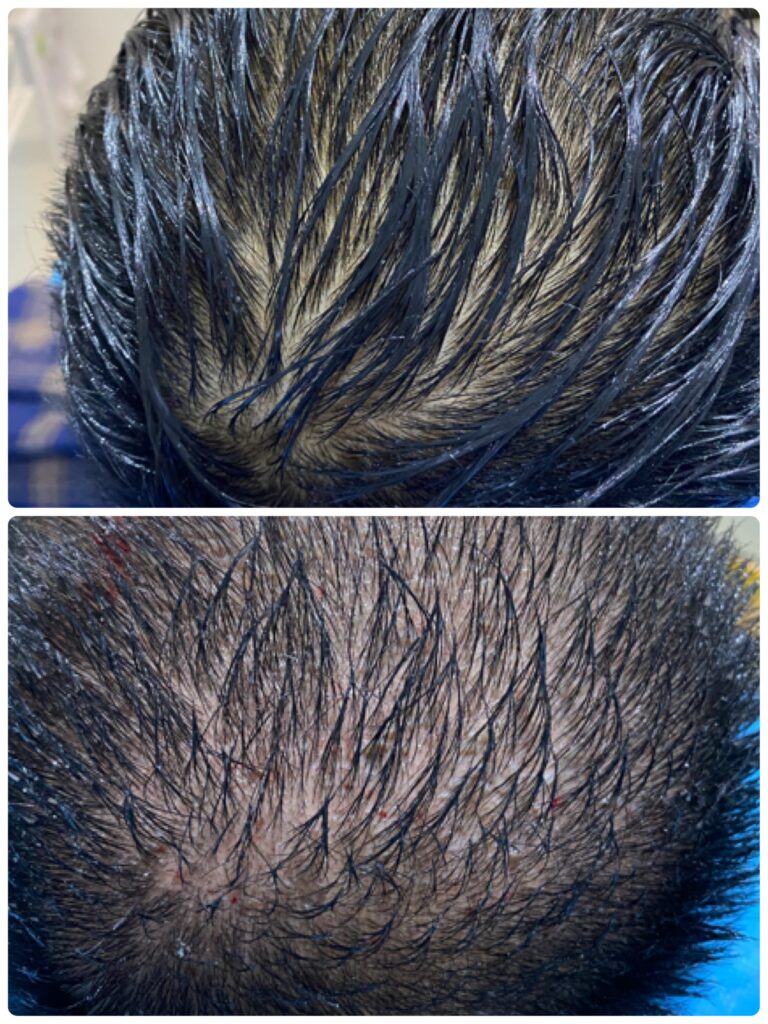
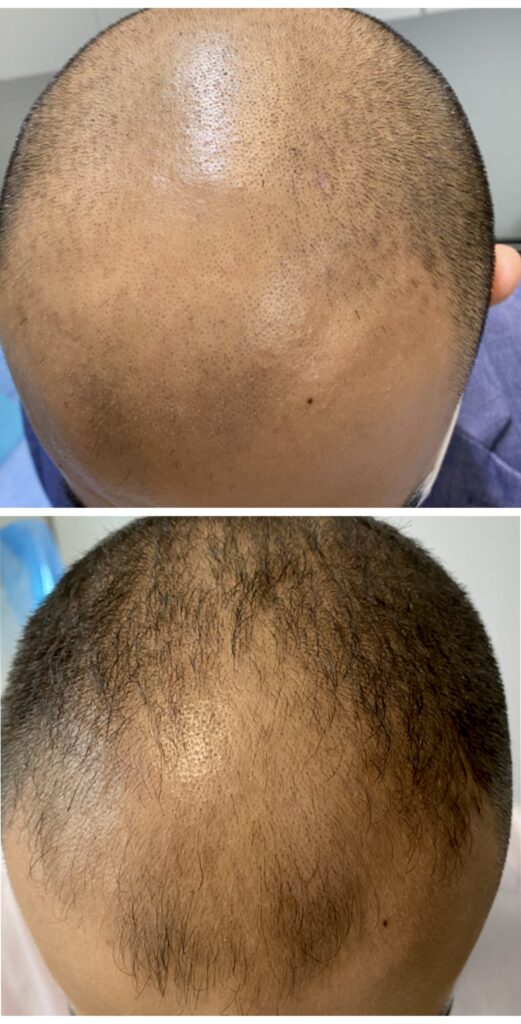
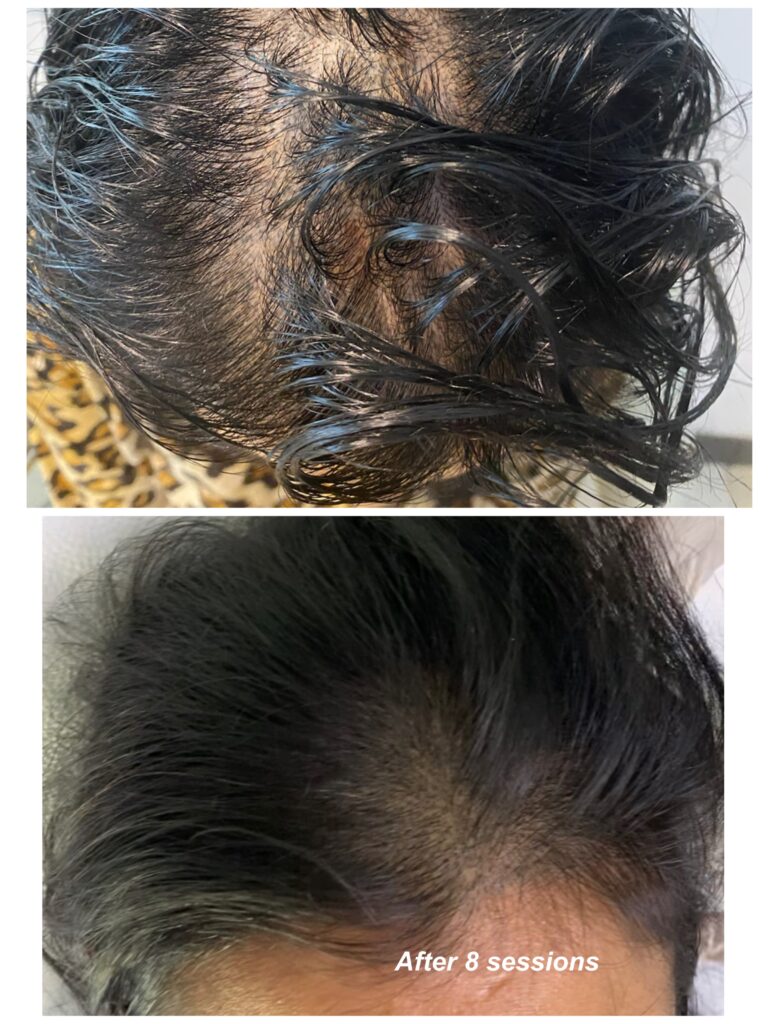
- A review date, set in advance. Standardised photographs at the start and at the review, taken the same way so the comparison means something.
- A maintenance conversation at the end, not a renewal you find out about later. In pattern loss, holding a result means continuing at a lower frequency, and you should know that going in.
Patience is a clinical requirement here, not a sales line. If you want to see a difference in three weeks, hair is the wrong treatment to have chosen. If you are willing to give it six months, it is one of the most rewarding.
When you will actually see something
Stage | What is happening | When |
First few weeks | Nothing visible. Some patients shed slightly more, not less — new growth pushing out hairs that were already finished. Expected, and not a sign of failure. | Weeks 0–6 |
Shedding settles | The first genuine sign that anything is working, and the one patients notice in the shower before they see it in the mirror. | 6–12 weeks |
Visible density | New hairs are short and fine at first and take months to reach a length where they contribute to how the hair looks. | 3–6 months |
Judgement point | Standardised photographs side by side, and an honest decision about whether to continue, change or stop. | 6 months |
Maintenance | Reduced frequency, indefinitely, in pattern loss. | From 6 months |
Nobody can assess hair treatment at six weeks, because nothing has had time to happen. The mirror is also the worst instrument available for this — you look at your hair every day and you will not see a gradual change in it. The photographs will.
When the answer is not injections
When the cause is medical, we treat the cause. An iron deficiency, a thyroid problem, a nutritional cause or a medication effect is not treated with a course of scalp injections. It is corrected, and the hair recovers alongside — often with no injections at all.
When the follicles are gone. Beyond a certain point, pattern loss has emptied an area rather than thinned it, and there is nothing left to stimulate. No injectable treatment restores density there. The honest options are transplantation, which moves follicles from where they are permanent to where they are not, or accepting the pattern and treating the areas that are still holding so that what remains is protected. Both are reasonable, and I will tell you which situation you are in.
When you need medical therapy as well. Pattern hair loss has licensed medical treatments, and for some patients a plan that ignores them is not a complete plan. Where that is the case it is discussed at the consultation.
An assessment that ends in “you do not need this” is a successful assessment. WhatsApp +971 52 328 6185 · Book a hair assessment at Apogee Clinic, Address Beach Resort, JBR Dubai |



Testimonials






























FAQs
That is the question the first appointment exists to answer, and there are only a handful of common answers: pattern hair loss, which is genetic and progressive; a shed triggered by an illness, an operation, childbirth, rapid weight loss or severe stress two to three months earlier; a correctable medical cause such as low iron stores or a thyroid problem; an autoimmune condition such as alopecia areata; or physical pull from how the hair is worn. They look different on the scalp and they need different treatments, which is why I examine and usually test before I treat.
Almost certainly. The hair cycle runs on a delay, so a shed usually reports on something that happened eight to twelve weeks earlier — a fever, surgery, an anaesthetic, childbirth, a crash diet or a period of severe stress. It is dramatic and it frightens people, and it is usually self-limiting once the trigger is dealt with. What is worth checking is whether a pattern loss underneath has been made visible by the shed, which is common.
Yes, selectively — and it is not my first choice for most patients. PRP is made from your own blood, so everything active in it is limited by your own biology, and the concentration is not standardised between patients or between preparation methods. I use it mainly in younger patients, typically under thirty, with early loss and follicles that are still largely intact, and in patients who specifically want a treatment using nothing but their own tissue. For most other patients I would rather use a treatment where the dose is defined and consistent.
Exosomes are the packets cells use to send signals to one another, carrying growth factors and other signalling molecules. Delivered into the scalp — usually with a Dermapen, which distributes them evenly and adds a healing response of its own — they are intended to push the follicle towards a growth phase. The practical advantage over a treatment made from your own blood is that the dose is consistent rather than dependent on your platelet quality on the day. It is my usual first-line regenerative treatment for hair.
Fresh exosomes are supplied in suspension and used as supplied, cold-chain handled from the laboratory to the scalp. Lyophilised — freeze-dried — exosomes are stabilised as a powder and reconstituted in the clinic immediately before treatment, which makes them consistent between vials and practical to schedule across a course. Both are used here. Which one you have is chosen on your diagnosis and your plan, and you will be told which it is.
Yes. Stem cells and exosomes can be harvested from your own tissue, processed and returned to your scalp, so nothing foreign is introduced at any point. It is the most involved option and it is generally a single procedure rather than a course, which makes it different from everything else offered here. It is not the proportionate starting point for early loss.
No — different product, different purpose. The hair filler I use is a peptide and hyaluronic acid injectable made for the scalp and CE-marked as a class III medical device. The hyaluronic acid improves the tissue environment the follicle sits in, and the peptide complex mimics signalling that supports a longer growing phase, released gradually rather than all at once. It is injected with topical anaesthetic first, in a course of four sessions about two weeks apart. It works on the follicle and the scalp rather than on the hormonal mechanism of pattern loss, so it belongs in a plan rather than standing on its own.
No — different product, different purpose. The hair filler I use is a peptide and hyaluronic acid injectable made for the scalp and CE-marked as a class III medical device. The hyaluronic acid improves the tissue environment the follicle sits in, and the peptide complex mimics signalling that supports a longer growing phase, released gradually rather than all at once. It is injected with topical anaesthetic first, in a course of four sessions about two weeks apart. It works on the follicle and the scalp rather than on the hormonal mechanism of pattern loss, so it belongs in a plan rather than standing on its own.
Yes. Alopecia areata is autoimmune — the immune system attacks the follicle and produces smooth, well-defined round patches, usually over a few weeks. It is not caused by stress, although that is what usually gets blamed. It needs a proper diagnosis rather than a general course of growth injections, and the treatment is chosen for how much scalp is involved and how active the disease is. Come in and be examined and I will tell you what is appropriate; where the disease is extensive or moving quickly, the plan is made alongside dermatology.
Most hair treatment here is not injected, which is the main reason it is more comfortable than people expect. Exosomes, mesotherapy and the anti-androgen solution are delivered with a Dermapen after topical anaesthetic, and most patients describe vibration and light scratching rather than pain — and it is an effective route in its own right, not a gentler compromise. Where an injection is genuinely necessary, such as a stem cell procedure, I use a scalp nerve block so the area is numb for the procedure itself. Tell me at the consultation if your pain tolerance is low: it changes how long the anaesthetic is left on, whether a block is used and how the session is paced.
For every regenerative and mesotherapy protocol here, a minimum of four, spaced across the hair cycle — which is why hair is the one thing in this clinic sold as a package. One session cannot change what a follicle does next; the cycle is measured in months. Stem cell therapy is the exception and is generally a single procedure. You will be told the number of sessions and the review date before you pay for any of it.
It depends entirely on whether the follicles are still there. Where hair is thinning, treatment can improve what is present and slow what is happening, and for many people that is enough. Where an area has emptied rather than thinned, there is nothing left to stimulate and no injectable treatment restores density there — that is a surgical question. I will tell you which of the two situations you are in rather than sell you a course either way.
If the cause was a one-off shed and the trigger has been dealt with, no. If it is pattern hair loss, then yes — the process is continuous and treatment holds it rather than ends it, so maintaining the result means continuing at a reduced frequency. I would rather you knew that before starting than discovered it a year later.
Not for at least three months, and properly at six. The first thing to change is usually the shedding, at around six to twelve weeks. New hairs then have to grow long enough to be visible, which takes months more. Judging it in the mirror at six weeks is the commonest reason people abandon a treatment that was working.