Men's Hair Loss Treatment in Dubai
Keeping what you have is the treatment. Regrowth is the bonus.
Male pattern hair loss is progressive. It does not plateau or correct itself, and the hair on your head today is the most you will have without doing something about it. The assessment answers one question before anything else: what is still there.
Book a Hair AssessmentWhat Is Actually Happening
Certain follicles on the scalp are genetically sensitive to a hormone the body makes from testosterone. In those follicles, each growth cycle produces a slightly shorter, finer hair than the one before — a process called miniaturisation. Long before there is a visible bald area, the hairs there have become thin, wispy and short.
It is a hormone sensitivity, not a hormone excess. Losing your hair does not mean your testosterone is high. What decides it is how your follicles are built to respond, which is inherited.
It is regional. The follicles at the back and sides are not sensitive to it — the entire basis on which hair transplantation works.
It is progressive and continuous. There is no point at which it finishes.
→ The full picture on causes, tests and conditions
Not Every Man Losing Hair Has Pattern Hair Loss
The clues that it is not simply pattern loss: it came on fast, over weeks rather than years; it is diffuse across the whole head; hair is coming out in handfuls rather than thinning where it stands; there are discrete round patches; or the scalp is itching, burning or inflamed. Any of these, and you are examined and tested properly rather than started on a course.
→ Tests, conditions and how they are told apart
The Crown and the Hairline Are Different Problems
The crown and mid-scalp. Where regenerative and mesotherapy treatment does its best work — there is generally still a dense population of miniaturised follicles present, still cycling, and pushing them back towards producing a fuller hair produces a visible change in density.
The frontal hairline and temples. Harder, and I will say so before you start rather than after. Recession at the temples tends to empty the area rather than thin it. Treatment can improve the density of the hair behind the receding line and help hold the position — it does not rebuild a hairline that has moved back.
If the hairline is what bothers you most, the honest conversation is usually about transplantation for the front and treatment for everything behind it — a standard and good combination, because a transplanted hairline is only as good as the hair it sits in front of.
When to Start
The best time to treat male pattern hair loss is while you are still being told there is nothing to see. Treatment works on follicles that are still producing a hair; once an area has emptied, the same treatment has nothing to act on.
Early treatment slows the process, thickens hairs that have started to miniaturise, and holds a position for years that would otherwise have moved. It does not stop the underlying sensitivity, which is why it continues at a lower frequency rather than finishing. And if you have left it late, it is still worth being assessed — what changes is the aim.
What Treatment Looks Like
Assessment, and in most cases blood tests, first. A proportion of men presenting with hair loss have something correctable underneath the pattern.
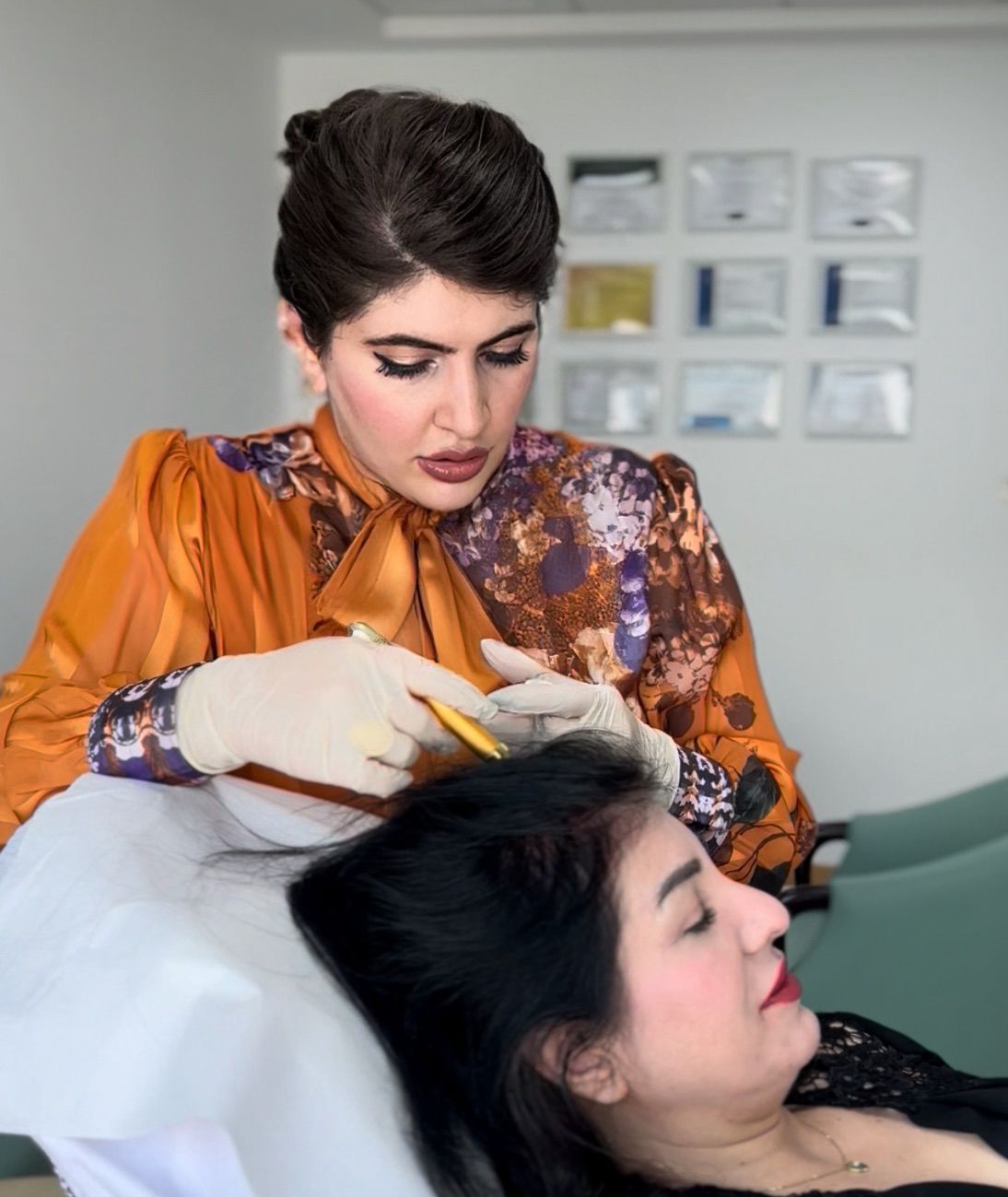
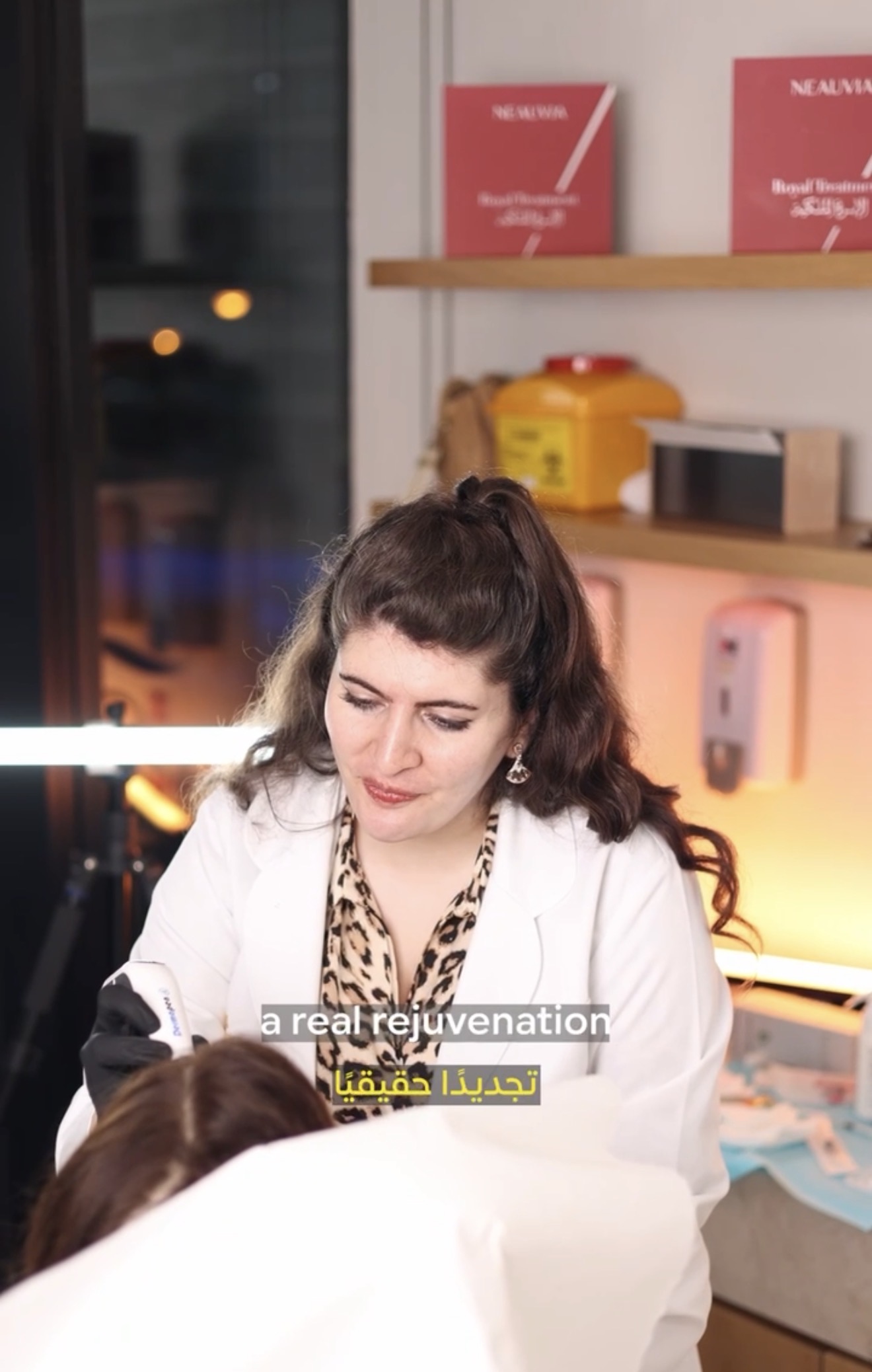
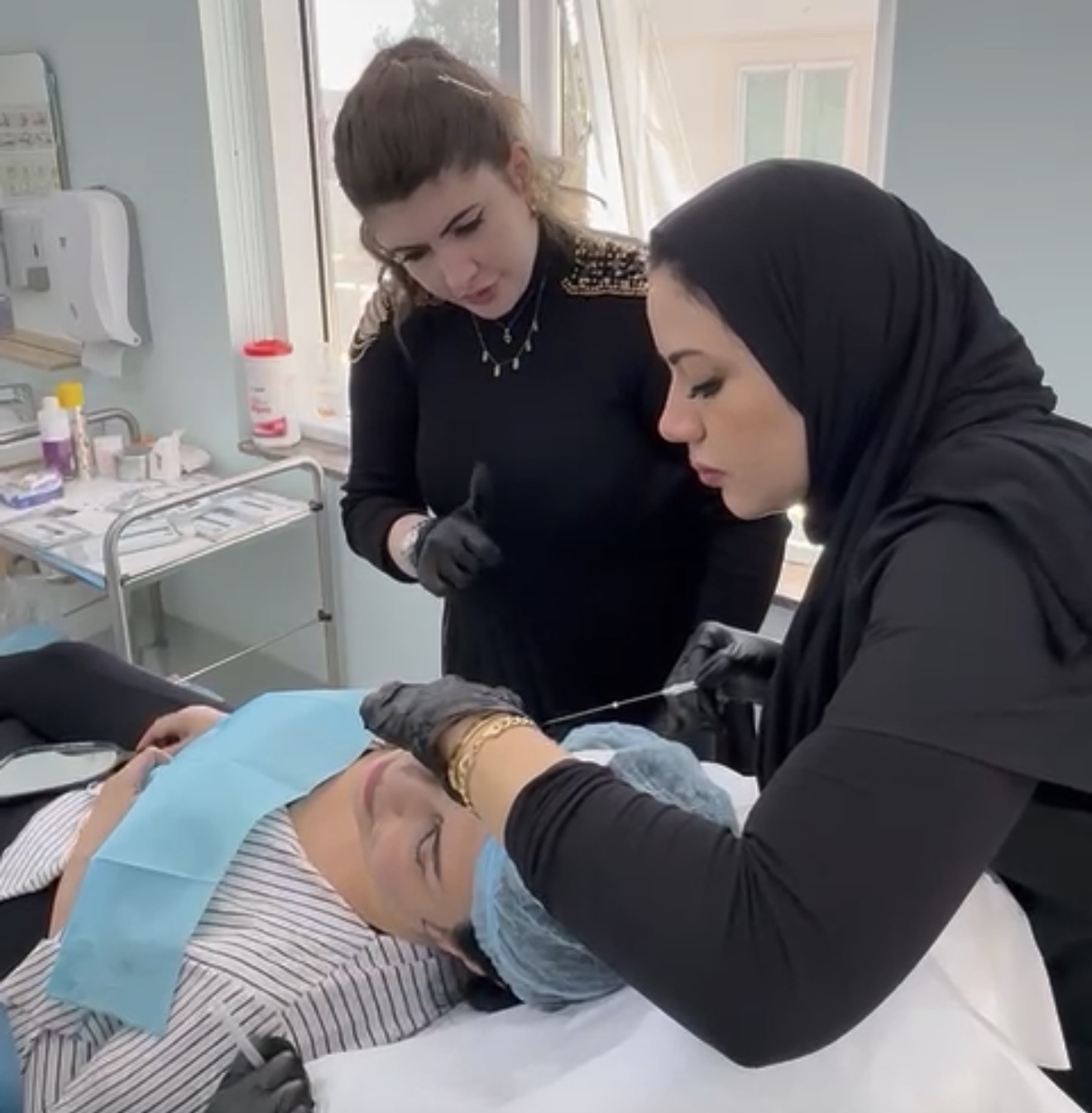
Exosome therapy — fresh exosomes sourced from regulated laboratories in Dubai, usually delivered through microneedling with the Dermapen. The first-line regenerative treatment here for hair, and the effect lasts considerably longer than PRP's.
Scalp mesotherapy — nutrient and cofactor solutions injected in courses, usually alongside the above.
Anti-androgen scalp mesotherapy — for pattern loss specifically, a prescription medicine delivered into the scalp in very small doses rather than taken daily by mouth. Discussed properly at consultation with its own consent conversation.
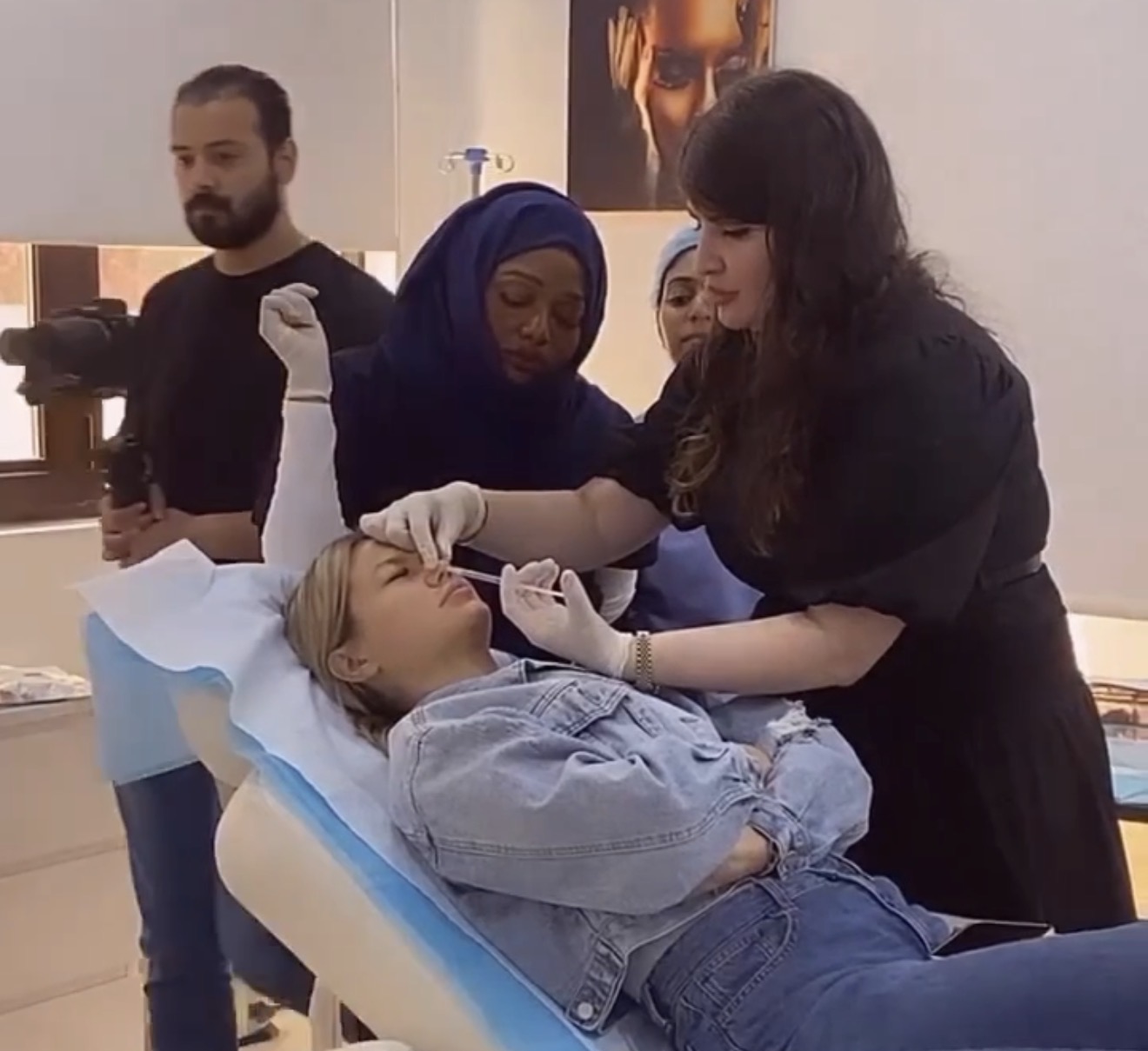
Hair filler — the DR.CYJ Hair Filler, a scalp-formulated peptide and hyaluronic-acid injectable, working on the tissue environment around the follicle.
PRP — I offer it, but I am honestly not a big advocate of it. It takes real effort for what it delivers, the effect typically lasts no more than about eight hours, and whole blood carries inflammatory factors that exosome and stem cell preparations do not. I recommend exosome or stem cell treatment instead for most men, and only do PRP where someone specifically wants it.
Stem cell therapy, including harvesting your own cells, where the situation warrants it — generally a single procedure rather than a course.
→ How each of these works, and why I prefer some over others · Stem Cell Therapy in Dubai
Where Treatment Stops and Surgery Starts
Thinning — follicles still present, hair getting finer. This is what regenerative treatment is for.
Empty — follicles gone, scalp smooth. Nothing injected restores density here, whatever it is. The follicle has to come from somewhere else, and that is a transplant.
Most men have both, in different areas of the same head, which is why the two approaches are usually combined. A transplant moves follicles into an area that is empty; treatment protects and improves everything that has not emptied yet — including the native hair around a transplant, which continues to miniaturise on its own schedule if left alone. I will tell you which category your scalp falls into, and where surgery is the right answer, I will say so and refer you appropriately.
Sessions, Time, and Being Patient
A minimum of four sessions. Hair grows on a cycle measured in months, and one injection lands in the middle of it — which is why hair is the one treatment here sold as a course rather than a session. Stem cell therapy is the exception. Packages are valid for one year, so there is no need to rush.
Nothing visible for three months. The first thing that changes is shedding, around six to twelve weeks. New hair is short and fine before it is anything else. The result is judged at six months, against photographs taken the same way.
Some men shed slightly more in the first weeks — new growth pushing out hairs that were already finished. Expected.
Then maintenance — usually just one session every two to three months. This matters particularly if you have had a hair transplant or treatment elsewhere already, where it helps protect what was achieved, and it is also worth having for ordinary age-related thinning or hair stressed by frequent styling. Many men combine a hair session with a longevity IV drip on the same visit.
A note on pain: most men expect hair treatment to hurt more than it does. Scalp treatment is mostly delivered with the Dermapen under topical anaesthetic, which men with lower pain tolerance generally find comfortable — say so at the assessment and the session is adjusted accordingly.
Frequently Asked Questions
Can male pattern hair loss actually be treated?
It can be slowed, and hair that has started to thin can be improved — reliably enough that most men who start early keep a head of hair they would otherwise have lost. Restoring hair in an area that has emptied completely cannot be done, because there is no follicle left to act on. The assessment establishes which situation you are in.
When should I start treatment?
While you can still see it in a photograph and nobody else has mentioned it. Treatment works on follicles that are still producing a hair, so the earlier it starts, the more there is to protect.
My crown is thinning. Is that treatable?
The crown and mid-scalp are where regenerative treatment does its best work — there is normally still a dense population of miniaturised follicles there, still cycling.
Can you bring back my hairline?
Not honestly, no. Temple recession tends to empty the area rather than thin it. Treatment can improve the hair behind the line and help hold the position — but rebuilding a hairline that has moved back is a surgical question. If the hairline is what bothers you most, the sensible plan is usually a transplant at the front with treatment protecting everything behind it.
Does high testosterone cause hair loss?
No. Pattern hair loss is caused by an inherited sensitivity of certain follicles to a hormone derived from testosterone, not by having too much of it. Men with normal levels lose their hair and men with high levels keep it.
Is this the same as PRP?
No, and I am honestly not a big advocate of PRP. It depends on drawing enough of your own platelets and growth factors on the day, its effect typically lasts no more than about eight hours, and whole blood carries inflammatory factors alongside the growth factors. Exosome and stem cell treatment last considerably longer without that load, which is why I recommend them for most patients. I still offer PRP where someone specifically wants it.
Should I just have a transplant instead?
Sometimes, and often both. A transplant moves follicles into an area that has emptied. It does not stop the hair around the graft from continuing to thin, which is why the two are usually complementary — surgery for what is gone, treatment for what is still there.
How many sessions, and how long before I see something?
A minimum of four sessions, spaced across the hair cycle. Expect nothing visible for three months; shedding usually settles first, around six to twelve weeks, and density follows. The result is judged at six months.
Do I have to keep doing it forever?
To hold the result, yes, at a reduced frequency. Pattern hair loss is a continuous process and treatment holds it rather than ends it. If you stop, what was happening before resumes.
Is any of this painful, and can I go back to work?
Scalp treatments are uncomfortable rather than painful, and the scalp is numbed where needed. You can return to work the same day, with some redness or tenderness possible for a day or two.
Individual results vary. Content is for educational purposes only and does not replace a medical consultation.
ABOUT
Dr Shiva Faramarzi
I am a physician working in aesthetic, regenerative and longevity medicine in Dubai, with more than a decade of experience in aesthetic medicine.
My practice is broad by design. I work across facial assessment and contouring, injectables, thread lifting, ultrasound-guided treatment and filler complication management, laser-based facial and body treatments, hair restoration, and regenerative and longevity medicine.
That breadth matters to me because patients rarely arrive with only one isolated problem. Someone may come asking about their jawline and also have old filler affecting the lower face. Someone concerned about facial ageing may need skin quality addressed before more volume is added. A patient coming for hair loss or regenerative treatment may have hormonal, nutritional or lifestyle factors that need to be considered alongside the procedure itself.
I do not want to have one answer for every patient. I want to be able to look at the whole picture, understand what is actually driving the concern, and choose from a wider range of treatments — including doing less, changing the order, or recommending something completely different from what was originally requested.
Over the years, certain areas have naturally become a larger part of my work, particularly ultrasound assessment, facial contouring, endolaser, thread lifting and regenerative medicine. But the goal has remained the same: to offer patients a high level of care across the different problems they may bring to me, rather than treating each concern in isolation.