
Home / Services / Face & Jawline
Face & Jawline Treatment Dubai | Dr Shiva
JAWLINE • CHIN • JOWLS • LOWER FACE
FACE & JAWLINE TREATMENT IN DUBAI
A jawline that looks soft, heavy or undefined is rarely caused by one thing.
And it is definitely not always solved by adding more filler along the jaw.
A recessed chin, fat under the chin, skin laxity, an enlarged masseter muscle, facial puffiness and filler already sitting in the tissue can all create a surprisingly similar appearance — while needing completely different treatments.
My starting point is therefore not:
“How much jawline filler do you need?”
It is:
“What is actually making your jawline look this way?”
When previous filler may be contributing, I can also use high-frequency ultrasound to assess what is already present before deciding whether anything new should be added.


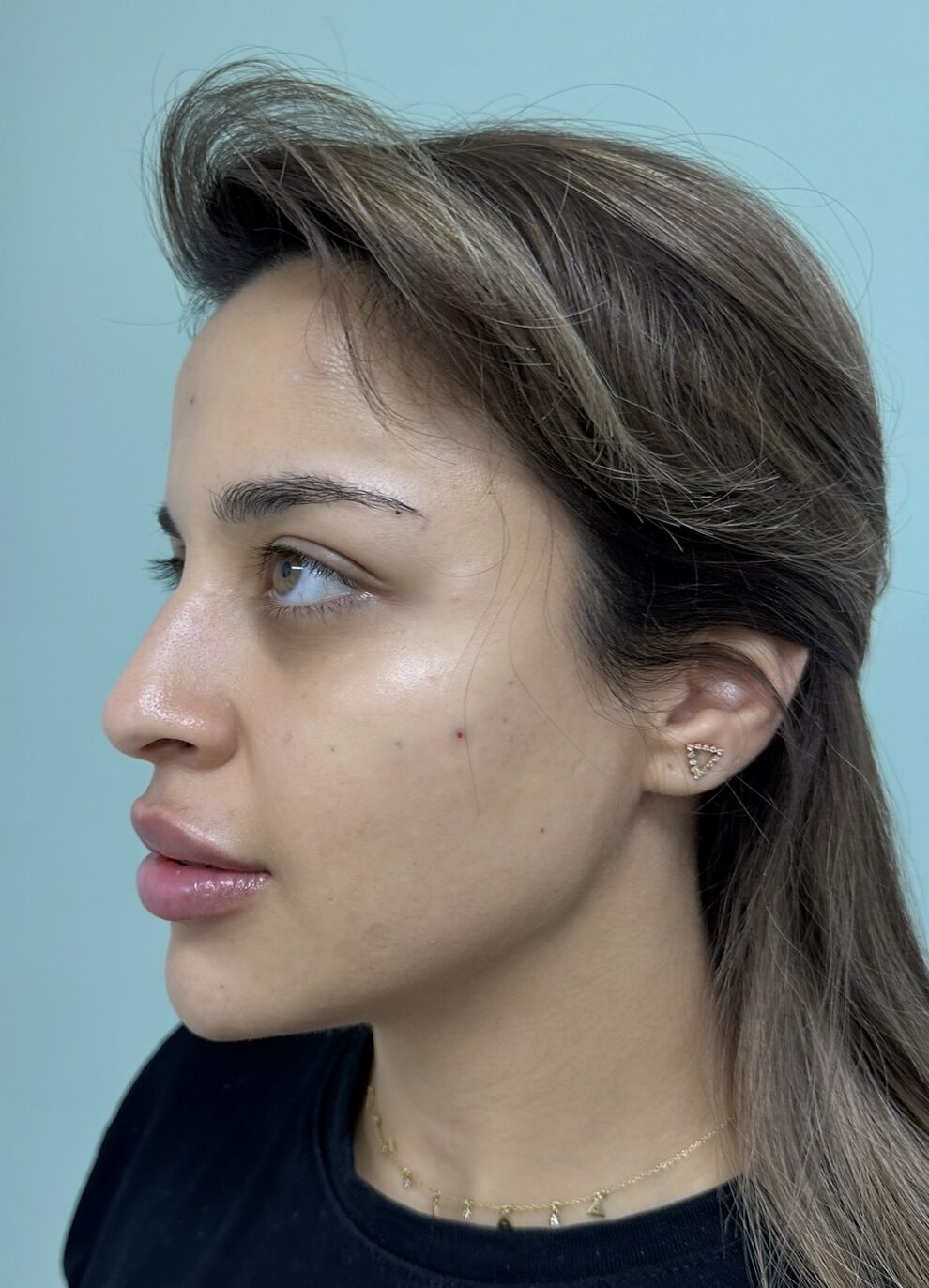
WHEN WILL I SEE THE RESULT?
This depends entirely on what we are doing.
Hyaluronic-acid filler gives an immediate structural change, although swelling needs around two weeks to settle before I judge the result properly.
Calcium-based structural injectables can create immediate definition, while their biostimulatory response continues over the following months.
Collagen biostimulators are deliberately gradual. There may be little to judge initially because the aim is to stimulate tissue change over time.
Masseter botulinum toxin changes the lower face gradually over several weeks as muscle bulk decreases.
Threads can produce an immediate mechanical change, followed by swelling and tissue settling. I normally reassess the more meaningful result over the following weeks.
Endolaser initially gives swelling rather than an Instagram-ready jawline. I assess progression over the following months as the tissue settles and remodels.
Regenerative volume replacement develops progressively over several months.
Hyaluronidase may begin changing filler very quickly, but I prefer to reassess after swelling has settled before deciding what the face actually needs next.
Different treatments have different biological timelines.
That is why I don’t judge every procedure by what the patient looks like when they leave the room.
A note on products
I use established, CE-marked products from major manufacturers, chosen for the tissue and the job rather than by what happens to be in stock. Which material is used — hyaluronic acid, calcium-based, collagen-stimulating or regenerative — is a clinical decision made at assessment, and I will explain why a particular one was chosen for you.
How I Treat the Face & Jawline
01
Assessment, including ultrasound
High-frequency ultrasound shows what is already in the tissue — where previous filler sits, whether it has migrated, and how much of the current shape is product rather than anatomy. This matters most in patients who have had repeated treatment elsewhere and cannot say what was placed or where.
02
Structural filler: chin and jaw
For genuine skeletal deficiency, product placed deep and on bone, in the chin and along the jaw, to restore projection and outline. Hyaluronic acid is the usual choice and gives an immediate, reversible result. Where stronger definition or firmer structural support is needed — a markedly recessed chin, or a male jawline being built for width and angle — I may use a calcium-based filler instead, which is firmer, holds a sharper edge and stimulates collagen as it integrates. Conservative volumes, placed where structure is missing rather than spread along the whole jawline. Not every soft jaw needs it.
03
Collagen stimulators and stimulating volumisers
Two different things that are often confused. A pure biostimulator adds no immediate volume and works by prompting your own collagen over a course of treatments — it suits diffuse laxity rather than a missing structural corner. A stimulating volumiser gives immediate volume and a collagen response that continues afterwards, which makes it useful where structure and skin quality both need addressing and where longevity matters. Choosing between them is a decision about what your tissue needs, not about which lasts longest.
04
Regenerative volume replacement
For facial volume loss where the tissue itself is depleted rather than displaced, an injectable adipose matrix can be used to restore volume that the body then populates with its own tissue. Results appear gradually and continue to develop over months. It is a considered option for selected patients rather than a routine alternative to filler.
05
Botulinum toxin for masseter bulk
Reduces the width of the lower face where the chewing muscle is the cause, and often improves clenching and jaw tension at the same time. Effect is gradual over several weeks, and dose and placement matter — over-treatment changes chewing and can hollow the lower face.
06
Thread lifting for mild jowling
Where the jawline outline has softened but there is no significant skin excess, threads reposition and support the tissue along the jaw rather than adding volume to it. I use double-arm threads, which give more secure fixation and a more even pull along the jawline than single-armed threads. Entry points rather than incisions, bruising and swelling in the first days, and an effect that is real but temporary — how long it holds depends on the thread used and on your tissue. Threads suit mild to moderate jowling; they do not substitute for surgery where skin excess is significant.
07
Endolaser for submental fat and jowling
Where the problem is fat under the chin or heaviness along the jaw, energy delivered under the skin through a single entry point reduces the fullness and tightens the overlying tissue. No incision and no stitches, with bruising and swelling in the first days. It targets what filler cannot: excess, rather than deficiency.
08
Combining threads and endolaser
These two treat different halves of the same problem, and in selected patients I combine them: the endolaser reduces the fullness and tightens the tissue, the threads reposition and support what remains. For a jawline that is both heavy and slightly dropped, the combination achieves more than either treatment does alone — and it is planned as one treatment, in one assessment, not sold as two.
09
Hyaluronidase, when previous filler is the problem
Where the face is heavy because of what is already in it, the correct treatment is removal. Assessed first, dissolved carefully and in stages, and re-assessed before deciding whether anything needs replacing. Often less is needed afterwards than the patient expects.
How Long Until You See Results
Different treatments work on completely different timescales, and knowing which you are having is the difference between patience and disappointment. This is what to expect.
Treatment | Straight away | Final result |
Hyaluronic acid filler | Immediate change | Settles over about two weeks as swelling resolves |
Calcium-based filler | Immediate definition | Collagen response continues over the following months |
Stimulating volumiser | Immediate volume | Continues to build as collagen forms |
Pure collagen biostimulator | Little to see initially | Builds gradually over months, across a course |
Threads | Around half the result is visible immediately | May soften slightly over the first two weeks, then builds again — final result at roughly six to twelve weeks as collagen forms, with skin quality improving alongside |
Endolaser | Swelling first, settling over the first days | Assessed at around three months, with improvement continuing to six |
Regenerative volume replacement | Gradual | Develops over up to six months |
Hyaluronidase | Change within days | Settled at around two weeks, then reassessed |
Anyone promising you a final result on the day is describing filler — and filler is only one of the eight things on this page.




More Filler Does Not Make a Sharper Jawline
The most common reason a face looks “done” is not bad filler. It is filler added repeatedly to correct a problem that filler was never going to solve.
Heaviness caused by fat, fluid, laxity or existing product does not improve when more volume is placed along the jaw — it compounds. Each round looks acceptable for a few weeks and slightly heavier by the end.
Part of my assessment is deciding whether the answer is to add, to remove, or to leave the face alone and treat something else entirely. |
Male and Female Jawlines Are Not Treated the Same Way
The goals genuinely differ, and pretending otherwise is how patients end up looking subtly wrong.
A masculine jawline is generally treated for width, a square angle and forward chin projection — definition without softening. A feminine jawline is generally treated for a clean outline and a tapered lower face, where added width works against the result.
Same techniques, different targets, and the assessment establishes which outcome you are actually asking for before anything is injected.
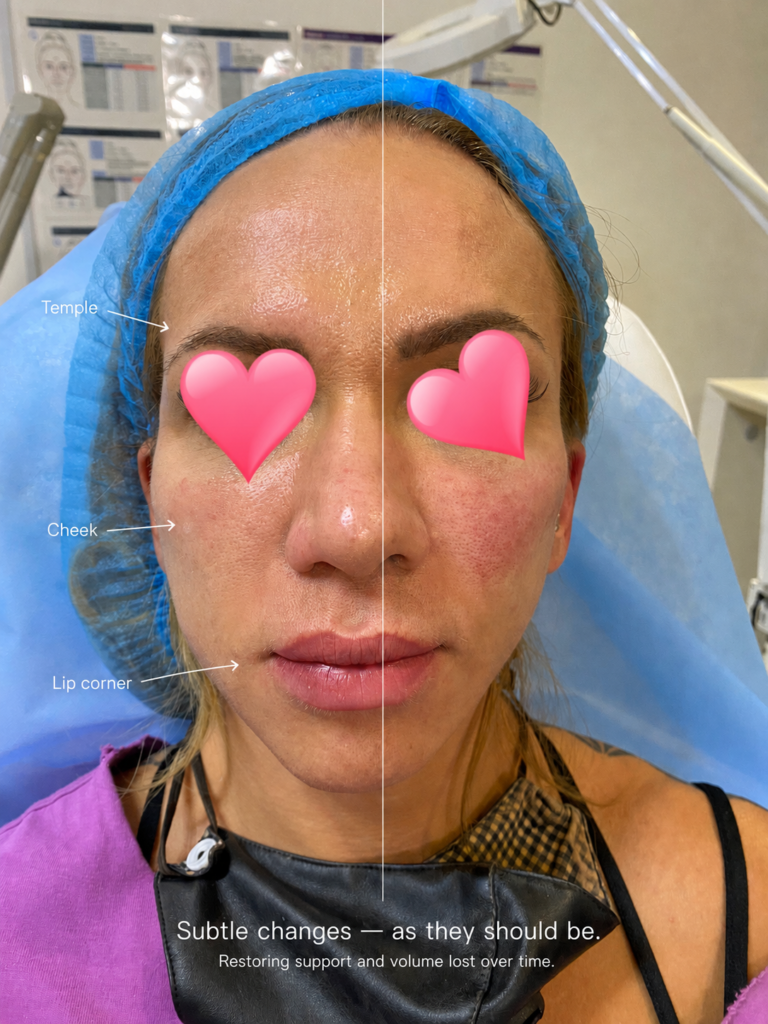
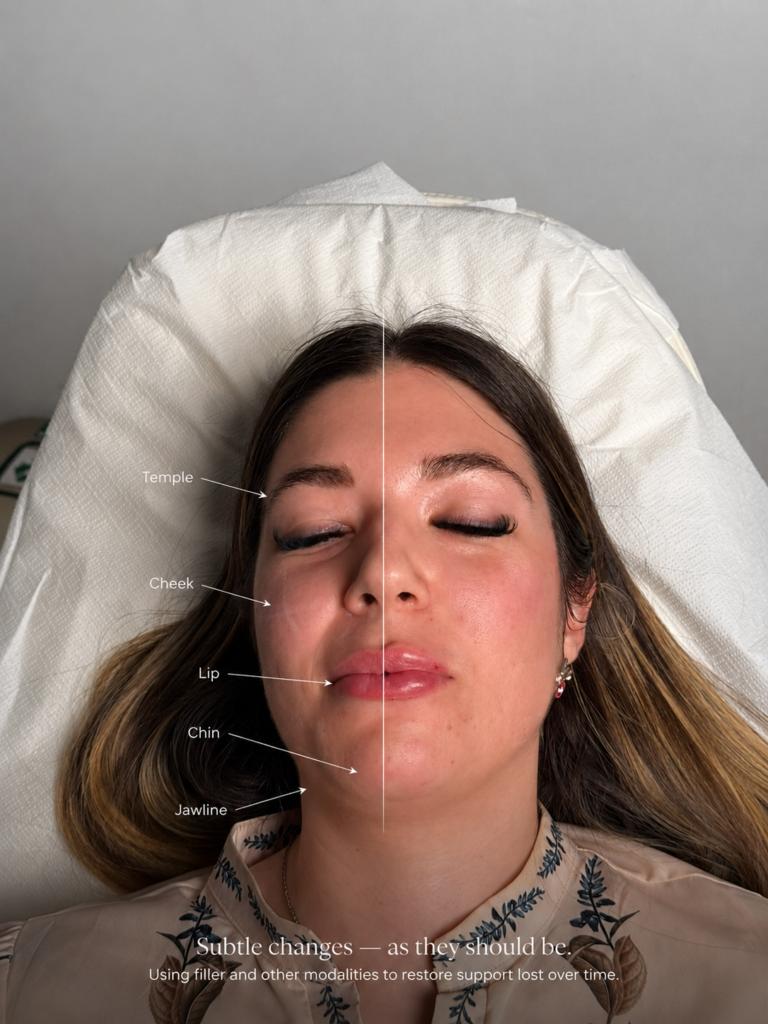
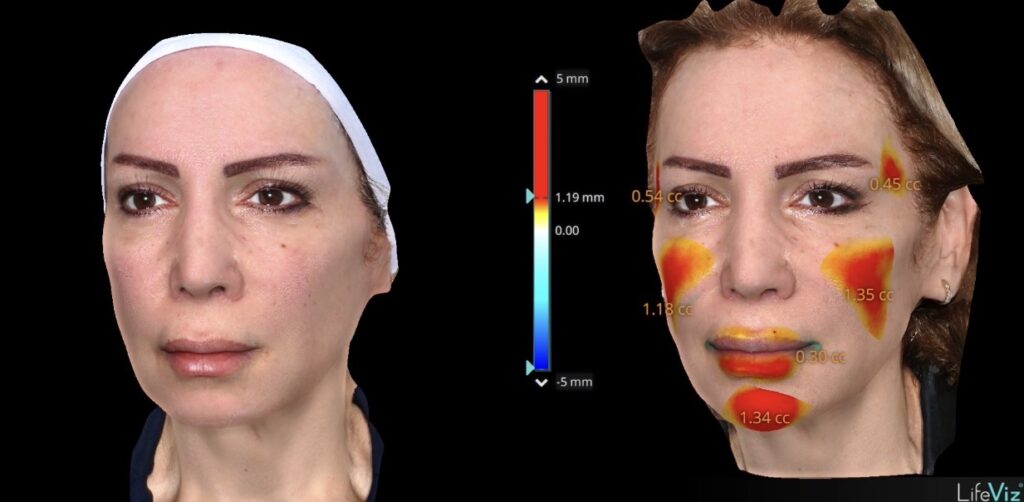
Every case here is my own patient, photographed in the same position and lighting before and after. Each one names the problem that was treated and the treatment used, because a jawline gallery without that information tells you nothing about whether it applies to you.



Testimonial
Your Confidence, Our Commitment






We’ve Got You Covered!
Curious? Start Here
Only if the reason your jawline looks undefined is missing structure. If the cause is submental fat, skin laxity, fluid retention or filler already in place, adding more volume tends to make the lower face heavier rather than sharper. Establishing which of these applies is the point of the assessment.
Hyaluronic acid placed deep on bone in the chin and jaw generally lasts longer than filler in mobile areas, and can remain detectable well beyond the point where patients assume it has gone. This is why previous treatment should be assessed before more is added. |
In many cases, yes. Chin projection is one of the areas where a small, well-placed volume changes the whole lower-face profile. Where the deficiency is significant, or where the bite is involved, a surgical or orthodontic opinion is the more honest recommendation. |
It depends on what is under the chin. Fat responds to treatments that reduce it, including endolaser; skin laxity does not, and fluid retention is a different problem again. No injectable filler treats a double chin. |
It reduces the width of the lower face over several weeks by reducing the bulk of the chewing muscle. Dose and placement matter — too much can alter chewing and hollow the lower face — so it is planned according to how strong the muscle actually is, not by a standard dose. |
They solve different problems. Endolaser reduces fullness — fat under the chin and along the jaw — and tightens the overlying tissue. Threads reposition tissue that has dropped. A jawline that is heavy needs the first; a jawline that has slipped needs the second; a jawline that is both is where I combine them in one planned treatment. Which applies to you is what the assessment establishes. |
For mild to moderate jowling, yes — threads reposition and support the tissue along the jawline rather than adding volume to it, which is why they suit a jawline that has softened rather than one that is missing structure. I use double-arm threads for more secure fixation along the jaw. The effect is temporary and varies with the thread and the tissue, and where there is significant skin excess a surgical opinion is the more honest answer.
Filler can migrate, accumulate over repeated treatments, and hold fluid — all of which add weight to the midface and lower face. Ultrasound assessment can show what is present and where, which is what distinguishes this from ageing change. In these cases the treatment is usually removal, not more product.
|
Dr Shiva Faramarzi, MD Aesthetic & Longevity Physician · DHA licence 43705219 Apogée Clinic, Address Beach Resort, JBR, Dubai WhatsApp or call: +971 52 328 6185 Last medically reviewed: August 2026 This page is general medical education and does not replace individual assessment. Treatment suitability, expected outcomes and regulatory status vary by patient and by therapy. |