Home / Services /gynecomastia treatment Dubai
Male Chest Fat & Gynecomastia in Dubai
Fat, gland, or both — the answer decides the treatment.
Male Chest Fat & Gynecomastia in Dubai
A fuller male chest is one of the most common things men quietly put up with. It shows through a fitted shirt, it does not move with training, and for many men it is the reason they avoid the beach or the pool. Some have had it since their teens; others notice it after weight gain, after weight loss, or after a cycle at the gym.
What looks like one problem can be two very different tissues. Fat responds to fat-reduction treatment. Glandular breast tissue does not. Treating the wrong one is the most common reason men are disappointed with chest treatment — so before any gynecomastia treatment, I find out which one you have.
My approach: assess first, with examination and ultrasound; treat the fat where it is fat; refer for surgery where it is gland. I combine treatments when I can identify two different problems — not because combining more treatments automatically produces a better result.
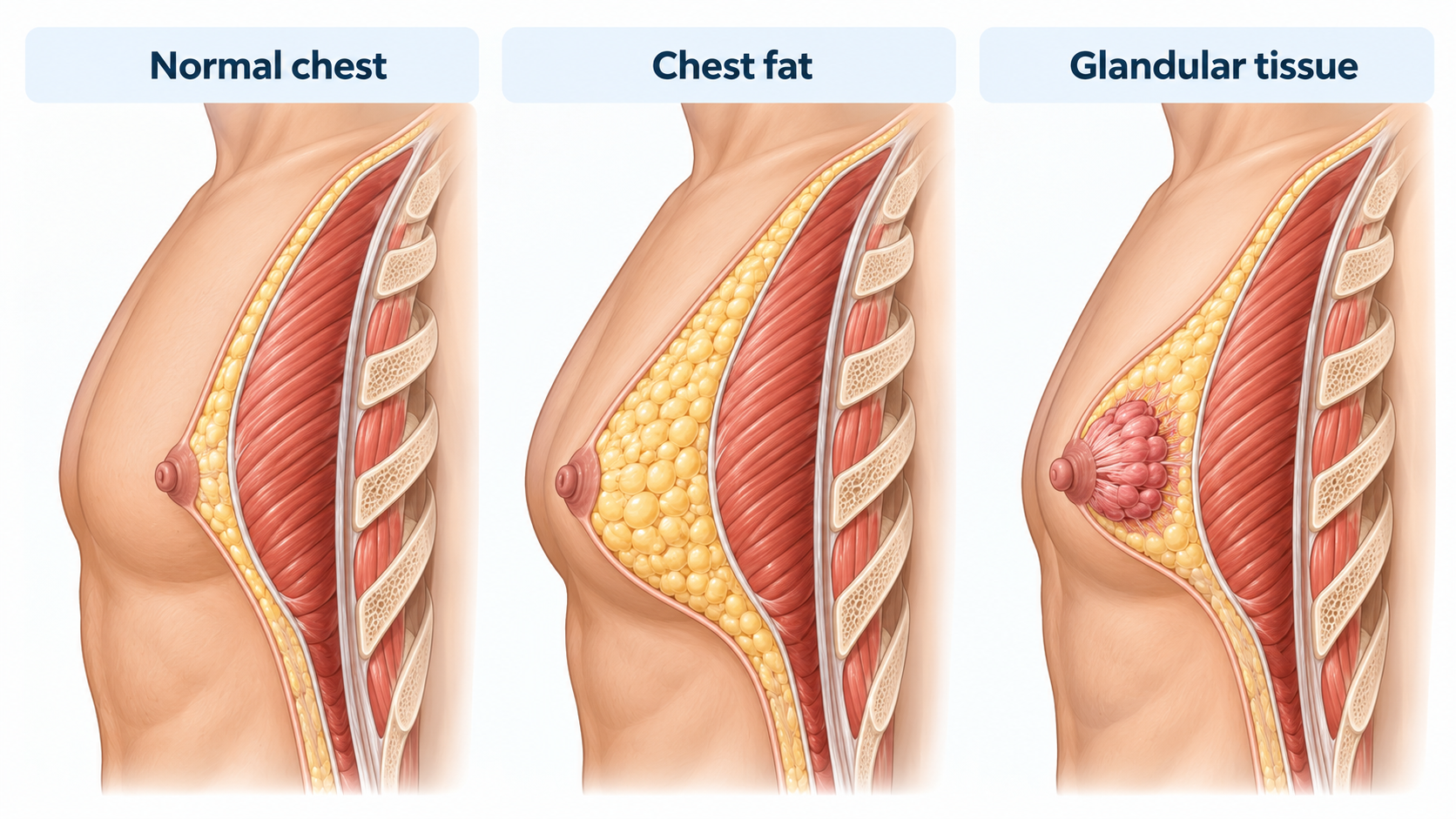
Gynecomastia or pseudogynecomastia?
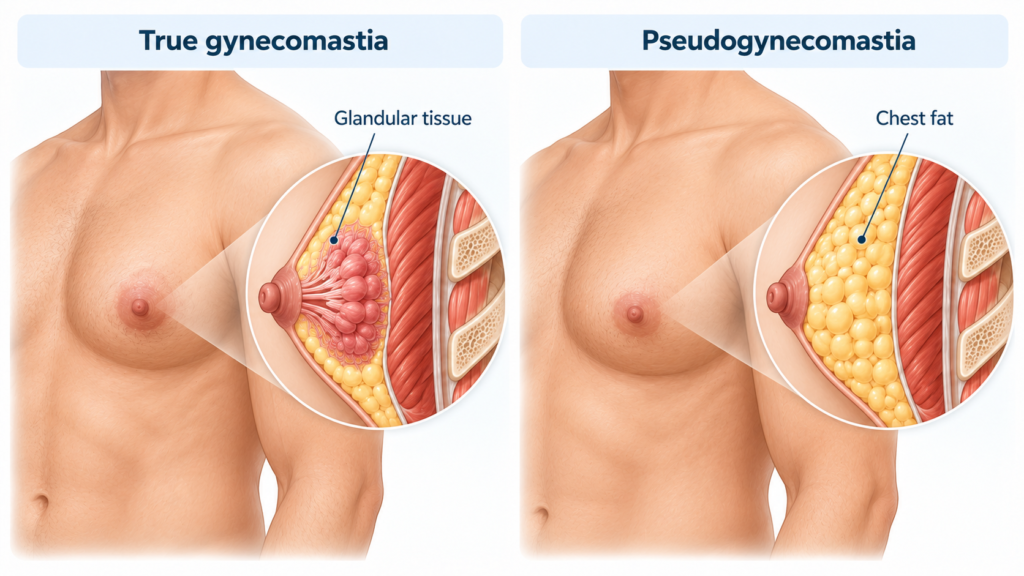
True gynecomastia is growth of glandular breast tissue. It usually sits directly behind the nipple as a firm, rubbery disc, and it can be tender, especially when it is new. It is driven by hormones — the balance between oestrogen and testosterone.
Pseudogynecomastia is fat. The chest is full and soft, without a distinct disc under the nipple, and it usually tracks with body fat elsewhere.
Mixed is very common in adults: a layer of fat with a smaller glandular disc beneath the nipple. Careful history and examination are the first step in telling these apart1.
| Fat (pseudogynecomastia) | Gland (true gynecomastia) |
How it feels | Soft, diffuse, no distinct edge | Firm or rubbery disc centred behind the nipple |
Tenderness | Usually none | Common when it is new or growing |
On ultrasound | Fat layer without a glandular disc | Glandular tissue behind the nipple |
What it usually follows | Weight gain, or weight loss that left a pocket behind | Hormonal change: puberty, medicines, steroid or testosterone use, some medical conditions |
What it responds to | Endolaser (laser lipolysis) | Surgical excision; sometimes medical treatment of the cause |
Why it happens
- Breast tissue in teenage boys is common and often settles by itself. This page is about adult men — a teenager with chest enlargement should be seen by a paediatrician or GP.
- Anabolic steroids, testosterone, SARMs and other performance products. These can tip the hormone balance towards breast tissue growth, during a cycle or after stopping. If you use or have used them, please tell me. I am not here to judge — it changes what I check, and continued use can bring tissue back after treatment.
- Several common medicines are linked with gynecomastia, including spironolactone, some prostate and hair-loss medicines (finasteride, dutasteride), some antidepressants and antipsychotics, and some heartburn medicines. Never stop a prescribed medicine without speaking to the doctor who prescribed it.
- Medical conditions. Low testosterone, thyroid overactivity, liver or kidney disease and, rarely, hormone-producing tumours.
- Body fat. Fat tissue converts testosterone to oestrogen, so higher body fat can drive both fat and gland in the chest.
- Often, no cause is found. When the history, examination and tests are normal, the diagnosis is idiopathic gynecomastia1.
When I will refer you first A hard lump, especially on one side only; a lump fixed to the skin or underlying tissue; nipple discharge or bleeding; skin changes or a pulled-in nipple; rapid growth; or a swollen lymph node in the armpit. Men can develop breast cancer. These signs need medical imaging and specialist assessment before any aesthetic treatment is considered. |
How I assess
- A history that covers when it started, whether it is tender, your weight changes, training, supplements and medicines — including anything bought online or at the gym.
- Examination standing and lying, comparing the tissue behind the nipple with the rest of the chest.
- High-frequency ultrasound of the chest, where it helps define how much of the fullness is fat and how much is gland, and how thick each layer is.
- Blood tests where the picture suggests a hormonal cause — for example new, tender or growing tissue, or symptoms of low testosterone.
- Standardised photographs and measurements, so we measure change rather than remember it.
At the end you get a written plan: fat, gland or mixed; what I can treat; and what needs a surgeon or an endocrinologist instead.
Not sure whether yours is fat or gland? Send me a message to book an assessment — WhatsApp +971 52 328 6185 |
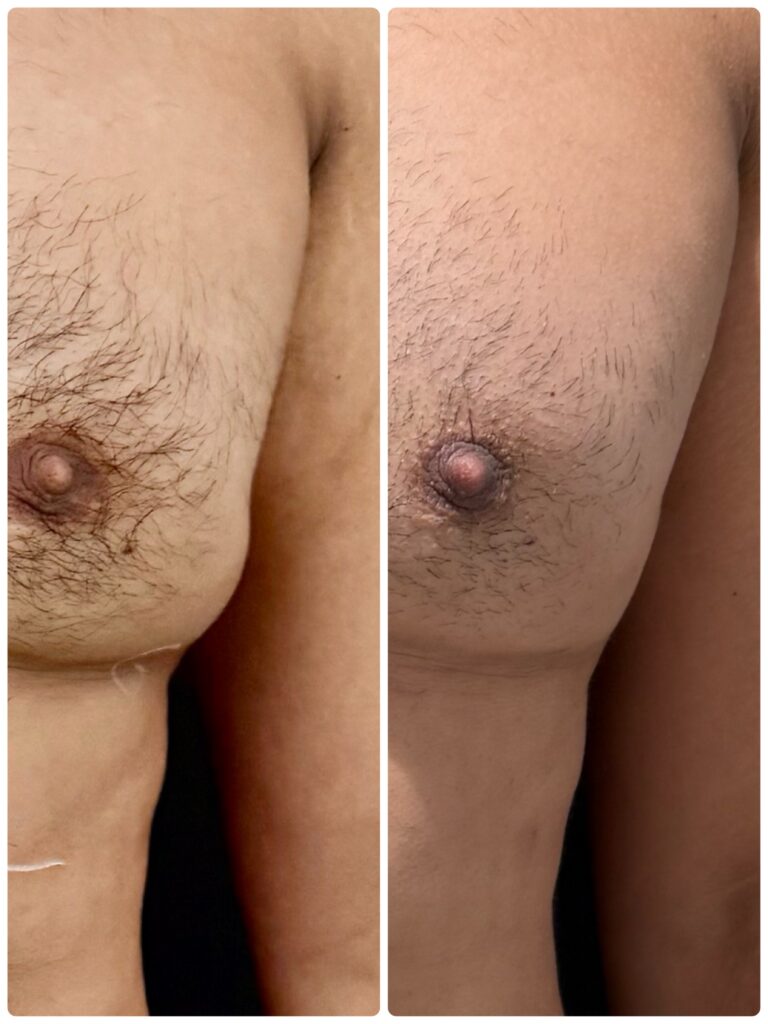
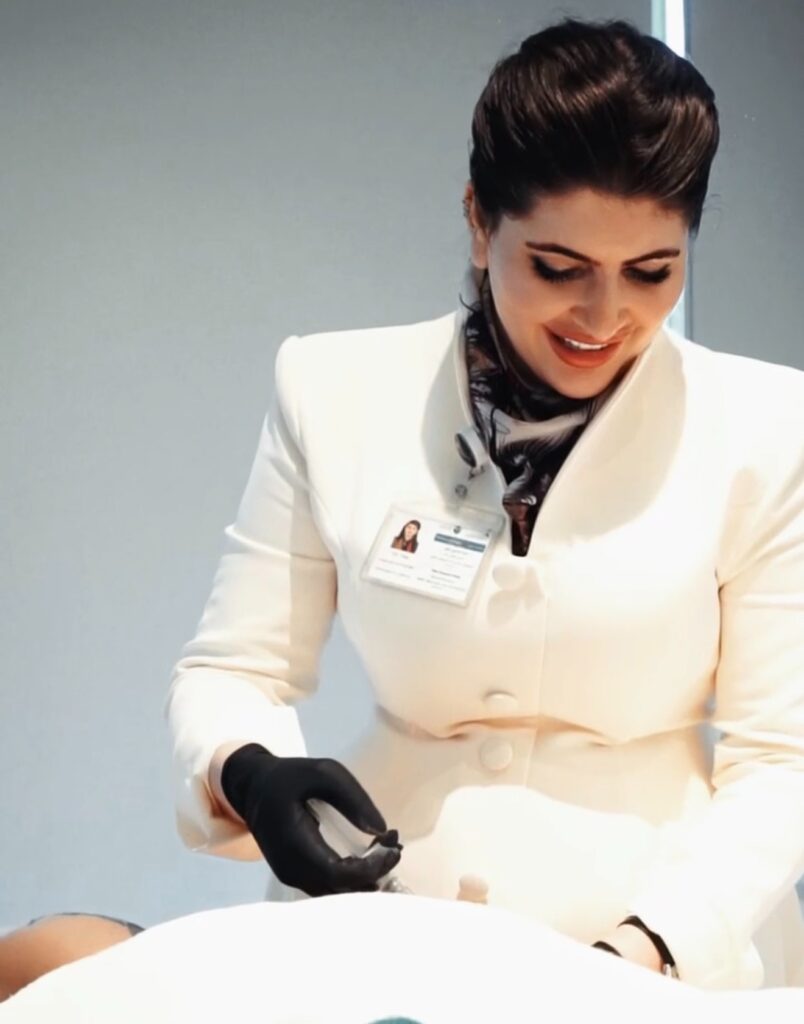
Endolaser for chest fat
Endolaser — laser-assisted lipolysis — uses a fine laser fibre introduced under the skin through a needle-sized entry point, under local anaesthesia. The laser energy breaks down fat cells and heats the surrounding tissue, which can promote tissue contraction and skin tightening. I then remove the emulsified fat gently with a fine syringe rather than a suction machine. There is no surgical incision and no general anaesthetic.
Published studies of laser-assisted lipolysis in men with gynecomastia have reported reduced chest circumference and breast thickness, high patient satisfaction and skin tightening, with mostly minor side effects such as bruising, swelling and temporary numbness2–5. One study also reported a reduction in the size of the nipple–areola complex6. These are small studies, most without a control group, so they show what is possible rather than guarantee a result. I use the Forza laser, a 1470 nm fibre laser, and have performed endolaser since 2016.
What endolaser can and cannot do
- It can reduce chest fat, help tighten the skin over it, and refine the contour where fat is the main problem.
- It cannot reliably remove a dense glandular disc. If there is significant gland behind the nipple, removing the fat around it alone can sometimes make the remaining disc more noticeable, not less.
- It cannot remove skin that hangs in a fold. After major weight loss that is a surgical problem — see loose skin after weight loss.
For how the laser works across the body, see laser lipolysis in Dubai.
When surgery is the right answer
Where gland is the main problem, or where there is a firm disc that will remain after the fat is gone, the treatment is generally surgical excision. Some men need both: the gland is removed, and the fat around it is reduced in the same plan. Telling you this before you spend money on the wrong treatment is part of the assessment.
If the amount of tissue is beyond what I believe can be reasonably corrected in one minimally invasive treatment, I would rather arrange a surgical opinion than sell you several laser sessions that may still leave you disappointed. For men who strongly prefer to avoid surgical scars, we can discuss whether a staged non-surgical approach is realistic, but its limitations need to be clear from the beginning.
If I believe surgical excision is the better option, we can also arrange a Zoom consultation with our plastic surgeon, Dr Sauniere. This allows you to discuss the surgical approach, likely scar placement, recovery and whether gland excision, liposuction or a combined procedure would be appropriate before deciding how you want to proceed.
New, tender gynecomastia with a clear hormonal cause is sometimes treated medically first, under an endocrinologist. If your blood tests point that way, that is where I will send you.
What to expect
- On the day: local anaesthesia; you are awake and go home the same day.
- Afterwards: you wear a compression vest. Bruising, swelling and some numbness are expected and usually settle over one to two weeks. Lymphatic drainage may help with swelling and comfort during the early recovery period in selected patients.
- Results: the chest looks flatter once swelling settles, and continues to improve as the tissue settles and remodels — typically over around three months, sometimes up to six.
- Keeping the result: fat cells removed or disrupted during treatment are not expected to regenerate in the same way, but the remaining fat cells can enlarge with future weight gain. Recurrence of glandular fullness can occur, particularly if residual glandular tissue remains and the hormonal or medication-related driver continues.
Ready to find out what your chest actually needs? Book an assessment at Apogee Clinic, JBR — WhatsApp +971 52 328 6185 |
What I will not promise
No laser turns glandular tissue into a flat chest, and no single treatment suits every man. If the honest answer is surgery, medical treatment, or simply waiting for a hormone cause to settle, that is the answer you will get.
A note from Dr Shiva Many men who come to me have already been told they “just need lipo” — or that they “need surgery” — without anyone checking what the tissue actually is. A few minutes of high-frequency ultrasound, alongside your history and examination, can usually clarify whether the fullness is predominantly fat, glandular tissue, or a mixture of both. After that, the decision about what not to treat is often as important as the treatment itself. |



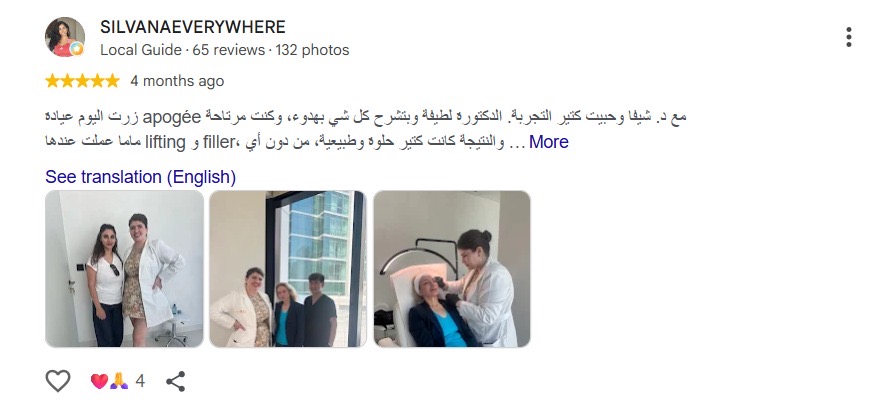
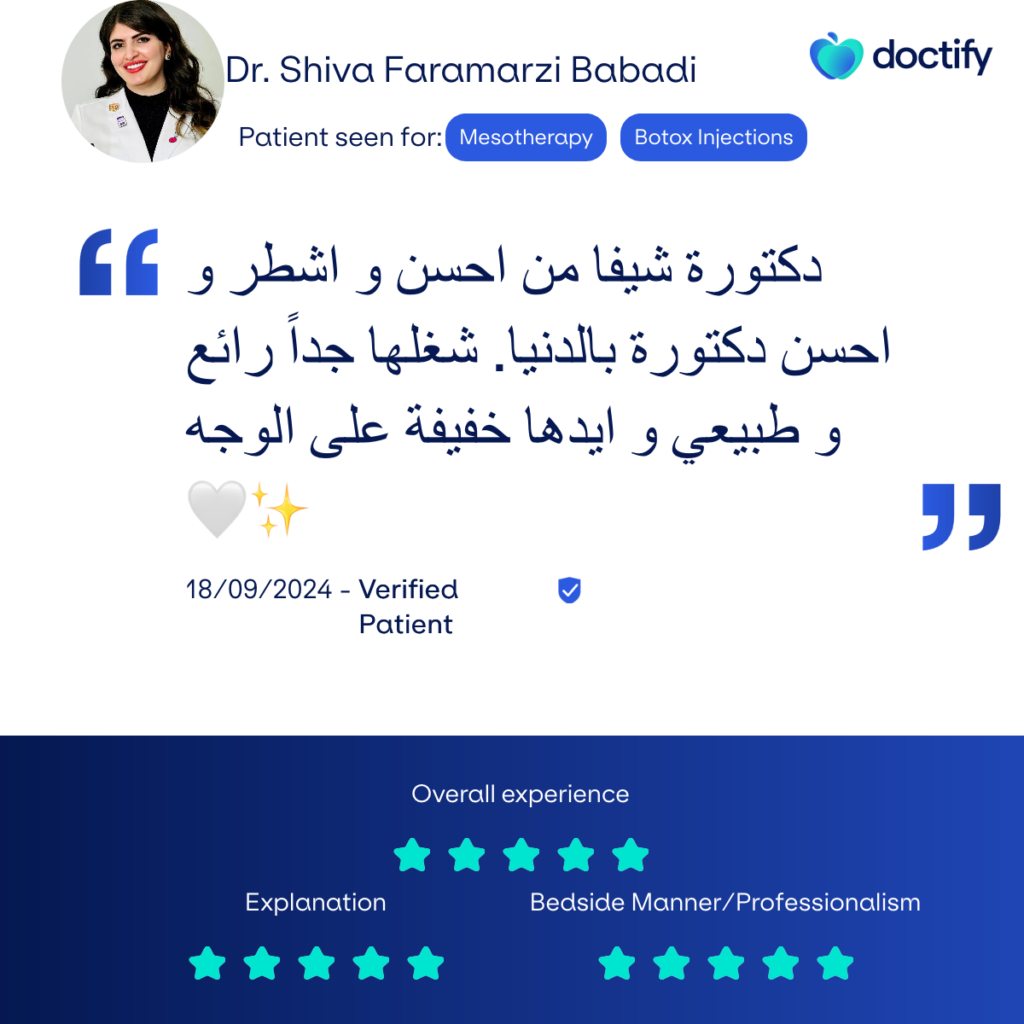
Testimonials
See how we’ve helped our patients achieve their aesthetic goals.



















You still have more questions?
FAQs

Gland usually feels like a firm disc directly behind the nipple; fat is softer and spread across the chest. Many adult men have both. Examination gives a good idea, and high-frequency ultrasound can usually clarify the picture, which is why I use it when planning treatment.
If the fullness is mainly fat, yes — endolaser can reduce it and help tighten the skin, under local anaesthesia. If it is mainly glandular tissue, the reliable treatment is surgical excision, and I will refer you rather than treat something the laser will not fix.
Losing body fat reduces chest fat, and training builds the muscle underneath. Neither removes glandular tissue, and a stubborn pocket of fat can remain even at a lean weight. That pocket is what endolaser is for.
Endolift is the brand name of one fibre-laser system. I use the Forza 1470 nm laser and remove the emulsified fat by syringe. The published chest studies are of laser-assisted lipolysis in general, not of any single brand2–5.
One of the key benefits of nonsurgical body sculpting is minimal downtime. Most patients can resume their daily activities immediately after the treatment. They can resume gym and physical training after 3 days. If you have an important event coming up we recommend you to plan at least three weeks in advance.
Yes, but please tell me. Steroids, testosterone and similar products can drive glandular growth, so they change the assessment and possibly the order of treatment. If use continues, tissue can come back.
Most suitable cases are treated in one session. If the amount of fat or skin excess is more than I believe can be reasonably corrected in one endolaser treatment, I would usually discuss surgical treatment rather than automatically recommend two or three laser sessions. A staged non-surgical approach can sometimes be considered for someone who strongly wants to avoid surgery and surgical scars, provided they understand from the beginning that the improvement may be more limited and may require more than one treatment.
Yes. If your examination or ultrasound suggests that surgery is likely to give you the better result, we can arrange a Zoom consultation with our plastic surgeon, Dr Sauniere, so you can understand the surgical option before making a decision. |
You go home the same day in a compression vest. Expect bruising, swelling and some numbness that usually settle over one to two weeks. I will give you specific instructions on work, exercise and the vest.
Endolaser uses needle-sized entry points rather than surgical incisions. They are small and usually fade well. Surgical excision of gland does leave a scar, usually placed at the edge of the areola.
Fat cells removed or disrupted during treatment are not expected to regenerate in the same way, but the remaining fat cells can enlarge with future weight gain. Recurrence of glandular fullness can occur, particularly if residual glandular tissue remains and the hormonal or medication-related driver continues — for example ongoing anabolic steroid or testosterone use, or another persistent hormonal cause.
Most male chest enlargement is benign. But a hard lump on one side, a lump fixed to the skin, nipple discharge, skin changes or a swollen armpit gland should be checked promptly by a doctor, before any aesthetic treatment1