When Fillers Aren’t the Answer: Why I Refer Some Patients to a Plastic Surgeon
By Dr Shiva Faramarzi, Aesthetic & Longevity Physician, Apogée Clinic, JBR Dubai · Last updated 29 September 2026
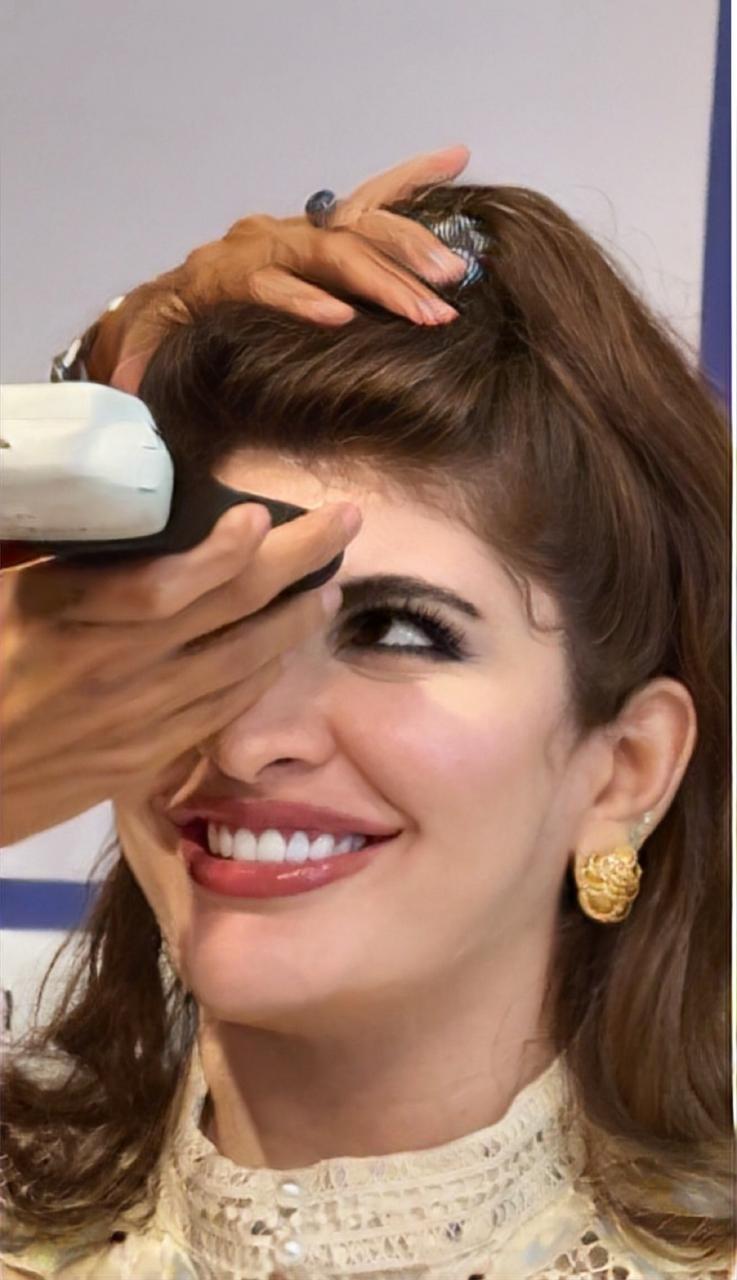
One moment in my consultation room tells me more than any questionnaire. We have talked about fillers and I hand the patient the mirror. Before I say anything, they put their fingertips at their cheekbones, or just in front of their ears, and gently pull their face upwards.
That small movement is honest. It shows me exactly what they want to see. Very often it is something a syringe cannot give them, because what they are showing me is a lift, and a true lift is surgery.
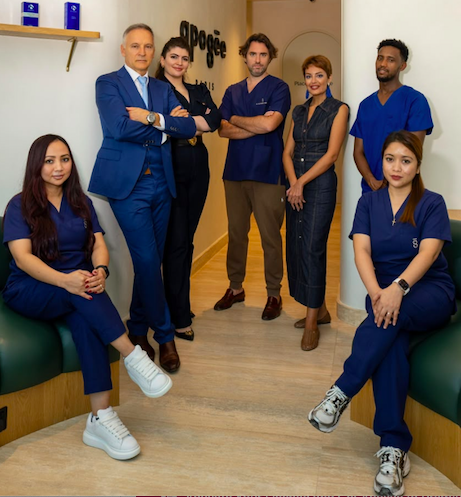
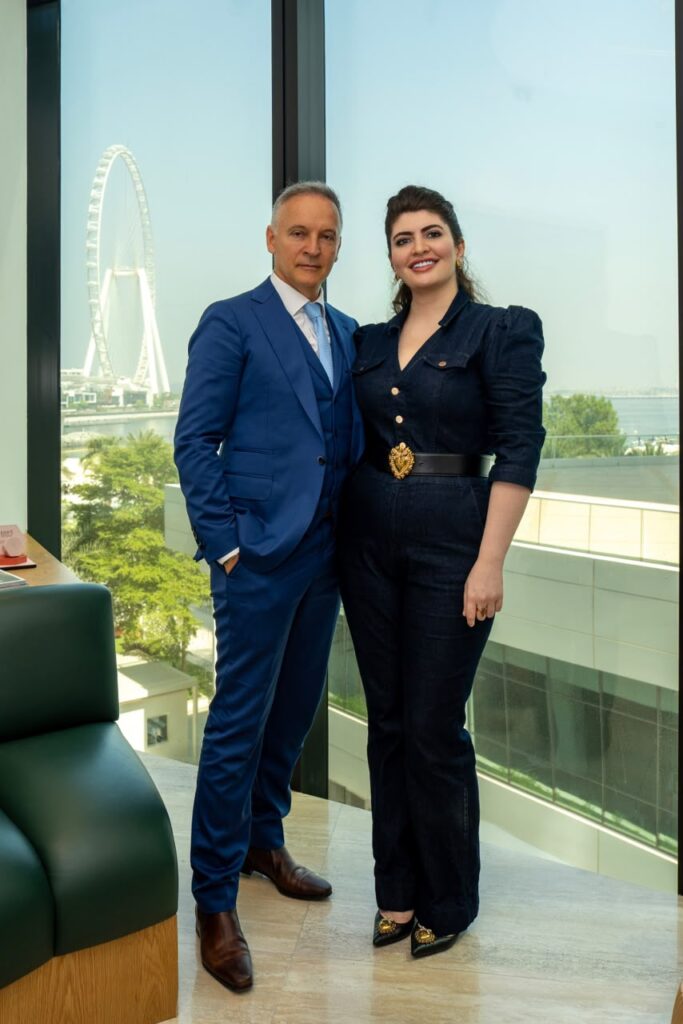
I am an aesthetic and longevity physician. I am not a plastic surgeon, and I do not perform surgery. Part of my job is to recognise early, and honestly, when the result a patient hopes for can only come from surgery. When it can, I make sure they are in good hands. At Apogée Clinic, those hands belong to Dr Dominique Saunière, the French plastic surgeon who joins us as our Visiting Plastic Surgeon.
Why a non-surgical doctor refers patients to surgery
Non-surgical treatments are very good at what they do. They restore lost volume, rebuild support over bone and improve skin quality. They stimulate collagen, and they reduce modest pockets of fat while tightening the skin over them.
There are three things they cannot do. They cannot remove skin that is genuinely in excess. They cannot reposition deep tissue that has dropped significantly. And they cannot safely replace the volume of a whole body region.
When a patient’s problem is one of those three, the most useful thing I can offer is a clear explanation and a referral, not a treatment. I apply the same logic I use for combining treatments. I combine when I can identify two different problems. I refer when I can identify a problem my tools were not designed to solve.

Four situations where I refer to a plastic surgeon
1. The finger lift in the mirror: when you are really asking for a facelift
The face ages in every layer at once. The bone of the midface and jaw slowly resorbs and changes shape.1 The deep and superficial fat compartments lose volume and shift.2 The ligaments that hold the face in place loosen. The skin loses elasticity, and eventually there is more of it than the face underneath needs.
Fillers, collagen stimulators and Renuva work on the volume and structure. Threads give a modest, controlled lift and build collagen as they do it. None of them can remove excess skin. None of them can reposition heavy, dropped tissue the way a surgeon can.
This matters because trying to create a lift by adding more and more volume has a name. A 2026 clinical review of facial overfilled syndrome describes practitioners who overfill the face to fight gravity. It warns that this can stretch the ligaments and speed up the very ageing it is meant to hide.3 The face ends up heavier and wider, and it looks less like the patient’s own.
So when a patient lifts their face in the mirror, I look at what their fingers are actually moving. If the face has dropped a little and the skin is good, threads or structural filler may be the right answer, and I say so. If there is jowling, with loose skin along the jaw and neck, I tell them honestly that a face and neck lift (a cervico-facial lift) will give them what their fingers are showing me. Injectables will not.
2. Renuva for the breast: when volume belongs to surgery
I am one of the few doctors in Dubai who offers Renuva. I value it for small, precise contour problems: a hollow temple, a hip dip, the back of the hands, areas of facial volume loss. Some patients, understandably, ask whether it could enhance the breast.
My answer is no, and not only for Renuva. The breast is not a place for injected volume. Large-volume hyaluronic acid gel was once used for breast enhancement. Radiologists then reported that the gel stopped them from examining the whole breast on mammography and ultrasound. The authors of one case series concluded that the injection could not be recommended, and France prohibited it for cosmetic breast enlargement.4 Breast tissue has to stay readable for screening for the rest of a woman’s life.
Breast augmentation, breast lift and breast reduction are surgical decisions about volume, shape and position. They are planned around your anatomy and your screening, and that conversation belongs with a plastic surgeon.
3. Forza for the tummy or back: when liposuction is the better tool
Forza endolaser is one of the treatments I am best known for. It melts fat through a fibre as fine as a needle and tightens the skin in the same pass. That makes it excellent for defined areas: under the chin, the upper arms and smaller pockets on the body.
Before I treat any area, I measure the fat with high-frequency ultrasound. Sometimes the measurement shows that the abdomen, flanks or back hold more fat than an endolaser session is designed to treat, because the layer is too thick, the area too large, or both. For those patients, liposuction removes more fat, more efficiently, in one surgical procedure. They are better candidates for surgery than for my laser.
Sometimes the main problem in the abdomen is loose skin, for example after pregnancy or major weight loss. Then neither liposuction nor laser is the answer on its own, and the surgeon may talk to you about an abdominoplasty (tummy tuck) instead. Measuring first lets me tell which of these a patient needs, rather than selling whichever treatment I happen to have.
4. When we need your own fat: harvesting for stem cell therapy
This fourth reason is not about sending a patient away. It is a collaboration within my own care. When a patient chooses autologous stem cell therapy, we use their own cells. Body fat is one of the richest sources of adult stromal and stem cells in the body.5 International standards set out how these cells are identified once they have been isolated from fat.6
Getting that fat means a small, liposuction-style harvest under sterile surgical conditions. That is a surgeon’s procedure, so Dr Saunière performs the harvest. The tissue then goes to the specialised laboratory we work with for processing, and the cells come back to me for the treatment.
Why I refer to Dr Dominique Saunière
I refer my patients to someone whose work I trust and whose philosophy matches mine. Dr Saunière has joined Apogée Clinic as Visiting Plastic Surgeon, as part of a collaboration between France and the United Arab Emirates. His approach is subtle: he aims for results that look like the patient, not like the procedure. His aftercare is attentive and genuinely caring, and that matters as much as the operation itself.
He is a French surgeon specialising in plastic, reconstructive and aesthetic surgery, with over 25 years of surgical experience. He previously served as Head of the Department of Plastic, Reconstructive and Aesthetic Surgery at a French university hospital. Teaching has always run alongside his surgery, and he has trained many surgeons and young physicians. He holds the French specialist diploma (DESC) in reconstructive and aesthetic plastic surgery and is a member of the Education Committee of the French Society of Plastic, Reconstructive and Aesthetic Surgery (SOFCPRE). He has also served as a member and examiner of the French College of Plastic Surgery, which certifies future French plastic surgeons.
He also knows aesthetic medicine from the inside. He is a Key Opinion Leader for an international company that makes injectable products for aesthetic medicine, and he regularly trains physicians in injection techniques. That matters to me. When I refer a patient, I am talking to a surgeon who understands exactly what injectables can and cannot do.
He performs facial surgery, including face and neck lifts, eyelid surgery and rhinoplasty. He also performs breast surgery (augmentation, lift and reduction), body contouring (tummy tuck, arm lift and thigh lift) and liposuction. You can read more on his website or follow him on Instagram at @dr.dominiquesauniere.
Seeing Dr Saunière, in Dubai or from France
Every surgical journey starts with a personal consultation: listening carefully and understanding what you are hoping for. Because Dr Saunière works between France and the UAE, Apogée Clinic has set up the patient journey to work across both.
- The first consultation. When Dr Saunière is in France, you can arrange an initial video consultation directly with him. To request one, contact Apogée Clinic or message him on Instagram at @dr.dominiquesauniere.
- What it covers. You meet him, talk through your goals and expectations, ask your questions and explore the options that suit you, whether in aesthetic medicine or in plastic and aesthetic surgery.
- The next steps. If treatment or surgery is appropriate, the clinic coordinates the rest of your journey with him, including his visit to Apogée Clinic.
- Follow-up. Apogée Clinic coordinates every stage, from the first consultation through your appointment, treatment or surgery, to your follow-up care, so that France and Dubai work as one journey.
What happens when I refer you
- I explain what I see. I tell you why I think surgery will serve you better, using ultrasound findings or 3D imaging where they help.
- I share my assessment with Dr Saunière, so you do not start from zero.
- You meet him and decide in your own time. You can see him in person at Apogée Clinic or by video when he is in France. A referral is a recommendation, not a commitment.
- Your care with me continues. Skin quality, collagen stimulation, regenerative treatments and maintenance often have a place before or after surgery. When there are two different problems, there can be two different treatments.
“Isn’t it bad for business to send patients away?”
People ask me this more often than you would think. Honestly, the patients I refer are often the ones who trust me most afterwards. They come back for their skin, for maintenance and for longevity medicine, and they send their friends. They do this because I told them the truth when it would have been easier to sell them a syringe.
Aesthetic medicine only works if patients can believe the doctor who says “yes, this will help you”. That belief is built on the times I say “no, this won’t”.
|
Have you been told you need filler, but your fingers keep lifting your face in the mirror? Book an assessment. We will look at what is actually happening, layer by layer. |
Frequently Asked Questions
How do I know if I need a facelift or fillers? |
It depends on what has changed. If your concern is hollowing or lost volume and your skin is still good, injectables can usually help. If your concern is loose skin along the jaw and neck, the kind you instinctively lift with your fingers, a surgical lift is usually the right answer. A proper in-person assessment tells you which one you need. |
Can a thread lift replace a facelift? |
No. A thread lift is not a mini facelift. Threads give a modest lift and stimulate collagen, which makes them a very good treatment for mild sagging in the right patient. They cannot remove excess skin or reposition heavy tissue the way surgery can. |
Can Renuva or filler be used to enlarge the breasts? |
I do not inject the breast with any filler or volumising material. Injected gel in breast tissue has been shown to interfere with mammography and ultrasound, which matters for lifelong breast screening. Breast augmentation, lift and reduction are surgical procedures, so I refer these patients to a plastic surgeon. |
Is endolaser an alternative to liposuction? |
For defined, moderate areas such as under the chin, the upper arms or smaller pockets of body fat, often yes. Endolaser also tightens the skin. When there is a large amount of fat across the abdomen, flanks or back, liposuction is the more effective option. I measure the fat with ultrasound before recommending either. |
Why do you need to harvest fat for stem cell therapy? |
Autologous stem cell therapy uses your own cells, and body fat is one of the richest sources of adult stromal and stem cells. The fat is collected in a small, sterile, liposuction-style procedure. Because this is a surgical step, our plastic surgeon performs it. |
Will I still see you if I have surgery? |
Yes. Many patients continue with skin quality, collagen and regenerative treatments before or after surgery. Surgery and non-surgical care solve different problems, so they often work well together. |
Are you a plastic surgeon? |
No. I am an aesthetic and longevity physician, and I do not perform surgery. When a patient needs surgery, I refer them to Dr Dominique Saunière, the French plastic, reconstructive and aesthetic surgeon who is Visiting Plastic Surgeon at Apogée Clinic. |
Where does Dr Saunière see patients in Dubai? |
Dr Saunière sees patients at Apogée Clinic, Address Beach Resort, JBR, as Visiting Plastic Surgeon. The clinic coordinates his visits and your appointments with him. |
Can I consult Dr Saunière while he is in France? |
Yes. When he is in France you can arrange an initial video consultation directly with him. Contact Apogée Clinic or message him on Instagram at @dr.dominiquesauniere. If treatment or surgery is appropriate, the next steps, including his visit to Apogée Clinic, are then coordinated with the clinic. |
References
- Mendelson B, Wong CH. Changes in the facial skeleton with aging: implications and clinical applications in facial rejuvenation. Aesthetic Plast Surg. 2012;36(4):753–760. https://doi.org/10.1007/s00266-012-9904-3
- Rohrich RJ, Pessa JE. The fat compartments of the face: anatomy and clinical implications for cosmetic surgery. Plast Reconstr Surg. 2007;119(7):2219–2227. https://doi.org/10.1097/01.prs.0000265403.66886.54
- Zhou C, Che Q, Zhao R, Wang H, Wa Q. Facial overfilled syndrome: a narrative clinical review. Clin Cosmet Investig Dermatol. 2026;19:1–10. https://doi.org/10.2147/CCID.S600459
- Becchere MP, Farace F, Dessena L, et al. A case series study on complications after breast augmentation with Macrolane™. Aesthetic Plast Surg. 2013;37:332–335. https://doi.org/10.1007/s00266-012-9971-5
- Zuk PA, Zhu M, Ashjian P, et al. Human adipose tissue is a source of multipotent stem cells. Mol Biol Cell. 2002;13(12):4279–4295. https://doi.org/10.1091/mbc.e02-02-0105
- Bourin P, Bunnell BA, Casteilla L, et al. Stromal cells from the adipose tissue-derived stromal vascular fraction and culture expanded adipose tissue-derived stromal/stem cells: a joint statement of IFATS and ISCT. Cytotherapy. 2013;15(6):641–648. https://doi.org/10.1016/j.jcyt.2013.02.006

Dr Shiva Faramarzi
Aesthetic & Longevity Physician at Apogée Clinic, Address Beach Resort, JBR Dubai. She specialises in ultrasound-guided injectables and filler complication management, endolaser, thread lifting (which she teaches to other physicians across the UAE) and regenerative medicine.
About Dr Shiva · Instagram @drshivaf · WhatsApp +971 52 328 6185