If you have felt a small bump under the skin after a thread lift, or noticed a dimple that was not there last week, the first thing worth saying is this: it is usually not evidence that your doctor did something wrong.
Threads are placed into tissue that moves. You talk, chew, sleep on one side, lose a little weight. The thread settles into that movement, and sometimes a barb or a fold ends up somewhere it can be felt. Separately, the response to the material varies between people — some produce a great deal of collagen around a thread, some produce very little, and nobody can tell you in advance which you will be.
Most of what follows is manageable. Some of it resolves on its own. A small amount needs attention soon rather than eventually, and knowing the difference is the reason this article exists.
What can happen, and what to do about each
Dimpling and puckering
Small depressions in the skin along the line of a thread, most obvious when you move your face. In the first few days this is common and usually settles by itself as swelling resolves and the tissue relaxes.
If a significant dimple persists beyond the early settling period — particularly around one to two weeks — it is worth reassessing rather than continuing to wait. Where persistent tethering is the cause, it may benefit from release with subcision: a fine needle passed beneath the skin to divide the band that is pulling the surface down. It is a small procedure, done in clinic.
Timing matters here more than anywhere else in this article. Tethering addressed early is generally more straightforward to correct. Left for months, the tissue tends to become fibrotic, and established fibrosis is harder to treat than early tethering.
A thread you can feel, or see
A palpable firmness along the thread, or in some cases a visible line or a raised point. Early on this is often just swelling and the tissue reaction around a new implant, and it quietens over the first weeks.
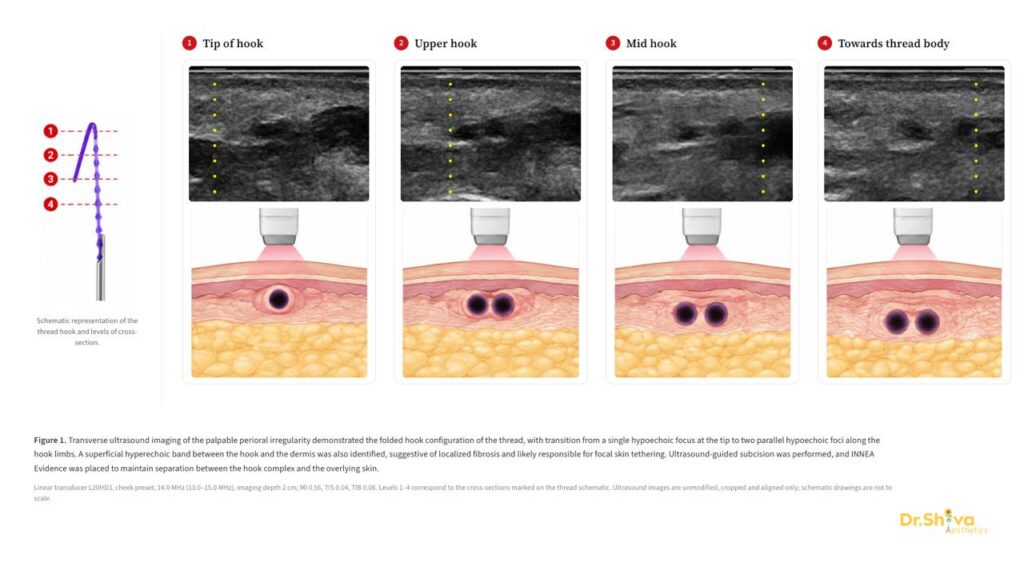
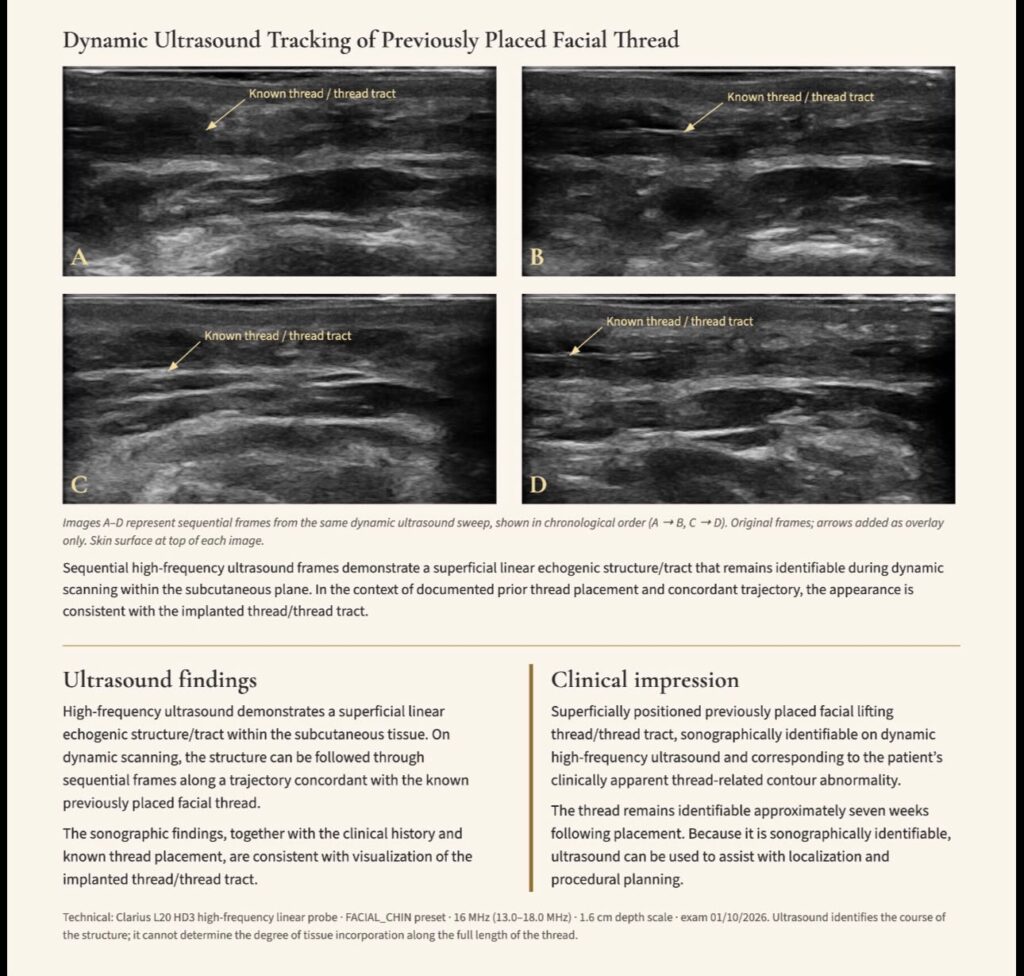
When it does not quieten, the question becomes where the thread actually sits — how superficial it is, and whether it can be reached. That is a question ultrasound can answer and fingers cannot.
Extrusion
Occasionally the end of a thread works its way towards the surface, usually near an entry point. This needs attention promptly. The exposed portion is generally removed, which is normally straightforward.
Infection
Uncommon, but it has to be recognised and treated properly rather than waited out.
Where there is inflammation without a collection of pus, antibiotics and close monitoring are usually the right approach, and the thread may be able to stay.
Where infection is associated with an abscess, or where it persists around implanted material, the position changes. Thread removal is often required in that situation, alongside drainage and antimicrobial treatment where indicated. Removal is normally through a small access point rather than anything larger.
Either way, this is the part of the article not to wait on. Increasing redness, increasing pain or swelling, discharge, or a thread coming through the skin all warrant prompt medical assessment. Prolonged inflammation in the skin can also leave a mark that outlasts the infection itself.
Asymmetry
Faces are not symmetrical and they do not swell symmetrically. Assess at six to eight weeks, not at six days. If a genuine asymmetry is still present once everything has settled, it can usually be addressed — but judging it early leads to correcting something that was going to correct itself.
Partial removal is a legitimate outcome. Taking out the portion causing the problem, and leaving a well-integrated remainder that is causing none, is frequently the correct decision rather than a failed one. The aim is to solve the problem with the least disturbance to the surrounding tissue — not to achieve a tidy result on a report.
Contour afterwards. Tissue that has been tethered or altered by a thread takes time to settle once the thread is gone. The surface may not be smooth immediately.
Can a thread be removed?
Often, yes — and usually with less drama than people expect. Removal is frequently done with a needle through a small access point under local anaesthetic, not through an incision and not in an operating theatre.
But the honest answer has conditions attached to it, and you should hear them before the procedure rather than during it.
Timing. Threads are most readily removed in the early weeks. As time passes, tissue grows into and around the material — which is the whole point of how threads work — and that integration is what makes later removal harder.
Completeness. Complete removal cannot be guaranteed in advance. If significant resistance or tissue incorporation is found during the procedure, the right response is to modify the approach, not to pull harder. Excessive traction does more damage than a retained fragment.
Why I scan before deciding anything
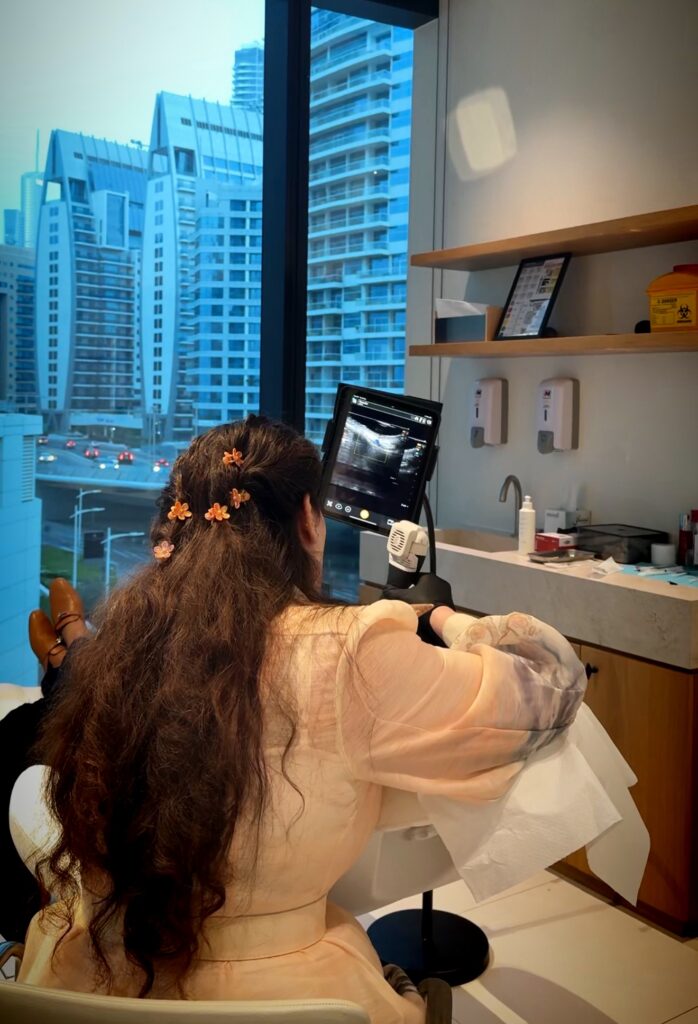
You cannot plan the removal of something you cannot locate. High-frequency ultrasound shows where a thread actually lies — how deep, in which plane, and along what course — and it shows it dynamically, so the structure can be followed through the tissue rather than guessed at from a lump.
It also answers a question that comes up constantly: is this lump the thread at all? Swelling, a seroma, a small haematoma, fat and fibrous tissue all feel similar through skin and look entirely different on a scan. Treating the wrong one is how a straightforward problem becomes a prolonged one.
There is a limit worth stating. Ultrasound identifies the course of a thread; it cannot tell you how firmly the tissue has grown into it along its whole length. That part is only answered during the procedure itself.
How threads compare with fillers
Patients often ask which is safer, and the honest answer is that they fail differently rather than that one is simply safer than the other.
Threads do not carry the same intravascular injection or embolisation risk associated with dermal filler. Filler placed into or around a vessel can obstruct it, and vascular occlusion — with tissue ischaemia, and in rare cases visual complications — is a distinct and particularly serious category of filler complication.
Threads have their own set of problems instead: dimpling, palpability, extrusion, infection, asymmetry. These tend to be more visible and more irritating, and on the whole more recoverable.
So the two have different complication profiles rather than one being universally safer than the other. That difference is worth understanding — and it is still not a reason to have threads if threads are not what your face needs.
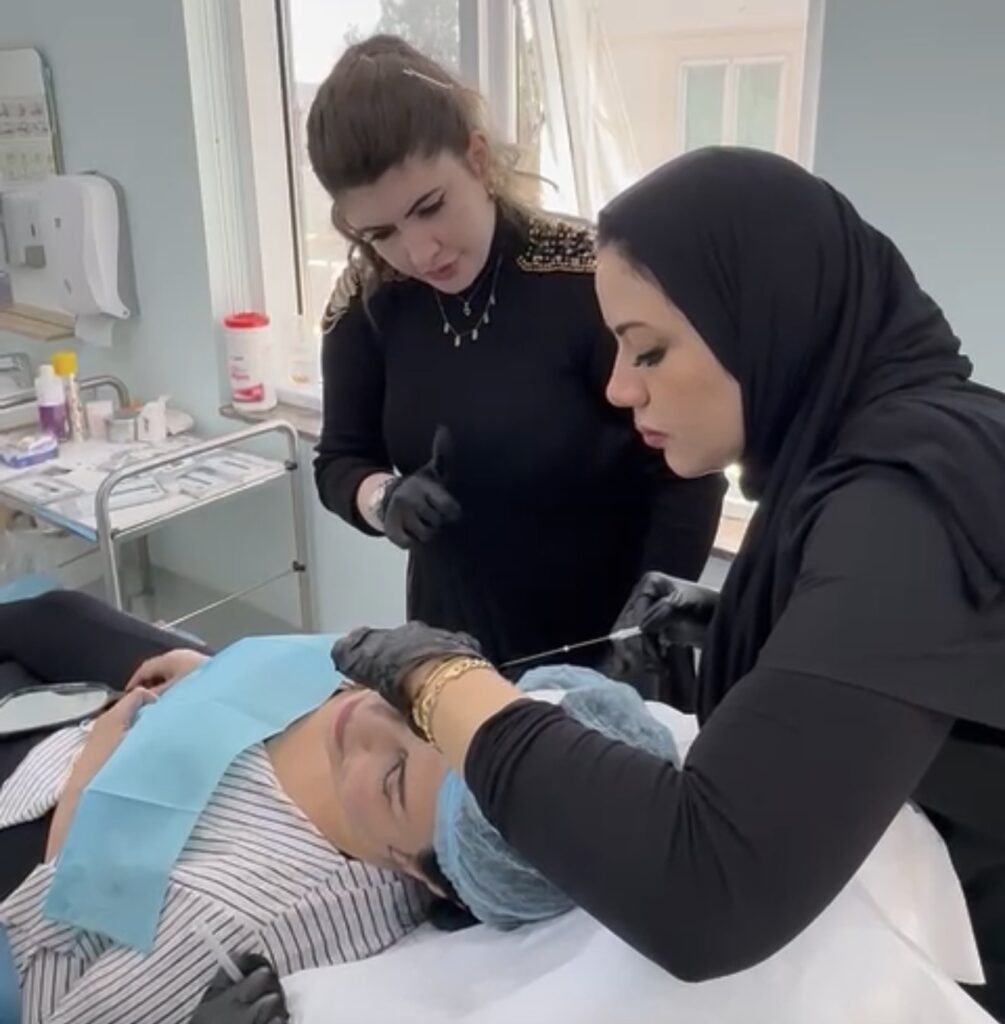
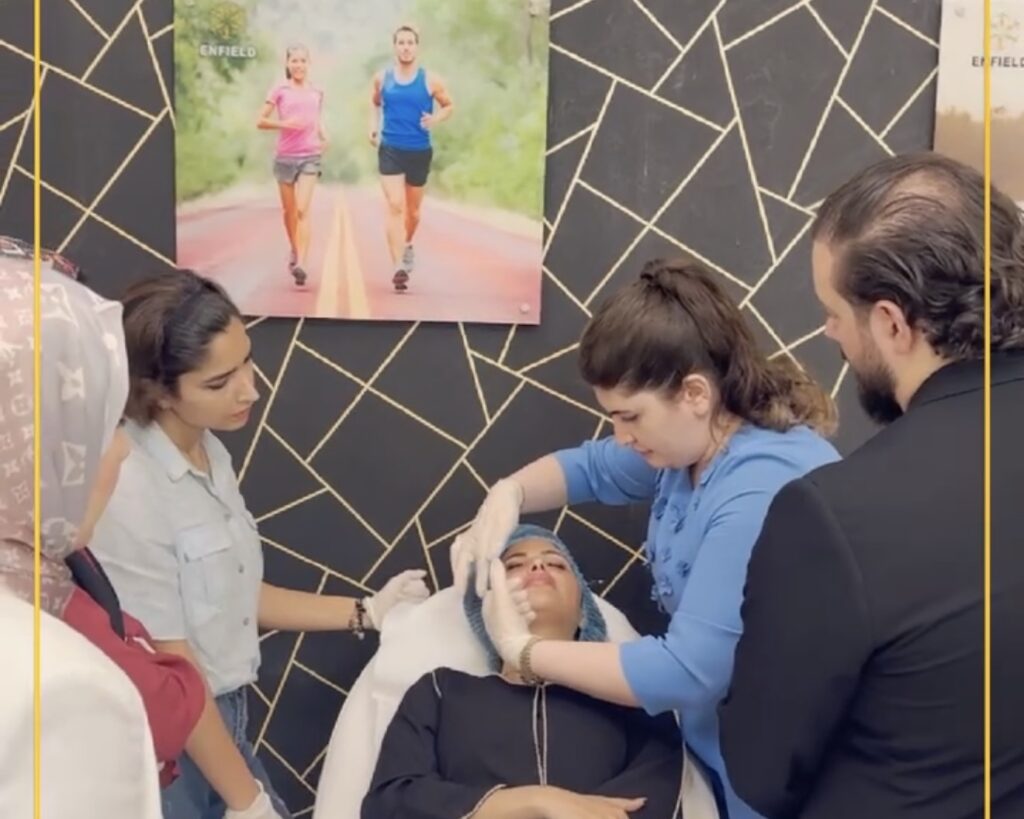
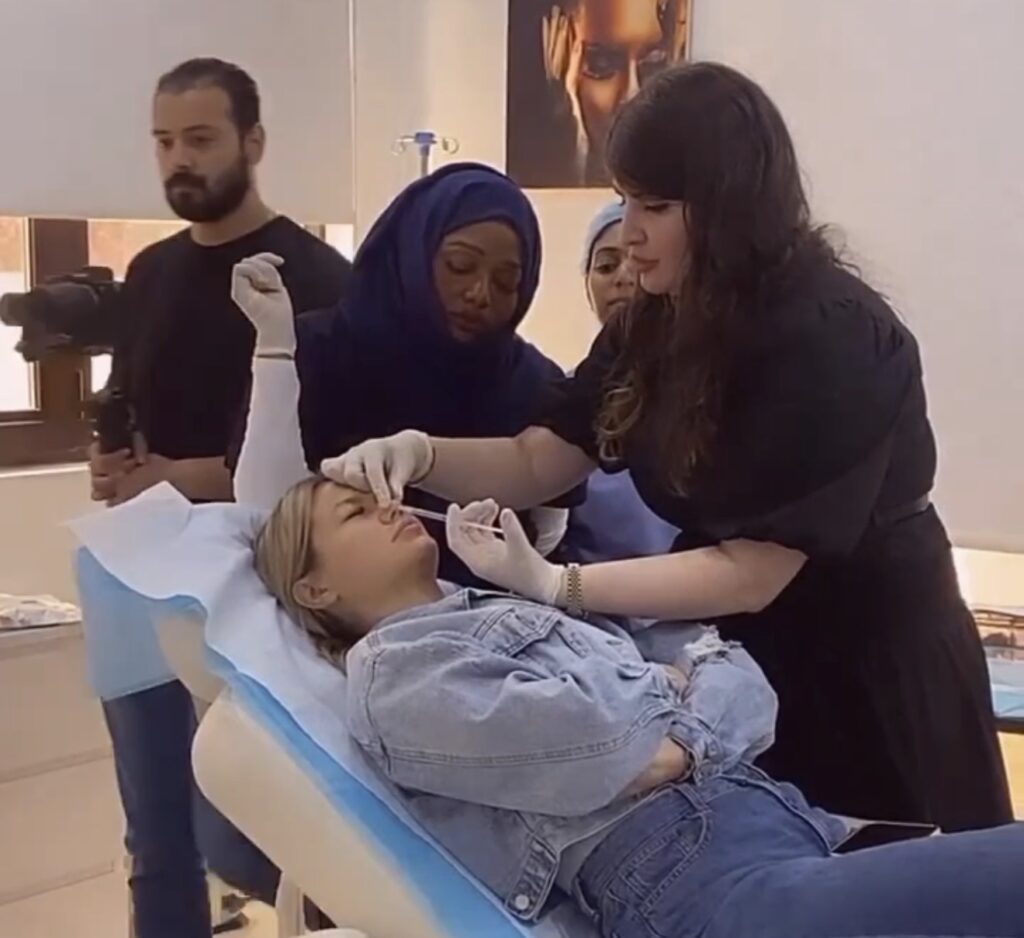
I should declare an interest. I have been training other doctors in thread lifting across the UAE for the last four years. I rate the treatment, I use it regularly, and I think double-arm threads in particular do something that nothing else does.
And I do not recommend them to everyone who asks for them.
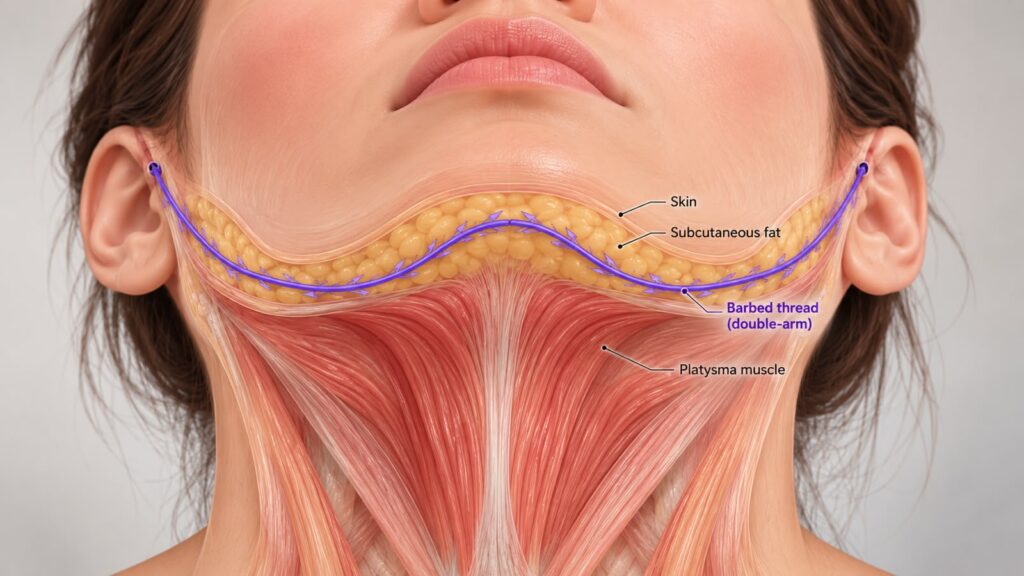
Threads reposition tissue that has descended. They do not replace volume that has gone, they do not remove fat that is weighing a face down, and they do not substitute for surgery where there is real skin excess. Used in the wrong face, they produce a disappointing result in a patient who was never going to be satisfied — and that is not a complication of the technique. It is a complication of the decision.
If something is not settling after a thread lift, do not wait it out and do not assume it cannot be helped. Most of it can. The things that are hardest to fix are the ones that were left longest.


FAQ
Is a lump after a thread lift normal?
In the early weeks, often yes — it is usually swelling and the normal tissue reaction around a new implant, and it settles. A lump that is still present after several weeks, or one that is growing, red or painful, should be assessed rather than waited out.
Can thread lift dimples be fixed?
Usually, yes. Many dimples settle on their own as swelling resolves in the first days. Where a significant dimple persists beyond the early settling period — particularly around one to two weeks — it is worth reassessing, and persistent tethering may benefit from release with subcision, a fine needle passed under the skin to divide the band. Tethering addressed early is generally more straightforward to correct than established fibrosis.
Can threads be removed?
Often, and usually with a needle through a small access point under local anaesthetic rather than an incision. Removal is most straightforward in the early weeks, before tissue has grown into the material. Complete removal cannot be guaranteed in advance, and partial removal of the problematic portion is sometimes the correct outcome.
How long after a thread lift can they be taken out?
Earliest is easiest. Threads are most readily removed in the first weeks; beyond that, tissue integration — the process that makes threads work — progressively makes removal harder.
Does a visible thread mean my doctor made a mistake?
Not usually. Threads sit in tissue that moves, and the collagen response around them varies considerably between individuals. Placement matters, but a palpable or visible thread is frequently a consequence of normal variation rather than poor technique.
What happens if a thread gets infected?
Inflammation without a collection of pus is usually managed with antibiotics and close monitoring, and the thread may be able to remain. Where infection is associated with an abscess, or persists around the implanted material, thread removal is often required alongside drainage and antimicrobial treatment where indicated. Either way it needs prompt assessment — increasing redness, pain, swelling, discharge or extrusion should not be waited out, and prolonged inflammation in the skin can leave a lasting mark.
Are threads safer than fillers?
They have different complication profiles rather than one being universally safer. Threads do not carry the same intravascular injection or embolisation risk associated with dermal filler — vascular occlusion, with tissue ischaemia and in rare cases visual complications, is a distinct and particularly serious category of filler complication. Threads have their own problems instead: dimpling, palpability, extrusion, infection and asymmetry, which tend to be more visible and more recoverable.
When should I get a second opinion?
If something has not settled by about two weeks, or at any point if there is increasing pain, redness, spreading swelling or a thread coming through the skin. Waiting rarely improves any of these, and timing genuinely changes what can be done.