Double Chin Treatment in Dubai | Non-Surgical | Dr Shiva
SUBMENTAL FULLNESS · JAWLINE DEFINITION · NON-SURGICAL
Double Chin Treatment in Dubai
A double chin is not one condition, and that is why one treatment does not fix all of them.
Fat under the chin, loose skin, retained fluid, a tight band of muscle and the projection of your chin itself all produce the same silhouette in a photograph — and each one needs something different. Some of them respond very well to non-surgical treatment. One or two do not respond to it at all.
So the first thing I do is work out which of them is actually creating the shape you are seeing, before anything is treated.
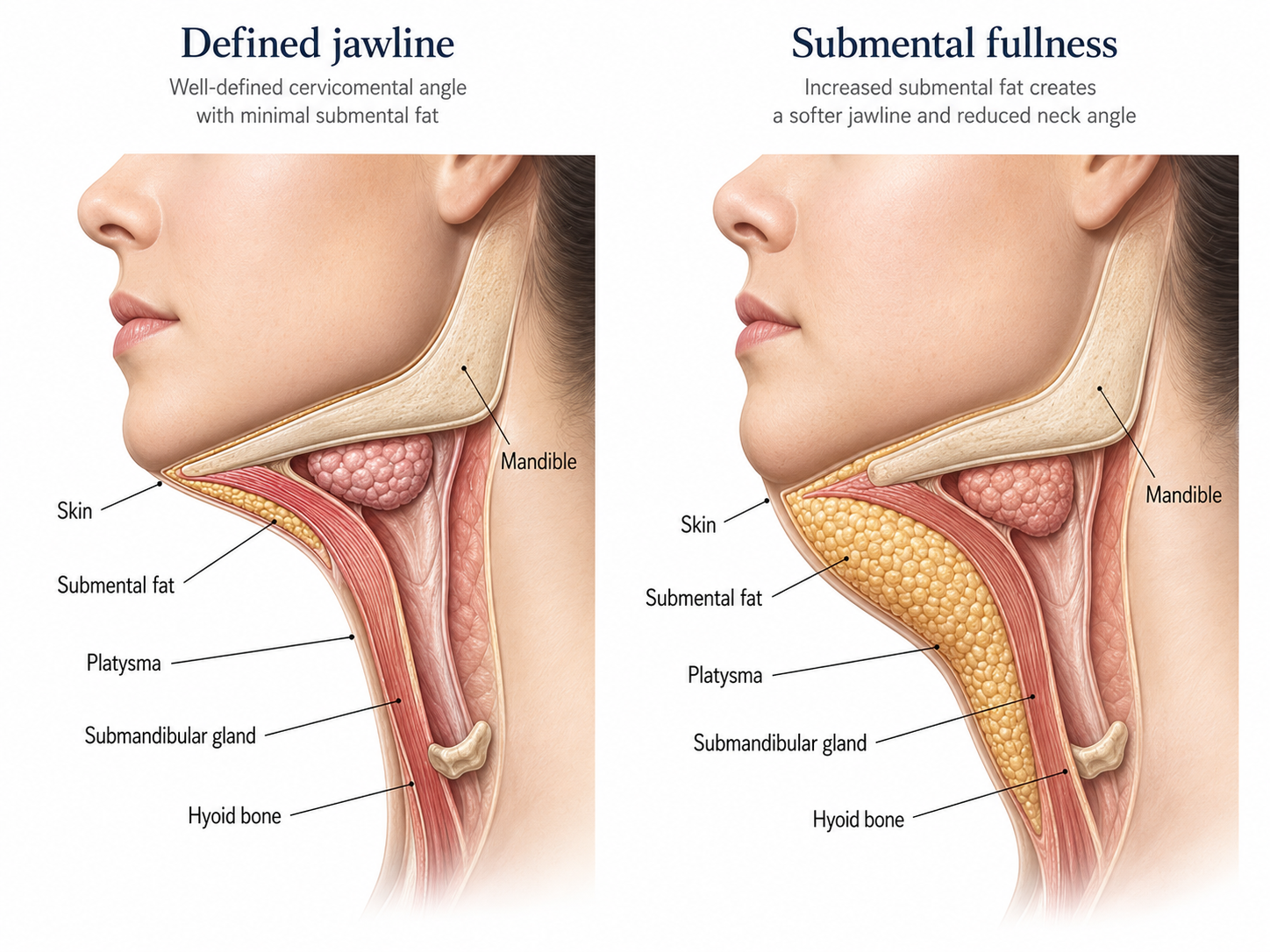

What is actually under your chin?
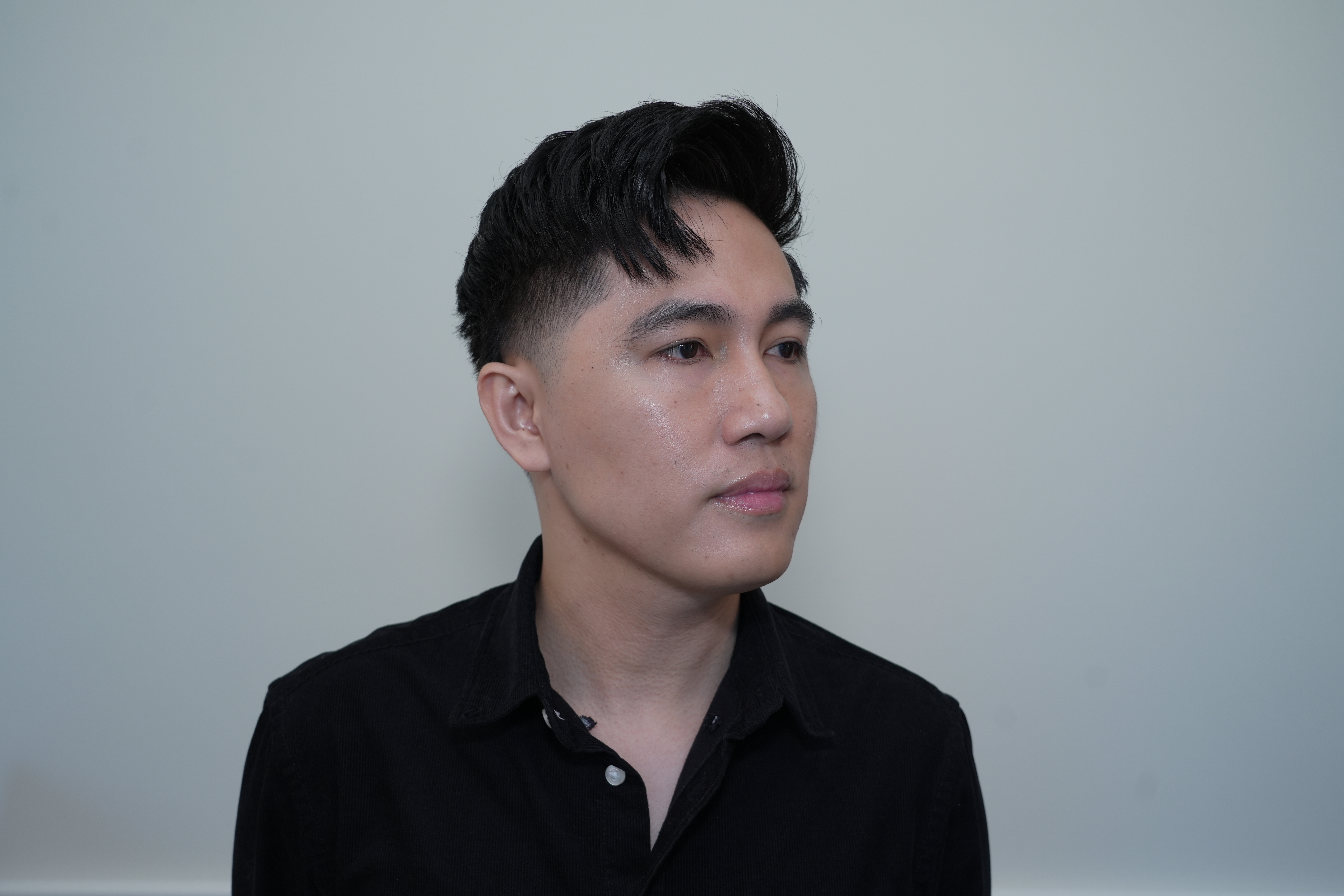
Six things create the appearance of a double chin. Most people have two or three at once, and treating the wrong one is the most common reason a double chin treatment disappoints.
01 — Fat beneath the chin (submental fat)
A distinct pad of fat sitting between the chin and the neck, blurring the angle where the two should meet. It is often unrelated to body weight — it is one of the most genetically determined fat deposits in the body, which is why it can persist in someone who is slim and exercising regularly. This is the cause that responds best to treatment, and it is a volume-removal problem, not a volume-addition one.
02 — Skin laxity and early jowling
When skin and the tissue supporting it lose tension, the outline of the jaw softens and the neck loses its edge. If laxity is the dominant issue, reducing fat alone can make things look worse rather than better — remove the volume that was filling loose skin and you are left with the skin. This is why the assessment matters more than the technology.
03 — Fluid retention and lymphatic congestion
Some faces are not heavier — they are holding fluid. If the fullness is noticeably worse in the morning, changes through the day, worsens with salt, alcohol or poor sleep, or appeared after previous injectable treatment, then it is unlikely to be fat, and treating it as fat will not work. This is a genuinely under-recognised cause and it is treated completely differently.
04 — The platysma muscle, and posture
The platysma is a broad sheet of muscle across the front of the neck. When it tightens or its edges separate, it forms visible vertical bands and pulls down on the jawline. Habitual forward head posture — which almost everyone who works at a screen or a phone now has — shortens the front of the neck and blunts the chin-neck angle without any fat being present at all.
05 — The projection of your chin
A chin that sits further back than average changes the entire outline of the lower face. The submental area may hold a completely normal amount of fat, but with no forward projection to define it against, it reads as a double chin in profile. Treating this by removing fat achieves very little; treating it by restoring projection can change the profile completely.
06 — What is not fat, and will not respond
Two things sit under the chin that no non-surgical treatment can change, and you deserve to know about them before you spend money. A prominent submandibular gland — a salivary gland that sits just beneath the jaw — can create a rounded fullness that looks exactly like fat on a photograph but is glandular tissue. And a hyoid bone positioned lower than average sets the chin-neck angle anatomically, regardless of how much fat is removed.
Neither is a problem. Both are simply anatomy. But if either is what is creating your profile, I will tell you at the assessment rather than treat you and hope.
Is this the same as Endolift?
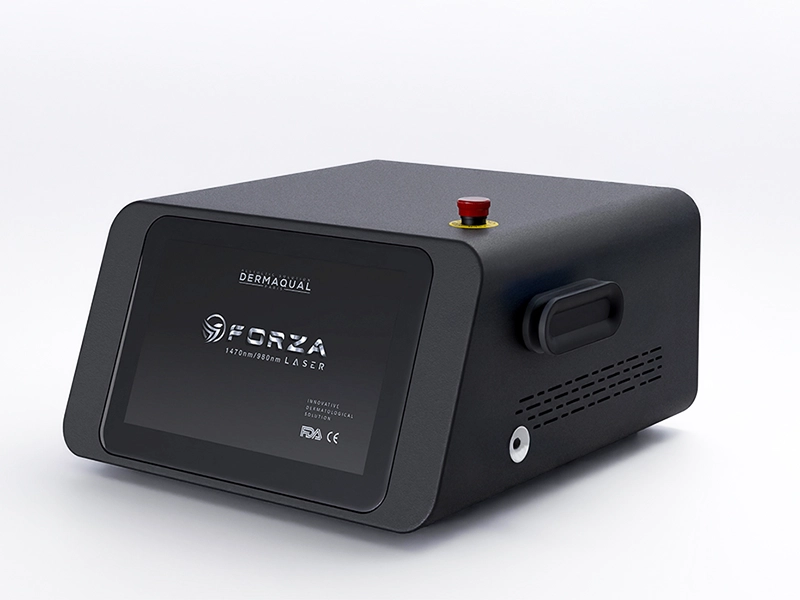
You may have seen this treatment advertised under a brand name. Endolift® is one Italian manufacturer’s trademarked version of a technique now performed on several laser platforms: a 1470 nm laser delivered beneath the skin through a fine optical fibre, which reduces localised fat and tightens the overlying tissue as it heats.
I know that platform well — I worked with it for years before moving, around three years ago, to the Forza system I use now: a 1470 nm fibre-coupled diode laser, CE-marked and FDA-cleared. The wavelength, the mechanism and the fibre approach are the same category of treatment. What actually changes your result is not the badge on the machine — it is whether the fullness under your chin is fat at all, and the settings and judgement used on the day
How each cause is treated
Once the cause is clear, the treatment follows from it. Reducing, tightening, repositioning and restoring projection are four different jobs, and no single device does all four.
01
Assessment
Examination of what is actually present: skin quality and recoil, the position of the hyoid, whether the submandibular gland is prominent, muscle bands, and how the appearance changes through the day.
Where it adds information, I scan the area with high-frequency ultrasound. That does two things. It measures how thick the fat layer under your chin actually is — which is what determines whether there is enough of it to be worth treating, and how much change is realistically available to you. And where there has been previous filler in the face or jawline, it shows what is already in the tissue, because product placed years ago can be adding weight to the lower face without the patient knowing it is there.
This is also how the question in the last section gets answered. Fat, a prominent gland and retained fluid look similar from the outside and different on a scan. I would rather measure than assume.
02
Threads, where the problem is laxity
Where the outline has softened but there is no significant excess skin, threads reposition and support tissue along the jawline rather than adding volume to it. I use double-arm threads, which give more secure fixation and a more even pull than single-armed threads. Around half the result is visible immediately, it may soften slightly over the first fortnight, and it then builds again as collagen forms.
03
Endolaser for submental fat
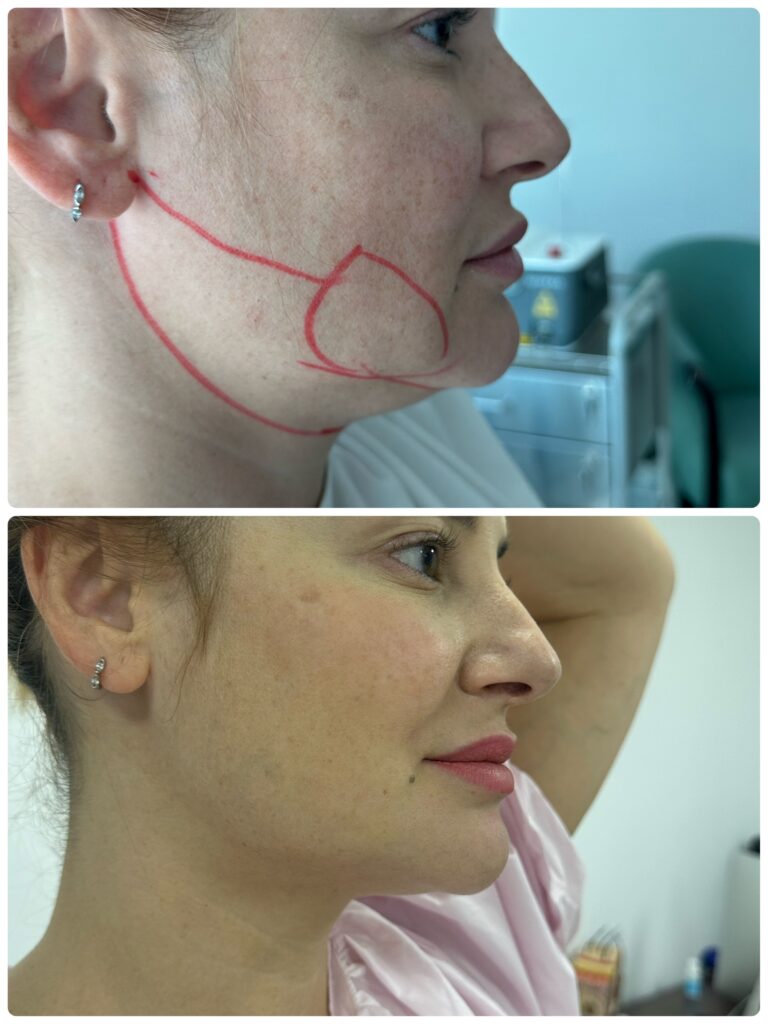
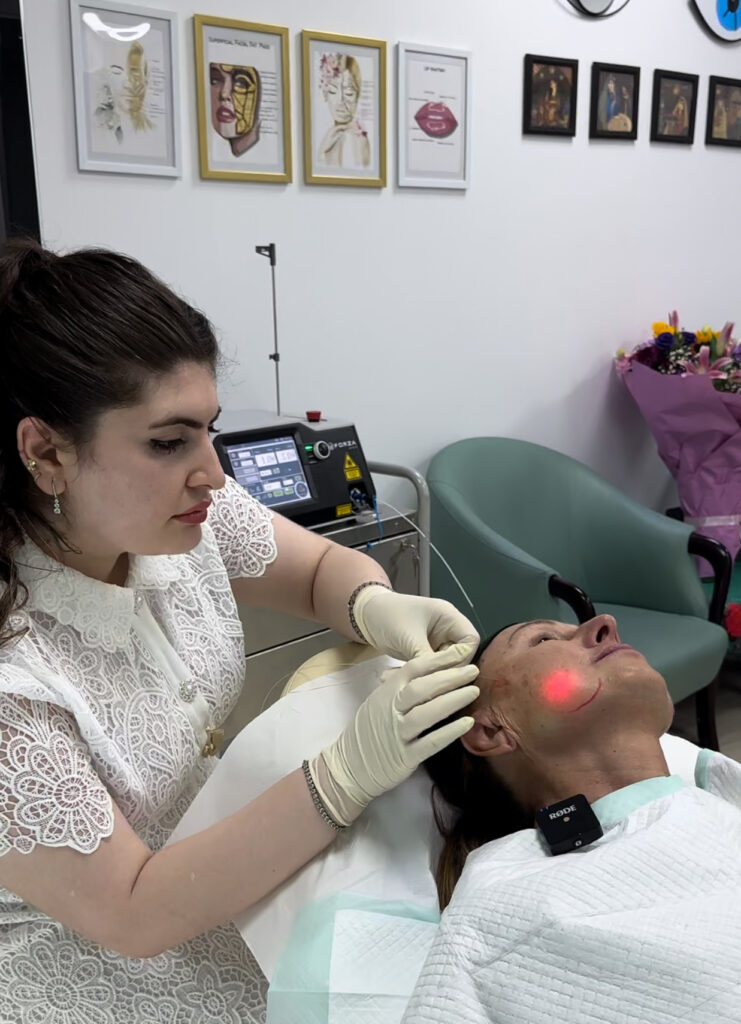
For genuine fat beneath the chin, this is the treatment I use most. A fine optical fibre is passed under the skin through a single entry point — no incision, no stitches — and delivers 1470 nm laser energy directly into the fat layer. The fat is emulsified and cleared by the body over the following weeks, and the same thermal effect causes the overlying tissue to contract, which is why it suits a chin that is both full and slightly lax.
Once the fat has been emulsified, I remove it directly with a fine syringe rather than leaving all of it to be cleared over the following weeks. It is not liposuction — there is no suction device and no cannula pass of that kind — but taking the liquefied fat out shortens the recovery noticeably. The body would clear it either way; this simply means it has less to do.
It is done under local anaesthetic and takes under an hour. You are given a compression garment to wear afterwards. Swelling and bruising are expected rather than absent, and the result is assessed at around three months, continuing to improve to six.
04
Endolaser and threads together
These treat two halves of the same problem. Where the chin is both full and dropped, the endolaser reduces the fullness and tightens the tissue while the threads reposition and support what remains. I combine treatments when I can identify two different problems — not because combining more treatments automatically produces a better result. It is planned as one treatment in one assessment, not sold as two.
05
Chin projection
Where the profile is being created by a chin that sits too far back, a small, well-placed volume on the bone at the chin changes the entire lower-face outline. This is one of the highest-yield treatments in facial aesthetics and one of the most commonly missed, because the patient arrives asking about their neck.
06
Fluid retention
If the fullness is fluid rather than fat, the treatment is directed at the congestion rather than at the tissue — and treating it as fat wastes both your money and a procedure you did not need. This overlaps with facial puffiness and lymphatic congestion, which I have written about separately.
07
When surgery is the honest answer
Where there is significant excess skin, a large volume of fat, marked platysmal banding or a very low hyoid, non-surgical treatment will under-deliver, and a surgical opinion is the more useful recommendation. I would rather say that at the assessment than after three sessions.
How this compares to surgical fat removal
Surgical fat removal and endolaser are not the same operation performed with different tools.
Liposuction removes fat. It does not tighten the skin and tissue that were holding that fat — which is why removing a large volume can leave an area looking loose rather than sharper, and why surgeons often plan skin removal alongside it.
The endolaser reduces and tightens in the same pass, because the thermal energy that emulsifies the fat also causes the tissue above it to contract. For a moderate amount of submental fat with reasonable skin quality, that combination is usually what the area actually needs.
The access is different too. There is no surgical incision — the fibre is introduced through a needle puncture and passed like a fine cannula, so there is no line to heal and nothing to stitch. It is done under local anaesthetic rather than a general.
None of that makes it the right choice for everyone. Where the fat volume is large, the skin excess significant, or the platysma markedly banded, surgery does something this treatment cannot — and I will tell you that at the assessment rather than after it.
What it costs
Most clinics will not put a number on a website. I will, because you should be able to work out whether this is worth a consultation before you book one.
Endolaser to the submental area: from AED 5,500 (for gentlemen 6500). Most people need one session. Whether a second adds anything is decided at the three-month review, once the result is visible — not sold to you on the day of the first.
Double-arm threads along the jawline: from AED 4000. The number of threads follows the tissue and the vectors needed, not a package.
Chin projection with filler: from AED 2100.
What changes the price is the size of the area being treated and the time the procedure takes. A broader treatment area — a fuller neck, or a jawline treated alongside the chin — takes longer, uses more energy and is priced accordingly. Where previous filler needs assessing or removing first, that is discussed and priced at the assessment.
You will find lower prices for this treatment in Dubai. What you are paying for here is the assessment that decides whether you should have this treatment at all, a procedure performed by the doctor who assessed you, and a review at three months.
What to expect, and when
Anyone promising you a finished result on the day is describing filler. Everything else on this page works on a slower timescale, and knowing which you are having is the difference between patience and disappointment.
Treatment | First few days | Final result |
Endolaser | Bruising and swelling for up to about a week, largely settled by around ten days. Compression garment worn as advised. | Assessed at around three months, continuing to improve to six |
Bruising and swelling; around half the result visible immediately | May soften over two weeks, then builds again — final at roughly six to twelve weeks | |
Chin filler | Immediate change | Settles over about two weeks as swelling resolves |
Combined endolaser + threads | As for both above | Judged together at three months |
Recovery, and what actually speeds it up
You will bruise. It is worth saying that plainly, because most pages describing this treatment imply you will not.
Bruising and swelling build over the first day or two and are usually at their most obvious for about a week. By around ten days most people are comfortable in company again. You wear a compression garment as instructed during that period.
What makes the biggest difference to that timeline is lymphatic drainage massage. Two or three sessions in the week to ten days after treatment speed the recovery considerably — the swelling clears faster and more evenly. I recommend it to everyone rather than treating it as an optional extra, and it is the single most useful thing you can do for yourself after this procedure.
You wear a compression garment continuously for the first one to three days, and then for eight to ten hours a day after that. It is less demanding than the compression required after surgery, and it matters most in the early period when the tissue is settling into its new position.
If you have an event coming up — a wedding in particular — have this done six to eight weeks beforehand. The bruising is long gone well before then, but the contour is still developing, and you want to arrive at the event looking at the result rather than at the process.



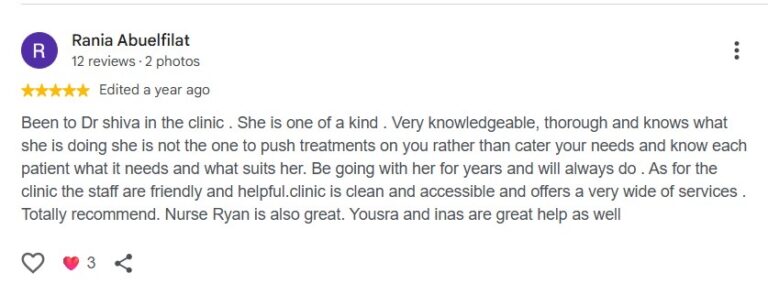
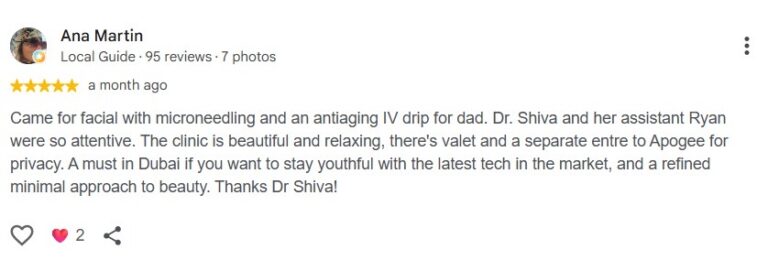
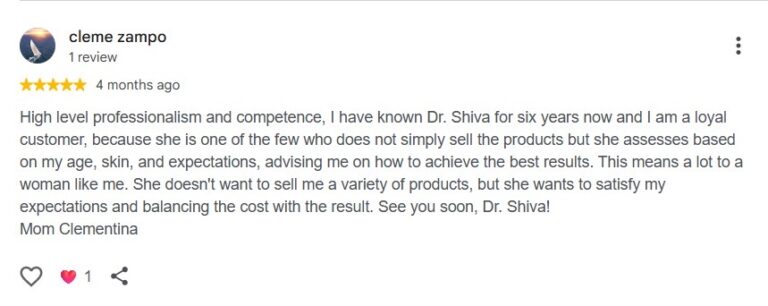
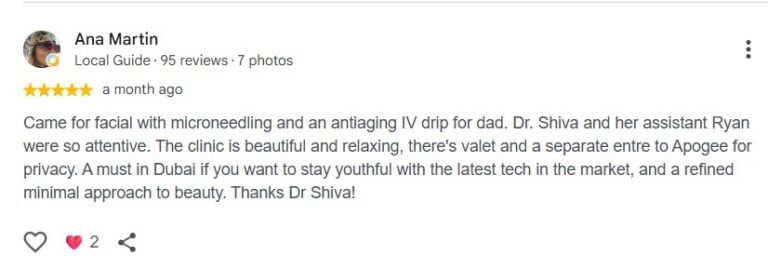
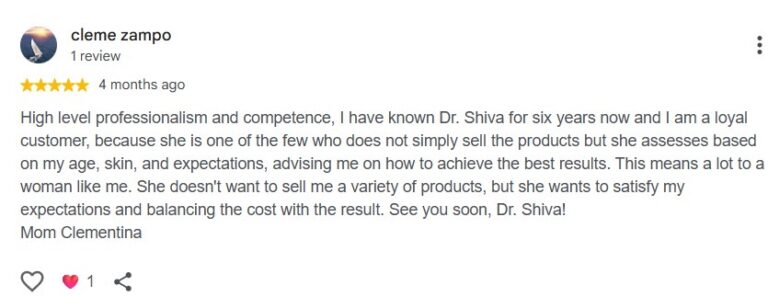
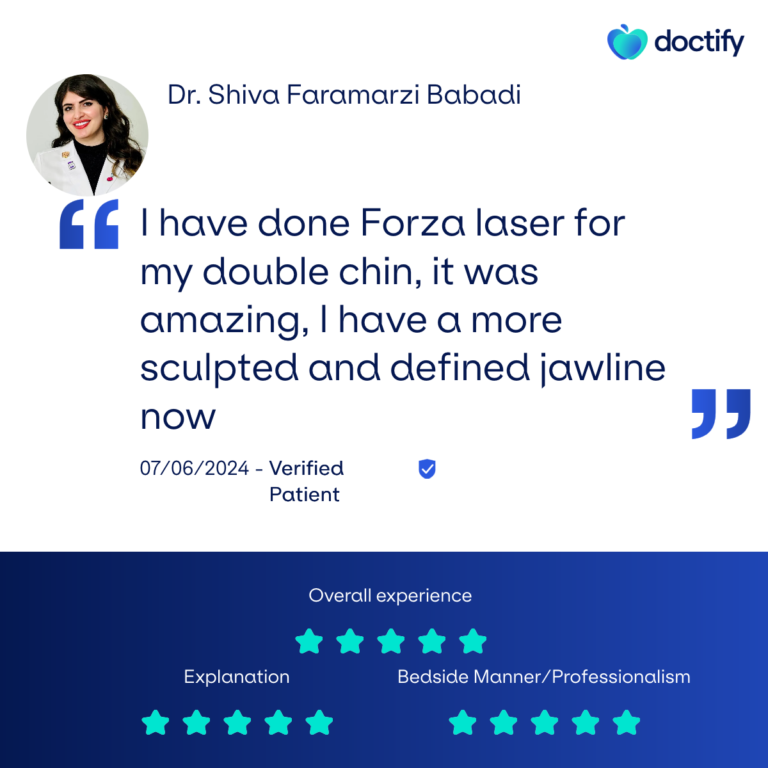
Testimonials
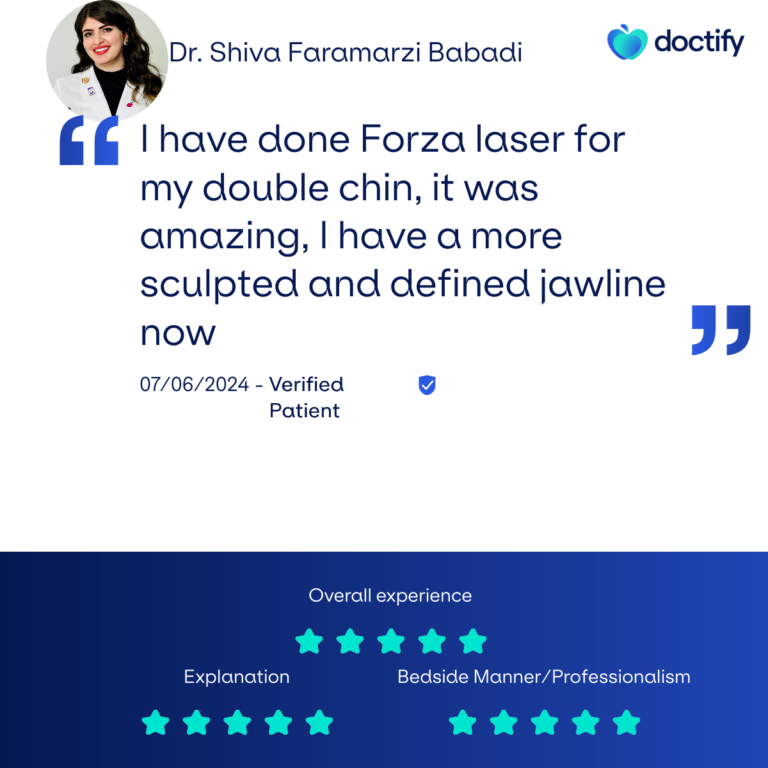
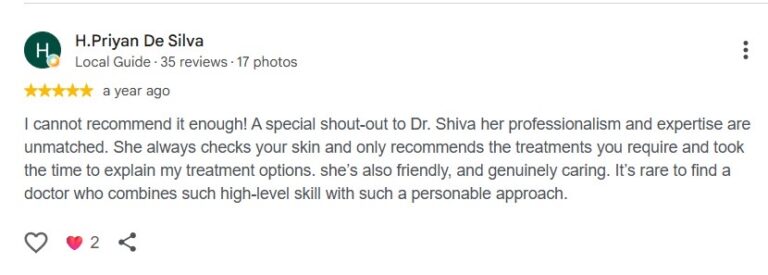
See how we’ve helped our patients achieve their aesthetic goals.

























Frequently Asked Questions

It depends entirely on what is under the chin. Fat responds well to endolaser; skin laxity needs tightening or repositioning rather than fat reduction; fluid retention is a different problem again; and a receded chin needs projection, not removal. No injectable filler treats a double chin. Establishing which of these applies to you is the entire point of the assessment.
In many cases, yes. Fat beneath the chin can be reduced with an endolaser through a single entry point, with no incision and no stitches. Where there is significant excess skin, a large fat volume or marked muscle banding, non-surgical treatment will under-deliver and surgery is the more honest recommendation.
Submental fat is one of the most genetically determined fat deposits in the body, so it can persist in someone slim and active. But it may not be fat at all — retained fluid, a tight platysma muscle, forward head posture, a chin that sits far back, or a prominent submandibular gland all create the same profile at a normal body weight.
It is done under local anaesthetic, so the procedure itself is not painful. Expect a feeling of pressure and movement under the skin. Afterwards, most people describe tightness and soreness rather than pain, and swelling for roughly three to seven days.
Fat cells that are removed do not return, but the remaining tissue still ages and still responds to significant weight change. Most patients see the result assessed at three months, improving to six, and holding well beyond that with stable weight. Any clinic quoting a permanent result is overstating it.
Endolift® is one manufacturer’s trademarked version of the same technique: a 1470 nm laser delivered under the skin through a fine fibre. I perform that technique with a different CE-marked, FDA-cleared platform. The category of treatment is the same; what differs between clinics is the assessment and the judgement, not the badge on the machine.
That pattern points to fluid rather than fat. Fullness that changes through the day, worsens with salt, alcohol or poor sleep, or appeared after previous injectable treatment behaves like congestion, not like a fat pad — and treating it as fat will not work.

Dr Shiva Faramarzi, MD
Aesthetic & Longevity Physician · DHA licence 43705219
Apogée Clinic, Address Beach Resort, JBR, Dubai
WhatsApp or call: +971 52 328 6185
Last medically reviewed: August 2026
This page is general medical education and does not replace individual assessment. Treatment suitability, expected outcomes and regulatory status vary by patient and by therapy.