Home / Services / Cheeks Treatment
Cheek and midface assessment in Dubai with Dr Shiva Faramarzi
CHEEKS • CHEEKBONES • MIDFACE • VOLUME LOSS
Cheek & Midface Treatment in Dubai
A flat, tired or heavy midface is not one problem, and cheek filler is not one answer.
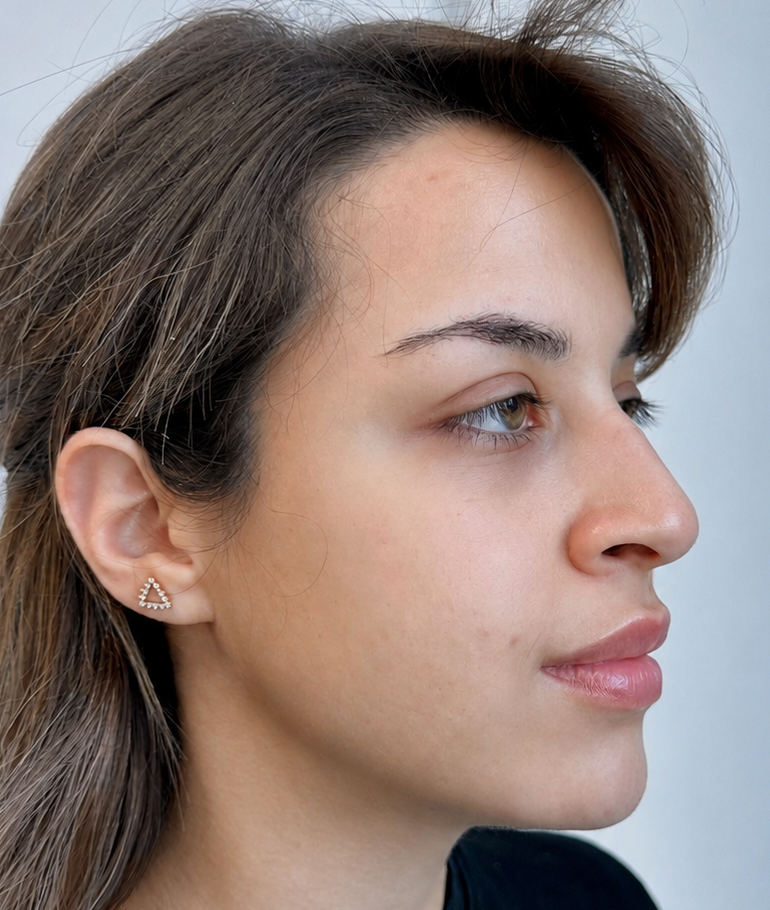
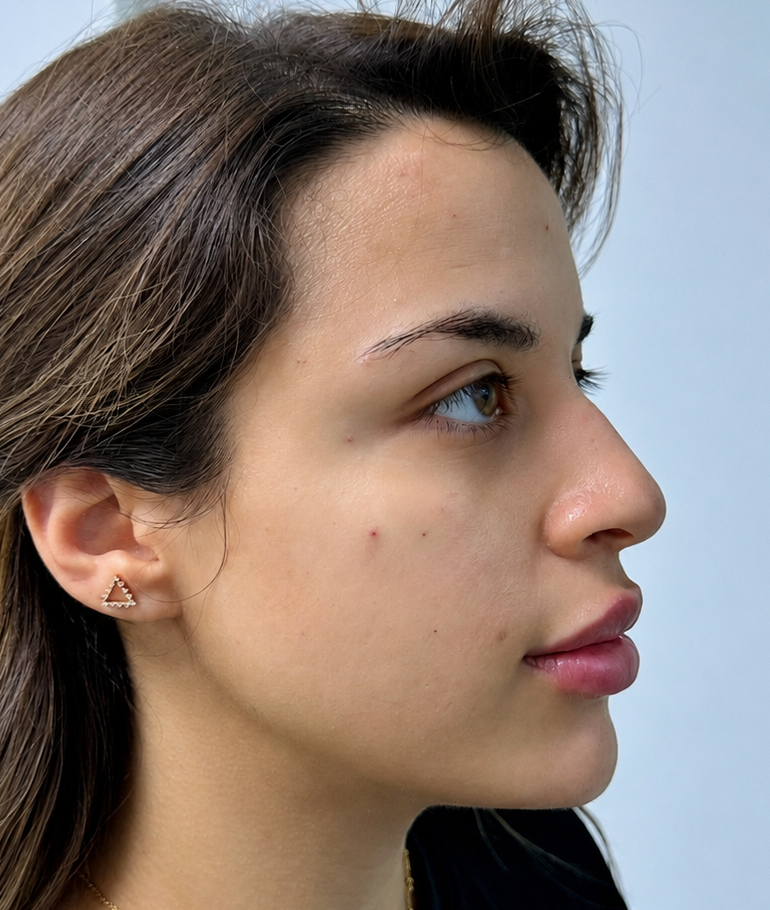
The cheek can look deflated because volume has genuinely been lost, because the bone underneath has changed shape, because the tissue has dropped rather than emptied, or because there is already filler in it that has migrated and settled somewhere it was never meant to be.
Those four faces look similar in the mirror and need completely different treatment. My starting point is establishing which one you have — including scanning any previous filler with high-frequency ultrasound before adding anything new.
Why do cheeks lose their shape?
Once the cause is clear the treatment follows from it. Restoring structure, replacing tissue globally, repositioning what has dropped and removing what should not be there are four different jobs — and the first decision is whether this is a localised problem or a whole-face one.
How I treat the cheeks and midface
01
Assessment, including high-frequency ultrasound
Ultrasound shows what is already in the tissue: where previous filler sits, which layer it is in, whether it has migrated toward the under-eye, and how much of your current shape is product rather than your own anatomy. It also maps the vessels in the area I am about to inject. In patients who have had repeated treatment elsewhere and cannot say what was used or where, this is the difference between a plan and a guess.
02
Structural filler on the cheekbone
Where the underlying platform has genuinely lost projection, a firm product placed deep and on bone at the cheekbone restores it. Small volumes, in the right plane, supporting the tissue above rather than inflating it. Hyaluronic acid is the usual choice — immediate, and reversible if it is ever needed.
The distinction that matters: this is not filling the cheek. It is rebuilding what the cheek sits on.
03
Ellansé, where structure and skin quality both need work
Ellansé is a stimulating volumiser: it gives immediate volume and prompts a collagen response that continues afterwards, so the result develops rather than fades. I find it particularly useful in older patients, where the tissue needs both support and improvement in its own quality, and where the result reads as more natural than volume alone. It is firmer than a standard filler and less forgiving of imprecise placement, which is a reason for care over where it goes rather than a reason to avoid it.
04
Sculptra and Lanluma, for global volume loss
These are collagen biostimulators. They add no immediate volume; they prompt your own collagen over a course of treatments, and the result builds gradually across months.
I prefer them where the volume loss is global rather than local — temples, midface, the area around the mouth, the whole face thinning together — because they restore a general loss of firmness and fullness across the face rather than rebuilding one specific missing corner. Where the problem is a single structural deficit, a filler placed precisely does that job better
05
Renuva, regenerative volume replacement
Where the tissue itself is depleted rather than displaced — significant weight loss, long-term low body fat, genuinely thin faces — Renuva is an injectable adipose matrix that restores volume which your own body then populates with its own tissue. It develops gradually over months rather than appearing on the day, and it is a considered option for selected patients rather than a routine alternative to filler. Like the biostimulators, it comes into its own when the loss is spread across the face.
06
Thread lifting for midface descent
Where the cheek has dropped rather than emptied, threads reposition the tissue upward and support it, instead of adding volume to a cheek that already has enough. I use double-arm threads for more secure fixation. Entry points rather than incisions, bruising and swelling in the first days, and a real but temporary effect that depends on the thread and on your tissue. Threads suit mild to moderate descent; they are not a substitute for surgery where laxity is significant.
07
Skin quality across the midface
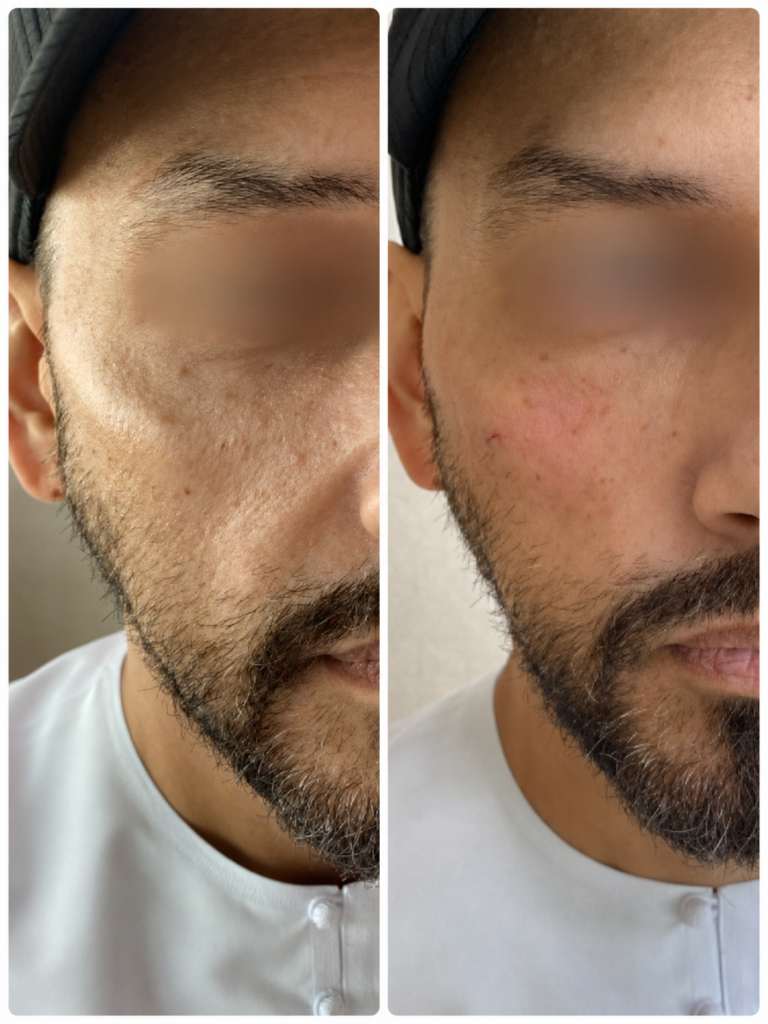
Some of what reads as a tired cheek is the surface, not the volume — texture, thinning skin and loss of light reflection. Microneedling, skin boosters and regenerative treatments address that directly, and they change how a cheek looks in a way that no amount of filler underneath it can.
08
Endolaser, where the cheeks are genuinely too full
Not every cheek needs more. Some patients have full cheeks that push upward and narrow the eyes when they smile, and for them adding volume is exactly the wrong direction. Endolaser delivers energy under the skin through a single entry point to reduce the fullness and tighten the tissue over it — no incision, no stitches, bruising and swelling in the first days, and a result assessed at around three months. It treats excess rather than deficiency, which is the opposite job to everything above it on this list.
09
Hyaluronidase, when previous filler is the problem
Where the midface is heavy because of what is already in it, the correct treatment is removal. Assessed with ultrasound first, dissolved carefully and in stages, and re-assessed before deciding whether anything needs replacing. Patients are frequently surprised by how much less is needed afterwards — and by how much the under-eye improves once the midface has been cleared.
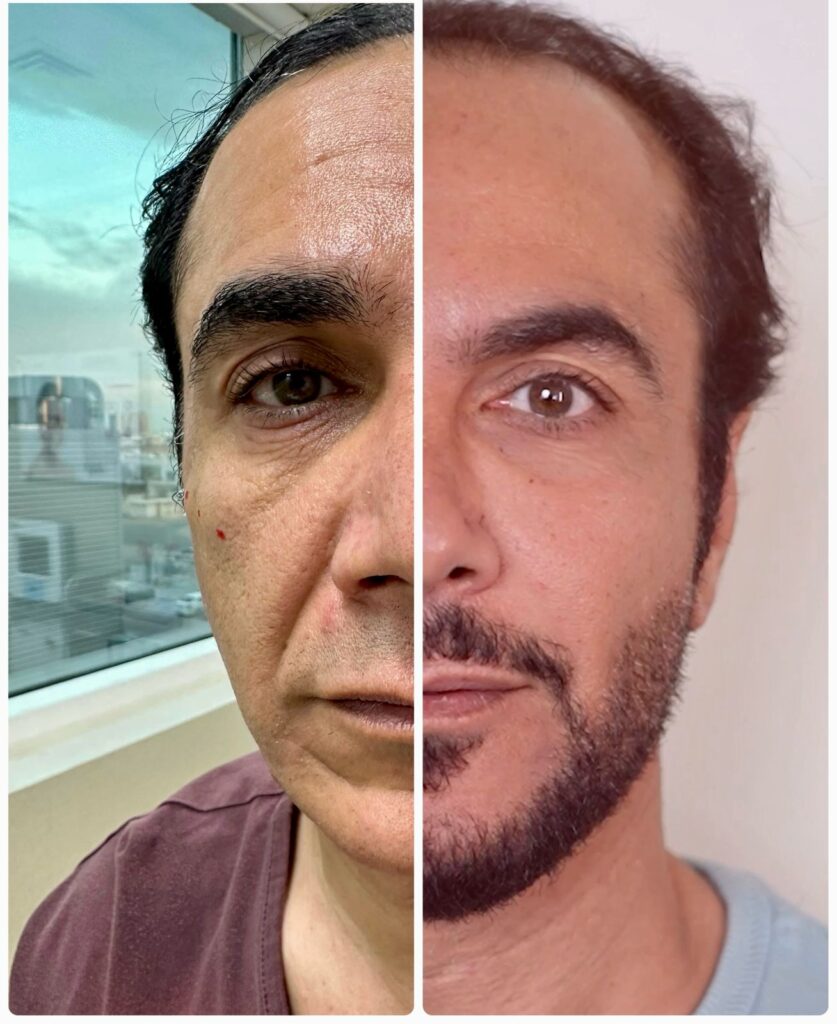
How I treat the cheeks and midface
Why the midface is where technique matters most
This is the section no competitor writes. It is the commercial argument for choosing you, made entirely as clinical fact.
The midface carries the arterial supply to the eye region. The angular artery, the infraorbital artery and the transverse facial artery all run through the territory being injected, the anatomy varies between individuals, and it does not follow the diagram reliably. Cheek and under-eye filler are the injections most associated with serious vascular complications.
Two things reduce that risk in practice: knowing which layer you are in, and knowing what is already in the tissue from previous treatment. High-frequency ultrasound answers both — it maps vessels before injection and identifies old product that has changed the anatomy since the last person injected it.
It is also what makes correction possible when something has gone wrong elsewhere, which is a significant part of my practice.
→ Link: Filler Complications & Ultrasound
How long until you see results
These treatments work on completely different timescales. Knowing which one you are having is the difference between patience and disappointment. | ||||
Treatment | Straight away | Final result | ||
Hyaluronic acid filler | Immediate change | Settles over about two weeks as swelling resolves | ||
Ellansé | Immediate volume | Continues to build as collagen forms over the following months | ||
Sculptra / Lanluma | Little to see initially | Builds gradually over months, across a course | ||
Gradual | Develops over about three months, continuing up to six | |||
Around half the result visible immediately | May soften over two weeks, then builds again — final at six to twelve weeks as collagen forms, skin quality improving alongside | |||
Endolaser | Swelling first, settling over the first days | Assessed at around three months, improving to six | ||
Skin quality treatments | Little immediately | Cumulative across a course | ||
Hyaluronidase | Change within days | Settled at around two weeks, then reassessed | ||
Anyone promising a finished result on the day is describing filler — and filler is one of nine things on this page. |
The overfilled cheek is the most common thing I see
Cheek filler goes wrong slowly. Each treatment looks reasonable on the day. The face looks slightly fuller than it did, which is what was asked for, and nobody involved notices the point at which “restored” became “carrying”.
What actually happens is that product accumulates. Hyaluronic acid in the midface is slow to break down, holds water, and moves — usually downward and inward toward the under-eye. So the upper cheek gets heavier, the lower eyelid gets puffier, and the natural next request is more filler to smooth the transition between the two.
By the time somebody arrives asking why their face looks tired despite being full, there is often more product in the midface than anyone realises, some of it years old.
Part of my assessment is deciding whether the answer is to add, to reposition, or to take out what is already there.
Two things patients ask for that the cheek actually answers
Under-eye filler, when the problem is the cheek
Many patients come to me asking for under-eye filler because they look tired. On examination, what they need is support in the midface.
The tear trough sits directly above the cheek. When the cheek loses support, the boundary between eyelid and cheek becomes visible as a hollow or a shadow — and treating that hollow directly, without addressing what has happened underneath it, is how filler ends up in the wrong place in the least forgiving area of the face.
Restoring the midface is frequently what improves the under-eye. Sometimes nothing more is needed at all.
The nasolabial fold, which cheek filler does not lift
I do not recommend cheek filler as a treatment for the nasolabial fold. It is widely offered on the basis that lifting the cheek lifts the fold, and the scientific evidence for that does not support it. Adding volume higher up does not reliably improve the fold, and in a face that is already full it makes the midface heavier while leaving the fold exactly where it was.
If the fold is what bothers you, it is treated directly, and usually in one of three ways:
• Threads, to reposition and support the tissue that has descended over the fold.
• Sculptra, to build collagen and improve the quality and firmness of the tissue in that area over a course.
• Filler at the piriform aperture — the bony rim beside the nose — placed under ultrasound guidance. Resorption of the maxilla here is a genuine anatomical cause of a deepening fold, and restoring that small area of lost bony support addresses the cause rather than disguising the line.
In many patients I combine threads and filler, which improves the cheek and the nasolabial fold together and is planned as one treatment rather than sold as two.
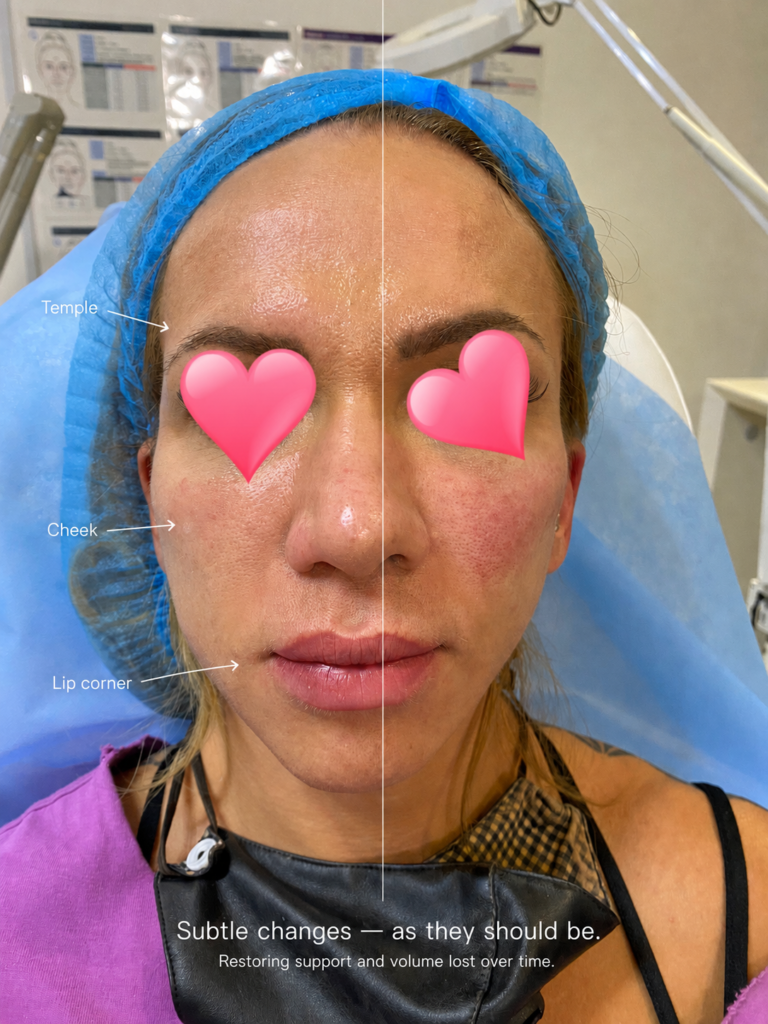
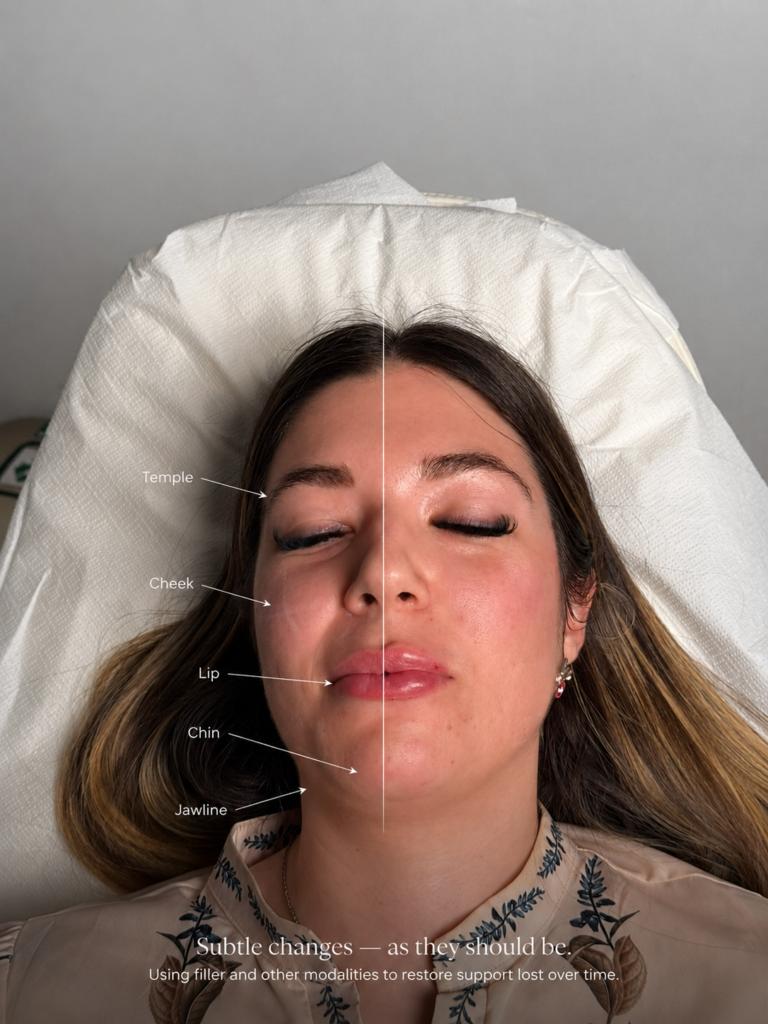
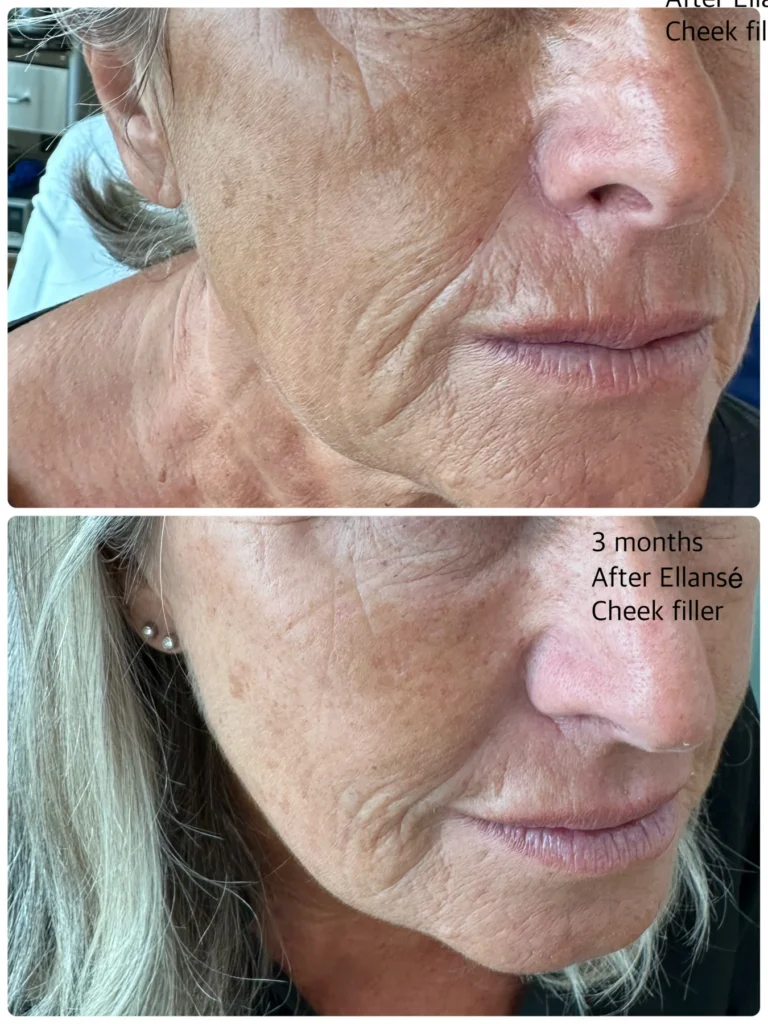
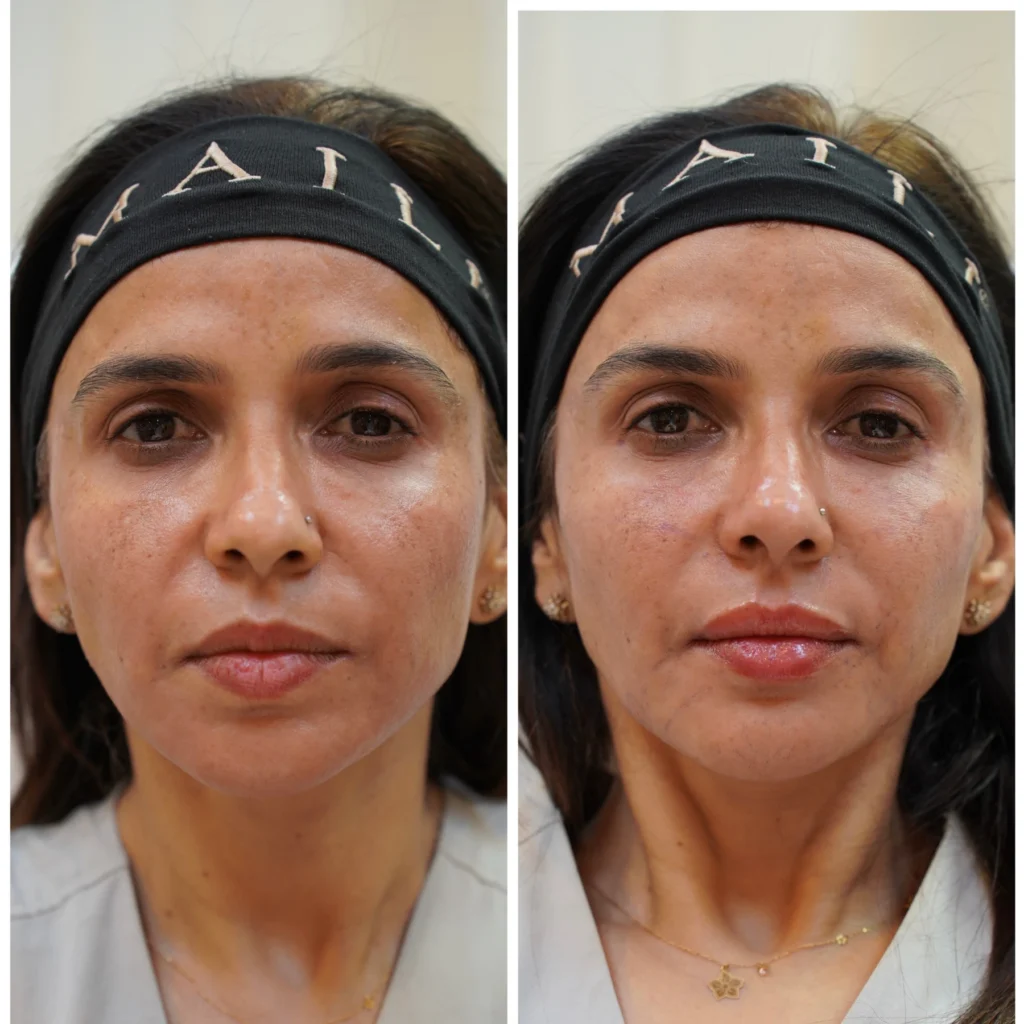



Testimonial
See how we’ve helped our patients achieve their aesthetic goals.


























We’ve Got You Covered!
Curious? Start Here
Only if the reason your cheeks look flat is that volume or structural support is genuinely missing. If the cause is descent, skin laxity, global volume loss or filler already in place, adding volume to the cheek tends to make the midface heavier rather than fresher. Which of those applies is what the assessment establishes
Longer than most patients are told. Product placed deep on bone in the midface is slow to break down and can remain detectable on ultrasound well beyond the point at which it was expected to have gone — which is precisely why previous treatment should be assessed before more is added. A single figure quoted for every patient is not accurate.
Hyaluronic acid attracts and holds water, accumulates across repeated treatments, and can migrate — most often downward and inward toward the under-eye. That combination adds weight to the midface and puffiness to the lower eyelid. Ultrasound shows what is present and where, which is what distinguishes this from ageing change
In my view, no — and the evidence for it is weaker than the marketing suggests. Lifting the cheek does not reliably improve the fold, and in a face that is already full it adds weight without changing the line. If the fold is the concern, I treat it directly: threads to reposition the tissue, Sculptra to build collagen in the area, or filler at the piriform aperture under ultrasound guidance where resorption of the bone beside the nose is deepening the fold. Threads and filler are often combined, which improves the cheek and the fold together
Frequently, yes — and it is often the safer approach. Restoring support in the midface improves the boundary between eyelid and cheek without placing product in the tear trough, which is the least forgiving area of the face. A number of patients who come asking for under-eye filler need cheek treatment instead.
When the loss is spread across the face — temples, cheeks, around the mouth — the answer is usually not more cheek filler. Collagen biostimulators such as Sculptra and Lanluma, or a regenerative treatment such as Renuva, restore volume across the face rather than in one place, and build gradually rather than appearing on the day. The plan matters more than the product here: replacing everything at once in a face that is still changing tends to be regretted.
Ellansé is a stimulating volumiser — it gives volume immediately and stimulates your own collagen afterwards, so the result develops over the following months rather than fading. I use it particularly in older patients, where the tissue needs both support and improvement in its own quality, and where it gives a very natural result. It is firmer than standard filler and placement matters, which is why it is a decision made at assessment
Yes, and it is the opposite of everything else on this page. Where the cheeks are genuinely full, push upward and narrow the eyes when you smile, endolaser reduces the fullness through a single entry point and tightens the skin over it, with no incision and no stitches. The result is assessed at around three months. Adding volume to a face like this is a common and avoidable mistake.
No. Bone resorption and midface volume loss happen in men too, and are often more visible in men who train heavily and carry a low body fat percentage — the face is the first place it shows. The treatment goals differ, and the assessment establishes them before anything is injected.

Dr Shiva Faramarzi Babadi, MDAesthetic & Longevity Physician · DHA licence 43705219 Apogée Clinic, Address Beach Resort, JBR, Dubai WhatsApp or call: +971 52 328 6185 Last medically reviewed: August 2026 This page is general medical education and does not replace individual assessment. Treatment suitability, expected outcomes and regulatory status vary by patient and by therapy. |