The short answer. “Stem cell therapy” is not one treatment, so there is no single answer to whether it is safe. The best-studied type, mesenchymal stem cells (MSCs) given by drip, has a reassuring record across dozens of randomised trials: the only side effect clearly linked to them was a short-lived fever, and no increased rate of infection, blood clots or cancer was detected during the available follow-up.1 That does not exclude rare or long-term risks. Safety also depends on what the cells are designed to do, how they are made and tested, how they are given, and who gives them.
Stem cell and exosome treatments are offered as an adjunct: alongside established medical care, a healthy lifestyle and, where appropriate, your main treatment protocol, never instead of them. For most conditions the clinical evidence is still developing.
Are all stem cell therapies equally safe?
No. When a patient asks me whether stem cells are safe, I ask three questions back:
- Which cells? Mesenchymal stem cells, newer cell types such as Muse cells, and blood-forming stem cells used in bone marrow transplants behave very differently in the body.
- What are they meant to do? Release signals and then leave, or settle in the tissue and stay?
- How are they made and given? By a regulated laboratory, with each batch tested, and given in the right way by a doctor who has assessed you first?
The answers change the risk far more than the words “stem cell” do.

Cells that pass through, and cells designed to stay
Some newer cell types are interesting precisely because they appear to home to injured tissue and may remain there. Muse cells are the example I am asked about most. Their developers describe them as able to recognise damaged tissue, migrate to it and integrate.2
Staying in the body is not, in itself, a danger. But when a cell is designed to persist, the questions change: where exactly does it go, what does it become, and what happens years later? For these cells, long-term human data are still limited. That raises the responsibility of whoever gives them, and it is why I hold them to a higher standard of evidence, especially for healthy people seeking longevity rather than treatment of a serious disease.
Why MSCs are a different conversation
With mesenchymal stem cells, the aim is different. I do not rely on the cells staying. Their main effect is thought to come from paracrine signalling: the cells release growth factors and other signals that support repair and calm excessive inflammation.3
After an infusion into a vein, most MSCs are first trapped in the small blood vessels of the lungs,4 and studies tracking them find that few appear to engraft long term.5 Because the cells do not set up home, the long-term questions that apply to persistent cells are less pressing. In the pooled trials, no increased rate of malignancy was detected during follow-up.1 That is why I am more comfortable with MSCs than with cells designed to persist. But more comfortable is not the same as risk-free, and I say so to every patient.
Do MSCs strengthen the immune system?
Not in the way people usually mean. MSCs are described as immunomodulatory: they are being studied for their ability to calm an overactive immune response, which is why they are researched in autoimmune and inflammatory diseases.3 They are not a way to boost immunity against infection, and I would not describe them that way.
Can stem cells cause cancer?
In the pooled analysis of MSC trials, no increased rate of cancer was detected during the available follow-up.1 There is, however, a separate concern. In laboratory and animal studies, MSCs placed near an existing tumour helped it spread.6 That is the reason I do not treat anyone with active cancer or a recent cancer history, and why screening before treatment matters.
Considering stem cells and worried about safety?
Send me your diagnosis and recent blood tests. I will tell you honestly whether treatment is reasonable for you, and what the risks are.
Where the real harm has come from
The serious injuries reported in medical journals have mostly come from unproven products given outside regulated care, often by the wrong route:
- Three patients lost much or all of their vision after a clinic injected fat-derived “stem cells” into both eyes.7
- A man developed a growth in his spinal cord after stem cell injections into the spinal fluid at clinics abroad.8
- A review of adverse events after unproven stem cell interventions describes a pattern: products of unknown content, procedures with no clinical evidence behind them, and patients paying large sums for promises of a cure.9
Regulators have warned about the same problem, including products sold as exosomes; no exosome product has been approved by the US Food and Drug Administration for treatment.10
What makes treatment safer
| Factor | Why it matters |
|---|---|
| Cell type | Cells that act by signalling and then clear have a different risk profile from cells designed to persist. |
| Laboratory | Each batch should be tested for identity, viability, sterility and endotoxin, with a certificate of analysis. |
| Route | A drip into a vein is not the same as an injection into the eye, the spinal fluid or a joint. Each route carries its own risks. |
| Assessment | Screening for cancer history, infection and pregnancy, and a clear reason to treat, before anything is given. |
| Follow-up | Measured before and after, so we know whether it helped, and you know who to contact if something is wrong. |
At our clinic, cells and exosomes are prepared by two established, regulated laboratories: one Italian, operating since 2009 and in Dubai since 2013, and one British, in Dubai since 2017. Every patient is screened and assessed before treatment.
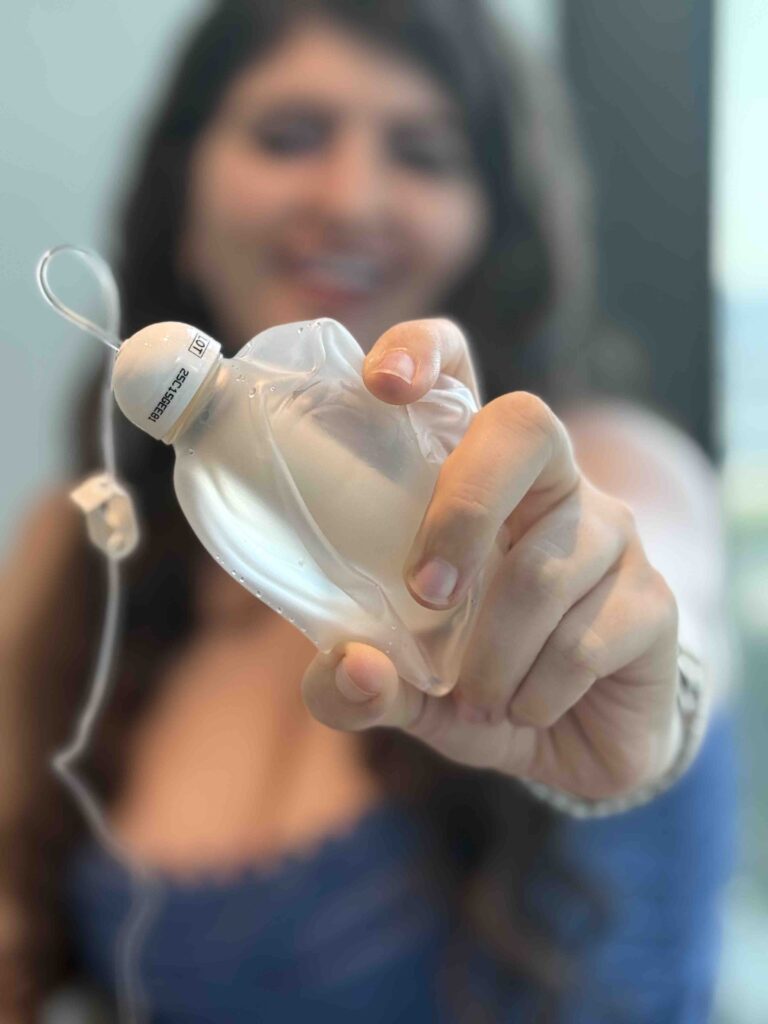
Patients travelling from abroad for stem cell treatment stay in Dubai for at least four nights afterwards, so they can be observed.

What side effects are common?
After an MSC drip, the side effect clearly linked to the cells in trials is a short-lived fever.1 We monitor you during and after the infusion.
Who should not have it
- Anyone with active cancer or a recent cancer history.
- Pregnancy, or actively trying to conceive.
- Active infection.
- Symptoms that have not yet been properly investigated.
Questions to ask any clinic
- What exactly is in the product: the cell type, the tissue source, and the number of cells per dose?
- Is there a certificate of analysis for this batch, covering identity, viability, sterility and endotoxin?
- What human evidence exists for my condition, and was it generated with this product?
- How is this product regulated and authorised for use in Dubai?
- What follow-up will I have, and who do I contact if something goes wrong?
Frequently asked questions
Is stem cell therapy safe?
It depends on the cells, the laboratory, the route and the doctor. MSCs given by drip have a reassuring safety record in trials,1 but rare or long-term risks cannot be excluded.
Can stem cells cause cancer?
No increased rate of cancer was detected in MSC trials during follow-up.1 Because MSCs may help existing tumours grow in animal studies,6 I do not treat anyone with active or recent cancer.
Do MSCs stay in my body?
Most are trapped in the lungs after a drip,4 and few appear to engraft long term.5 Their effect is thought to come from the signals they release.
Are exosomes safer than stem cells?
Exosomes are a cell-free option for patients who prefer not to receive living cells. Because they contain no cells, concerns about cells persisting do not apply in the same way. But exosome products vary, none is approved by the US FDA for treatment,10 and long-term human data are limited.
Why do you treat some cell types more cautiously than others?
Because a cell designed to stay in the body needs more long-term evidence than one that signals and clears. Novel does not mean unsafe, but novel also does not mean proven.
Book a regenerative consultation.
An honest assessment of whether treatment is reasonable for you, starting with your history and your tests.
This article is patient education and does not replace the advice of your own doctor.
References
1. Thompson M, Mei SHJ, Wolfe D, et al. Cell therapy with intravascular administration of mesenchymal stromal cells continues to appear safe: an updated systematic review and meta-analysis. EClinicalMedicine. 2020;19:100249. doi:10.1016/j.eclinm.2019.100249
2. Dezawa M. Macrophage- and pluripotent-like reparative Muse cells are unique endogenous stem cells distinct from other somatic stem cells. Front Bioeng Biotechnol. 2025;13:1553382. doi:10.3389/fbioe.2025.1553382
3. Caplan AI, Correa D. The MSC: an injury drugstore. Cell Stem Cell. 2011;9(1):11–15. doi:10.1016/j.stem.2011.06.008
4. Fischer UM, Harting MT, Jimenez F, et al. Pulmonary passage is a major obstacle for intravenous stem cell delivery: the pulmonary first-pass effect. Stem Cells Dev. 2009;18(5):683–692. doi:10.1089/scd.2008.0253
5. Leibacher J, Henschler R. Biodistribution, migration and homing of systemically applied mesenchymal stem/stromal cells. Stem Cell Res Ther. 2016;7:7. doi:10.1186/s13287-015-0271-2
6. Karnoub AE, Dash AB, Vo AP, et al. Mesenchymal stem cells within tumour stroma promote breast cancer metastasis. Nature. 2007;449(7162):557–563. doi:10.1038/nature06188
7. Kuriyan AE, Albini TA, Townsend JH, et al. Vision loss after intravitreal injection of autologous “stem cells” for AMD. N Engl J Med. 2017;376(11):1047–1053. doi:10.1056/NEJMoa1609583
8. Berkowitz AL, Miller MB, Mir SA, et al. Glioproliferative lesion of the spinal cord as a complication of “stem-cell tourism”. N Engl J Med. 2016;375(2):196–198. doi:10.1056/NEJMc1600188
9. Bauer G, Elsallab M, Abou-El-Enein M. Concise review: a comprehensive analysis of reported adverse events in patients receiving unproven stem cell-based interventions. Stem Cells Transl Med. 2018;7(9):676–685. doi:10.1002/sctm.17-0282
10. U.S. Food and Drug Administration. Consumer alert on regenerative medicine products including stem cells and exosomes. fda.gov
This article is part of my guide to regenerative medicine in Dubai. Related: stem cell therapy in Dubai · Muse cells vs MSCs · how long stem cells last.