
Sudden Patchy Hair Loss: What It Is, and What To Do First
If you've noticed a coin-sized bald patch appear seemingly overnight, the first thing to know is that panicking about it tends to make it worse. Here is how I actually approach it.
Ask About Your Patch on WhatsAppDon't Panic — Stress Genuinely Makes It Worse
Alopecia areata is sudden, patchy hair loss, usually in one or more coin-sized areas, and it is one of the more alarming things that can happen to a scalp precisely because it appears so fast. The instinct is to panic. Try not to: stress is not just an emotional reaction to the hair loss, it is also one of the things that can drive the underlying process further. Staying calm and getting assessed properly does more for the outcome than worrying does.
Why the Shedding Doesn't Stop on Day One
A detail that surprises most patients: the hair you see falling out today left a follicle that effectively stopped functioning roughly ten to twelve days ago. Hair loss has a lag built into it. This means that even once you come in and we start treatment, further shedding over the following one to two weeks is normal and expected — it is not a sign that the treatment isn't working. I explain this at the first visit so it doesn't cause unnecessary alarm partway through.
What Causes It
The precise mechanisms behind alopecia areata are still not fully understood. What is well established is that it involves the immune system acting against hair follicles, which is why the approaches that tend to help are immune-modulating rather than purely stimulant-based.
How I Approach Treatment
Exosomes or stem cell therapy — usually my first step
Exosome and stem cell treatments have immunomodulatory properties of their own, and in most cases I use them as the first-line approach to help bring the situation under control, without the side-effect profile that comes with stronger immune-suppressing medication.
A short course of oral steroid treatment, if you come in early
If you present early, particularly with a single recent patch, a short course of oral steroid treatment is sometimes appropriate to interrupt the process. This is a prescription decision made at assessment, not something started automatically.
Local steroid injections — used selectively, not as a default
I am not a strong advocate of injecting steroid directly into the scalp except where the patch is genuinely small and isolated to one area. Used more broadly or repeatedly, local steroid injections carry a real long-term risk of thinning the skin at the injection site, which is a trade I am not willing to make lightly.
Immunomodulatory biologic treatment — for recurrent cases
For alopecia areata that keeps recurring, stronger immune-modulating antibody-based treatments are an option, prescribed and monitored carefully given their own side-effect profile. This is reserved for recurrent presentations, not first episodes, and is discussed in detail before it is considered.
What To Expect From an Assessment
I look at the pattern and extent of the patches, how long they've been present, and your broader history, then set out a plan with realistic expectations before anything is started. As with other hair concerns, there is no guaranteed outcome I can promise — alopecia areata can also resolve on its own, and it can recur — but an early, calm, well-managed approach gives it the best chance.
This sits alongside the regenerative treatments covered on my main hair loss treatment page, and the same exosome and stem cell protocols used for pattern hair loss in men and women.
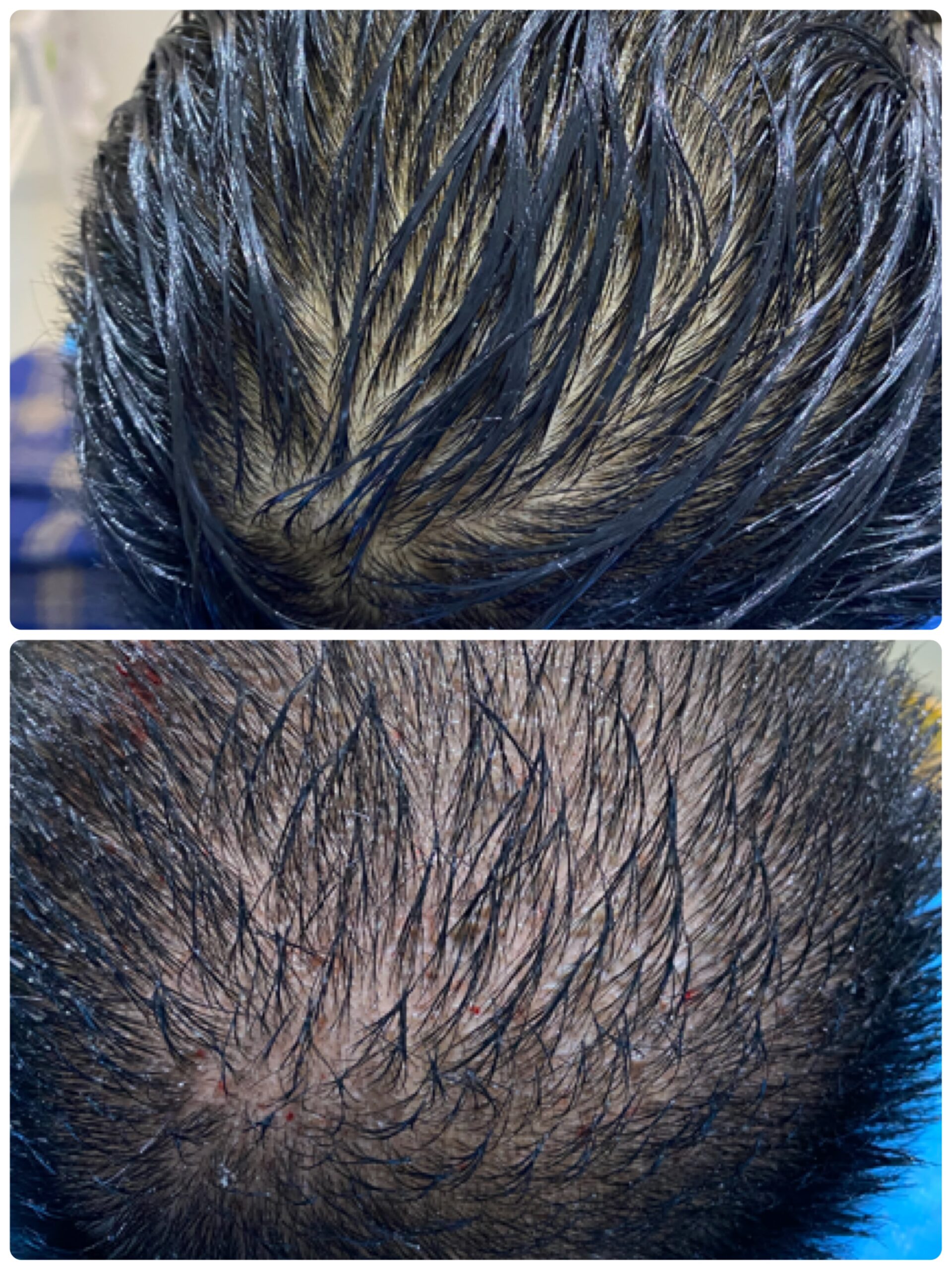
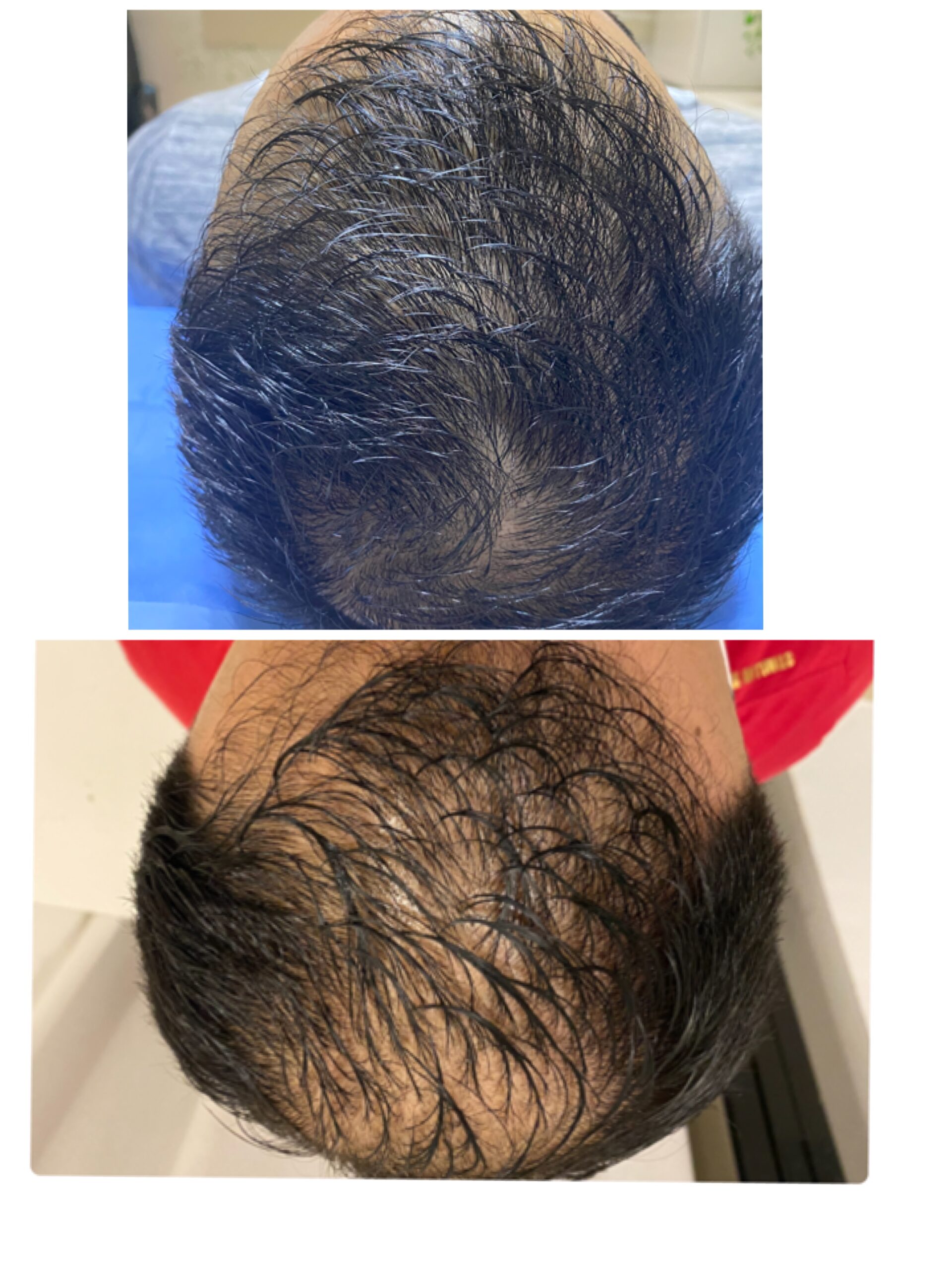
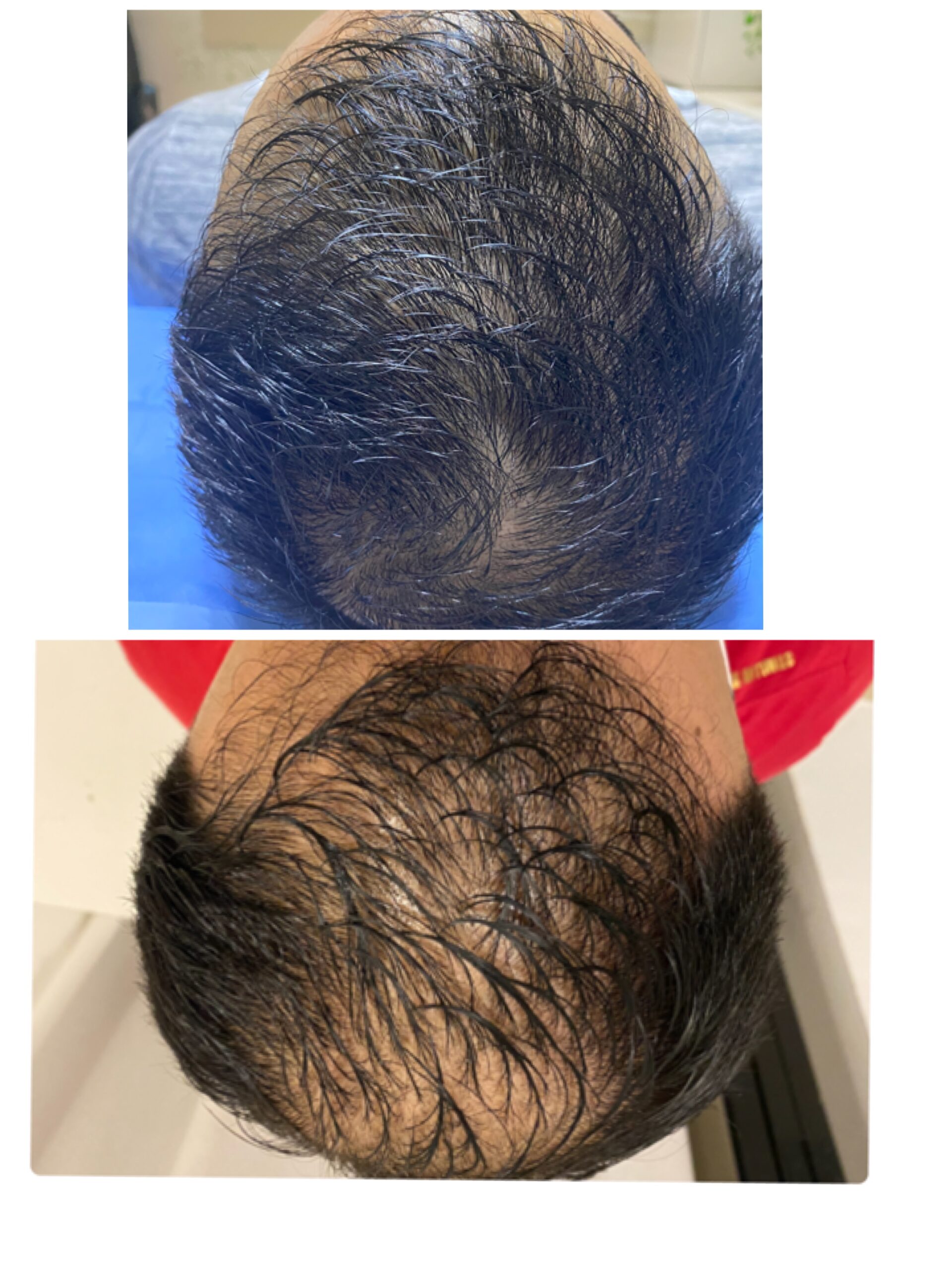
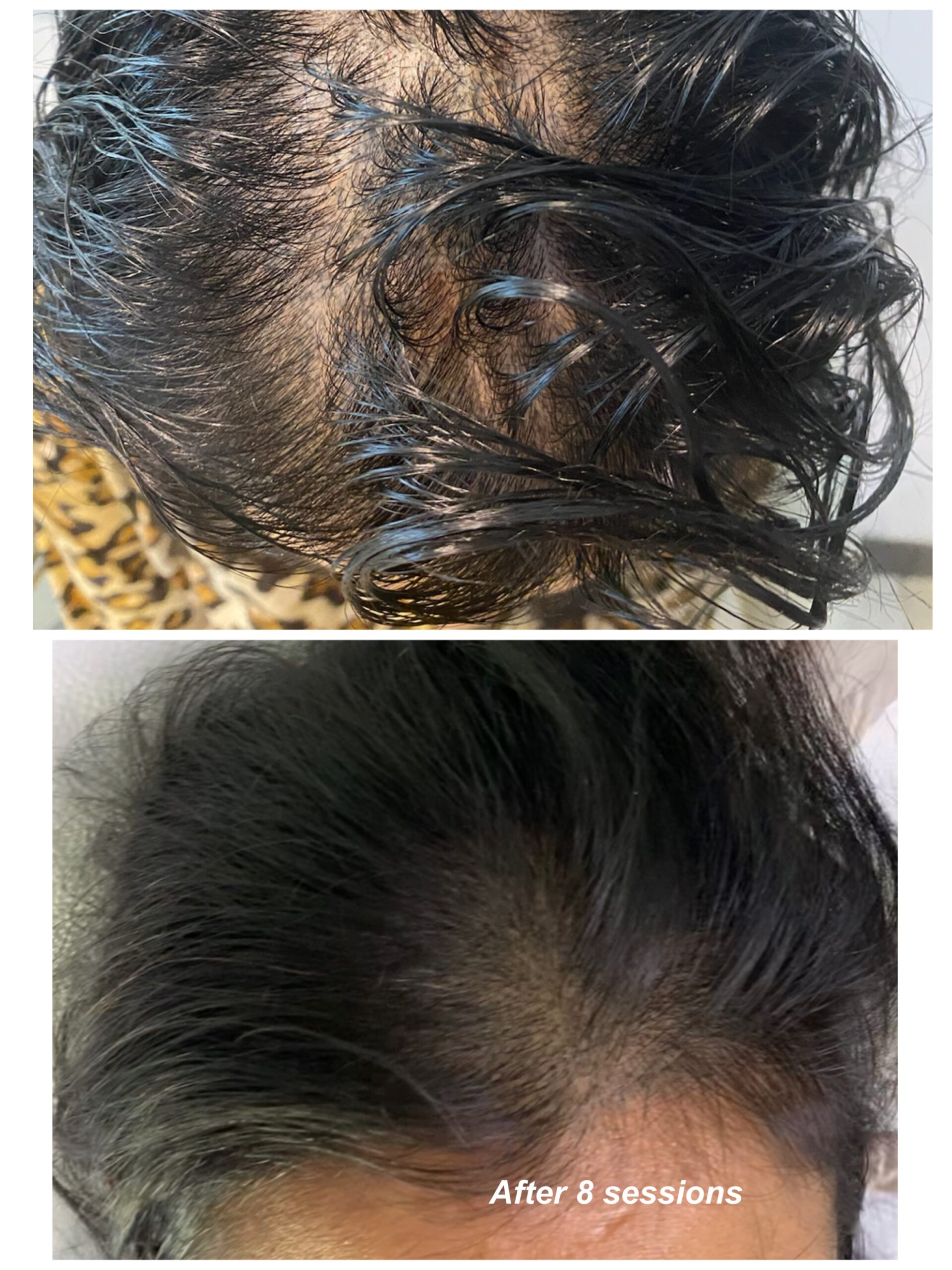
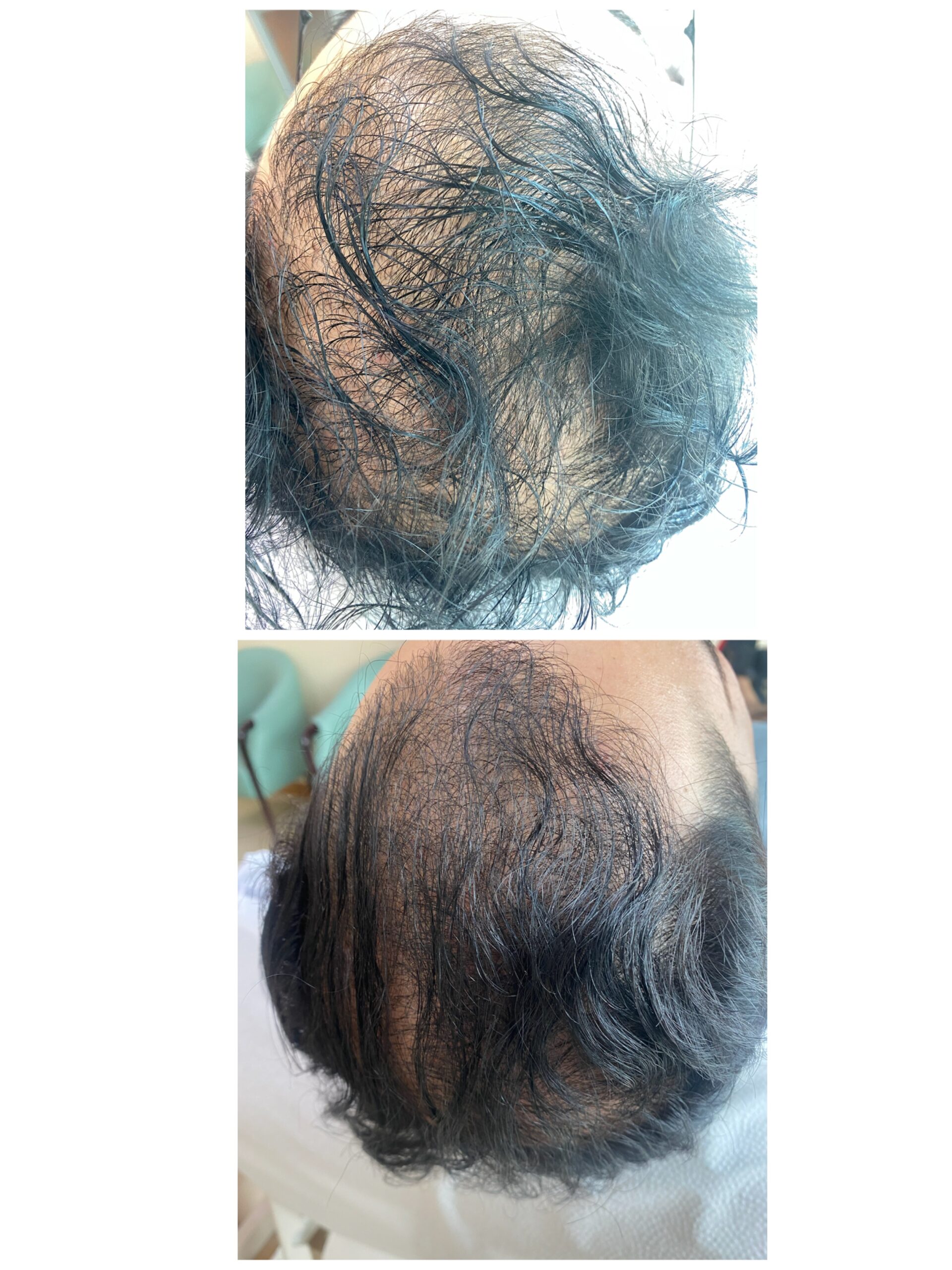
What Progress Can Look Like
Documented with each patient's consent for use on this site. Results vary according to diagnosis, severity and individual response — these are not a guarantee of any particular outcome.

Frequently Asked Questions
Is alopecia areata the same as pattern hair loss?
No. Pattern hair loss (androgenetic alopecia) is gradual thinning driven by hormone-sensitive follicles. Alopecia areata is sudden, patchy loss driven by the immune system, and the two are assessed and treated differently.
Will my hair definitely grow back?
Many cases of alopecia areata do regrow, sometimes on their own, but no doctor can promise that outcome for every patient — it can also recur. An early assessment gives the best chance of a good result.
Why does my hair keep falling for a week or two after I start treatment?
Because the follicle behind any hair you shed today stopped functioning roughly ten to twelve days earlier. Shedding for a further one to two weeks after starting treatment is expected and is not a sign the treatment has failed.
Do you use steroid injections for alopecia areata?
Selectively. I reserve local steroid injections for small, single, isolated patches, because repeated or widespread use carries a real long-term risk of thinning the skin at the injection site.
This information is educational and does not replace an in-person assessment.