
Microneedling in Dubai
DEPTH • STERILITY • SOLUTION • SKIN TYPE
Microneedling in Dubai
Collagen induction, done as a medical procedure rather than a facial
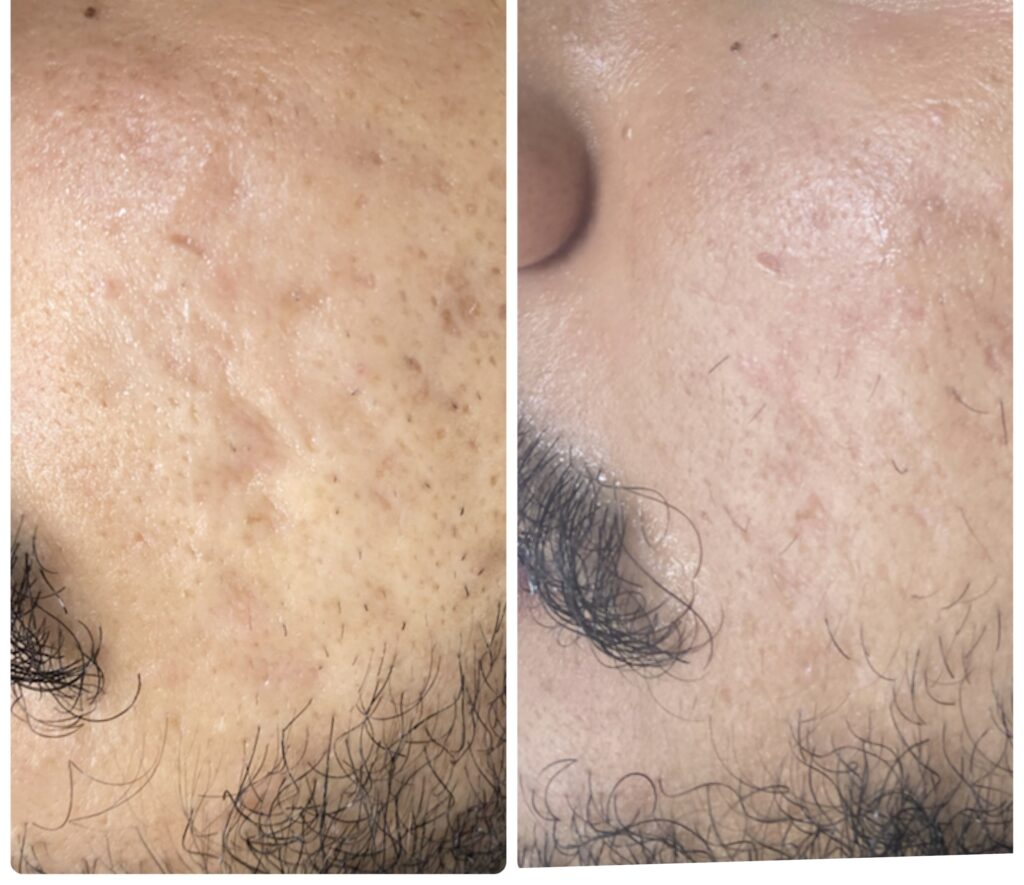
Microneedling creates thousands of controlled micro-injuries in the skin, and the skin answers by laying down new collagen. That much is well established — it has been measured on biopsy, not just photographed.1,2
What is not established is that every microneedling treatment is the same treatment. The depth decides whether you are working on surface texture or on the base of a scar. The device decides how clean and how vertical that channel is. And the solution used during the session decides whether the open channels are carrying something useful into your skin, something inert, or something that should never have been put there at all.
Those are four medical decisions. This page is about how I make them, and where I think the treatment is genuinely oversold.
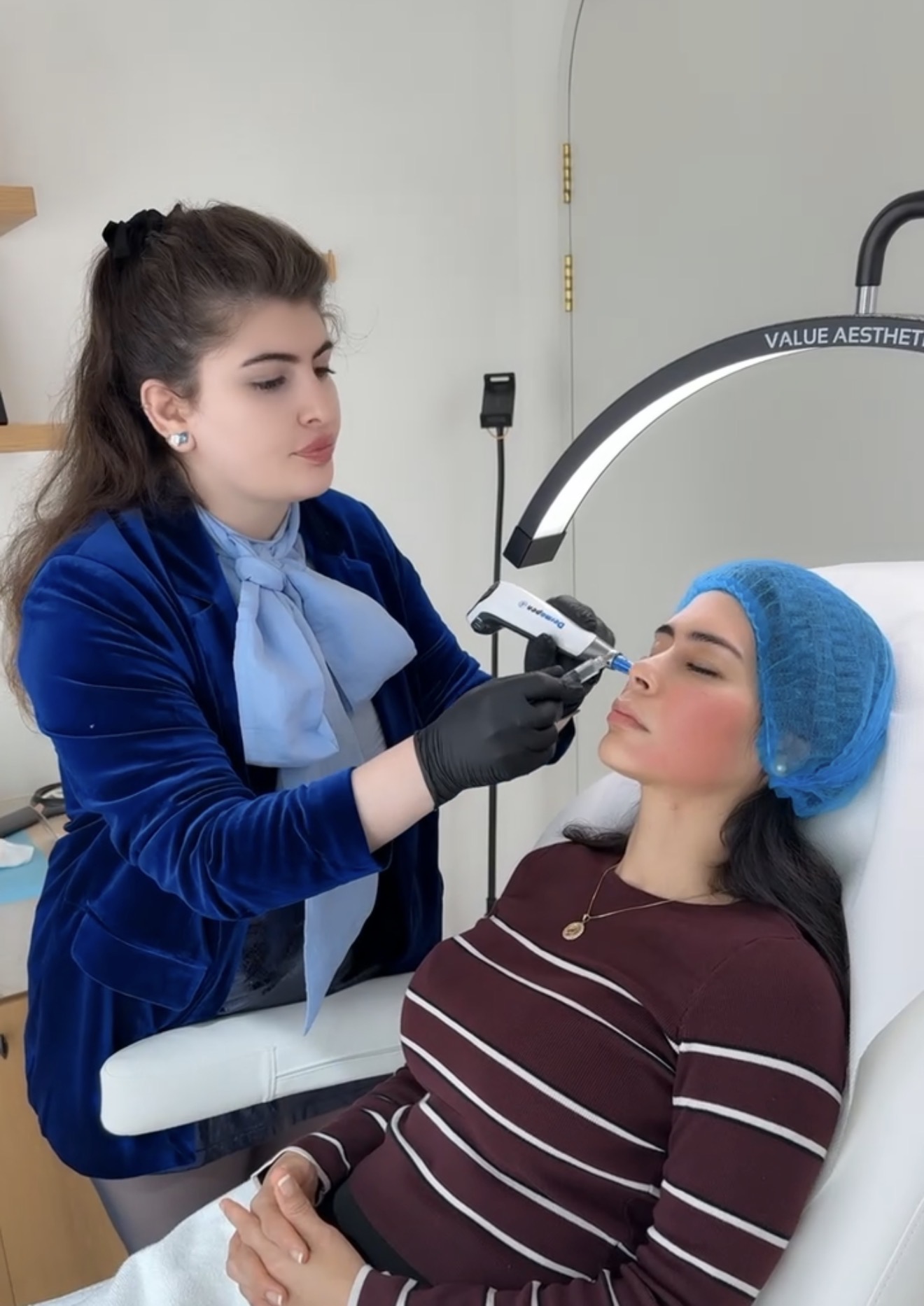

What Microneedling Actually Does
The mechanism is simpler than the marketing, and considerably more interesting.
A fine needle passed into the dermis creates a channel rather than a wound. The epidermis is punctured but not removed, so the skin’s barrier reseals within hours. Beneath it, the body reads thousands of these channels as injury and starts the repair sequence: platelet and growth-factor release, then fibroblast recruitment, then new collagen and elastin laid down over the following weeks and months.
The evidence for this is histological, which matters. In a study using serial punch biopsies and quantitative immunohistochemistry across six sessions, collagen types I, III and VII all increased significantly, tropoelastin increased, total damaged elastin decreased, and the epidermis thickened.1 An earlier series reported roughly 40% thickening of the stratum spinosum a year after treatment.2 There is also animal work showing that the healing after needling upregulates TGF-β3 — the isoform associated with regeneration rather than scar formation — for about two weeks afterwards.3 That is the mechanistic reason needling improves a scar instead of adding one
— Four Decisions, Not One Treatment
When a patient says “I had microneedling and nothing happened”, the usual explanation is not that microneedling does not work. It is that one of these four was decided badly, or never decided at all.
|
Decision |
What it governs |
What happens when it is wrong |
|
Depth |
Which layer is injured, and therefore which problem is being treated |
Superficial passes over a deep atrophic scar produce a glow and no scar change. Depth without indication produces unnecessary trauma |
|
Pattern and passes |
Density of channels, overlap, direction across the scar |
Uneven coverage, tram-track marks, or a treated area that stops visibly at the jawline |
|
The device |
How vertical, how clean and how reproducible each channel is — and whether the cartridge is sterile and single-use |
Torn rather than punctured channels; infection risk; unpredictable depth |
|
The solution |
What travels through the open channels for the next few hours |
At best nothing. At worst a granulomatous reaction to something that should not have been driven into the dermis (§6) |
Most clinics in this market sell you the first two as a package name and never mention the last two. The rest of this page is mostly about the last two, because they are where the difference between a good and a bad microneedling appointment actually sits
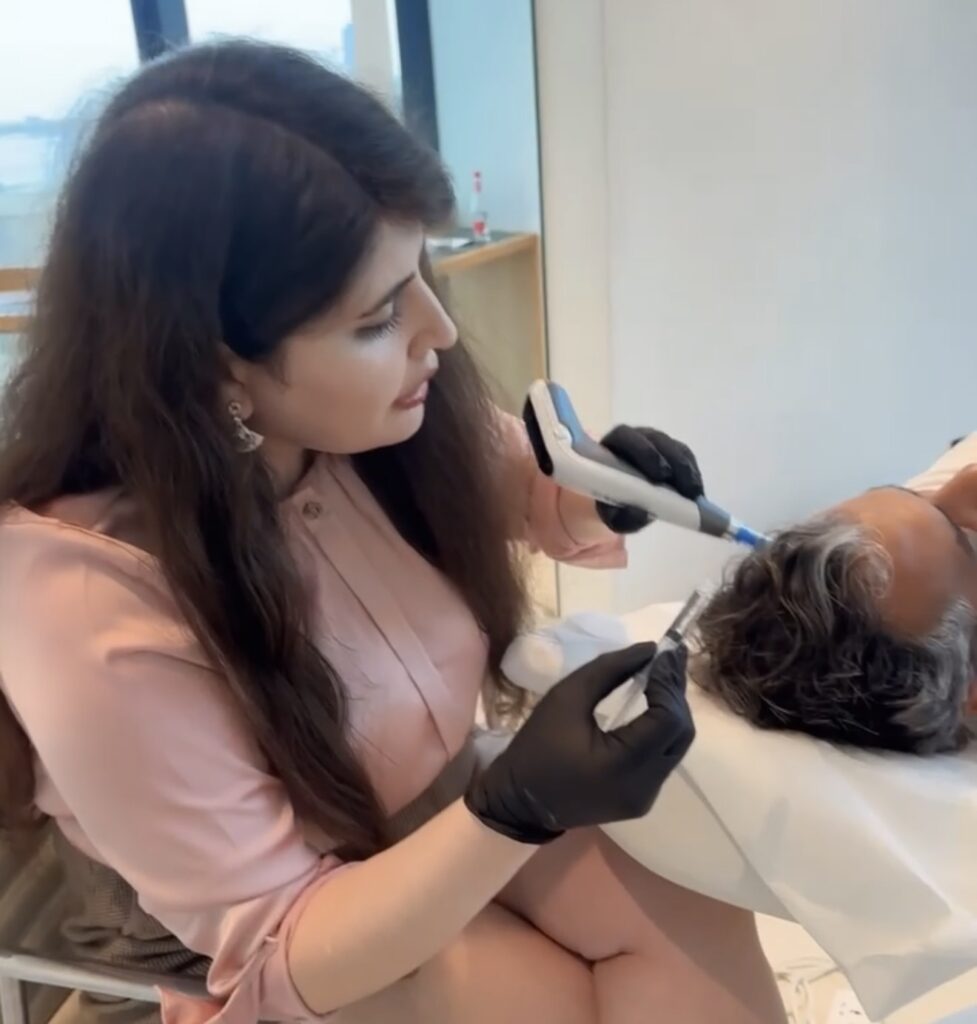
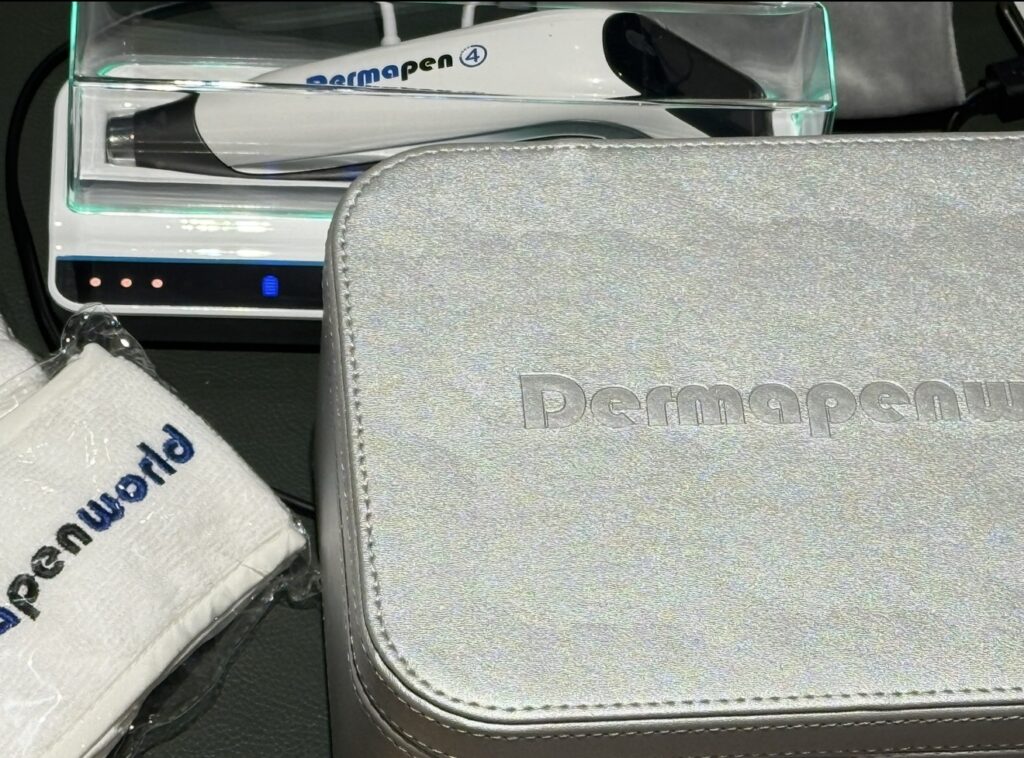
The Device: Why I Use a Regulated Medical Microneedling Pen
Section intro:
This is the section patients ask about most, usually phrased as: is the pen you are using different from the one I saw for 200 dirhams online? It is, and I want to be precise about how it is different, because there is a great deal of marketing in this category and not much of it survives being checked.
What I use
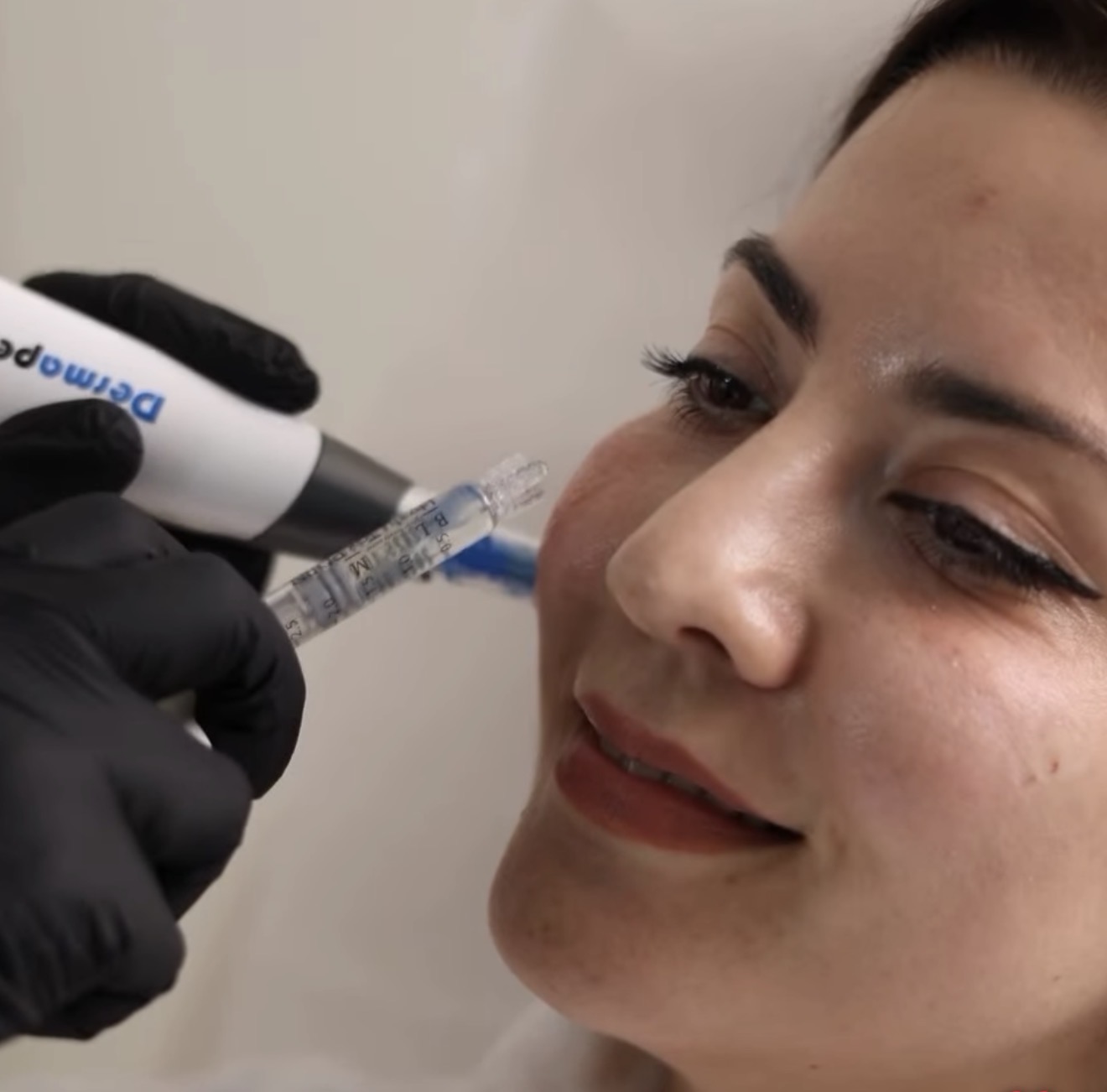
I use a Dermapen 4 (DermapenWorld / Equipmed). Here is what can be verified about it from a regulator rather than from a brochure — the figures below come from its United States FDA clearance document, which is a public record: FDA 510(k) K221070.
|
Specification |
Verified detail |
|
Needles |
16 surgical-grade stainless steel needles, 33 gauge, arranged in a circular pattern |
|
Depth |
Adjustable from 0.2 mm to 3.0 mm across 15 settings |
|
Oscillation |
Set between 80 and 110 Hz, within an operating range of 70–120 Hz |
|
Cartridge |
Sterile, single-use consumable |
|
Reuse prevention |
Each cartridge carries an RFID tag which prevents it being reused once removed from the handpiece |
|
Regulatory status |
FDA 510(k) cleared (K221070, December 2022) to improve the appearance of facial acne scars in Fitzpatrick skin types I–V, in adults aged 22 and over |
Two things about that table are worth saying out loud.
The first is that “cleared” is not “approved”, and the difference is not pedantry. A 510(k) clearance means the device was shown to be substantially equivalent to one already on the market. It is a real regulatory gate and most pens sold online have not been through it — but it is not a statement that the device has been proven superior to anything.
The second is that the clearance covers facial acne scarring in skin types I to V. It does not cover hair loss, and it does not cover use in combination with topical products — the FDA states plainly that it has not cleared any microneedling device for either (FDA consumer guidance). I use the device beyond that indication, as physicians routinely and legitimately do, and I would rather tell you that than let a regulatory logo imply a guarantee it does not make.
What actually distinguishes a medical device from a generic pen
Three things, in descending order of how much they matter to you.
1. The cartridge is sterile, single-use, and cannot be reused
This is the one that matters most and gets discussed least. A microneedling cartridge is a set of needles that has been inside another person’s dermis. The FDA’s position is unambiguous: “Re-use of the needle cartridge is unsafe… even if the cartridge is cleaned.” (FDA, Microneedling Devices). The device I use enforces this in hardware — the cartridge is electronically locked out once it has been removed from the handpiece, so it cannot be put back on for a second patient or a second session.
5b — What actually distinguishes a medical device from a generic pen
Three things, in descending order of how much they matter to you.
1. The cartridge is sterile, single-use, and cannot be reused
This is the one that matters most and gets discussed least. A microneedling cartridge is a set of needles that has been inside another person’s dermis. The FDA’s position is unambiguous: “Re-use of the needle cartridge is unsafe… even if the cartridge is cleaned.” (FDA, Microneedling Devices). The device I use enforces this in hardware — the cartridge is electronically locked out once it has been removed from the handpiece, so it cannot be put back on for a second patient or a second session.
|
This is not a theoretical risk, and I am going to give you the actual case. In 2024 the US Centers for Disease Control published an investigation into five HIV infections, genetically linked to one another, in clients of a spa offering PRP microneedling facials.25 The investigation found unlabelled tubes of blood stored in a kitchen refrigerator, unwrapped syringes in drawers and ordinary bins, no autoclave on the premises, and disposable tips that were being immersed in alcohol and reused. The honest reading of that case is important. It was not caused by a counterfeit device. It was caused by an unlicensed setting with no infection control. A genuine pen in that room would have transmitted HIV just as efficiently. What protects you is a licensed medical facility, sterile single-use consumables, and someone who handles sharps like a doctor — the device is part of that, not a substitute for it. |
2. The channel is made vertically, not dragged
The needles oscillate up and down, perpendicular to the skin, and the handpiece is moved between oscillations rather than dragged through them. A roller, by contrast, enters the skin at an angle and leaves at an angle, so each needle describes an arc — the entry is a small tear rather than a clean channel. Slower or less well-controlled motorised pens produce a version of the same problem.
This is a mechanical argument, and I want to be clear that it is a reasoning argument rather than a cited one. I could find no published study comparing needle-tip quality or lateral deviation between a regulated pen and a generic one. What I can tell you is that the depth is calibrated and reproducible on a device that has been through a regulatory file, and is not on one that has not.
3. Fluid does not travel back into the handpiece
The device carries a system the manufacturer calls Anti-Contamination Management, whose function is to stop blood and serum being drawn back up into the body of the pen. The handpiece is not a single-use item; the cartridge is. Anything that moves from the cartridge into the handpiece is, in principle, still there for the next patient.
I use a device built to prevent that. I am not going to repeat the manufacturer’s phrasing that this means “no risk of cross-infection”, because no device removes that risk — sterile technique and single-use consumables do, and the engineering supports them rather than replacing them.
What I am not going to tell you about this device
The manufacturer publishes a set of comparative figures — that its device creates a specific percentage more micro-channels than “the average counterfeit device”, that it is a specific percentage faster than comparable devices, that its channels carry a specific percentage more topical product into the skin. Those numbers appear on marketing pages with no published methodology, no comparator device list and no third-party test report behind them.
So I am not going to quote them to you, and you should be mildly suspicious of any clinic in this city that does. Comparative superiority claims that cannot be evidenced are exactly what UAE medical advertising rules restrict, and more to the point, a number that nobody can show you the workings for is not information.
What I can tell you is what is in the table above, because you can open the FDA document yourself and read it.
Rejuvenate and Restore Your Natural Radiance with Expert Solutions!
Why Benefit from Skin Treatments at Dr. Shiva Aesthetics?
01
Depth
Which layer are we treating?
The depth determines whether we are working on superficial skin quality or reaching the base of an atrophic scar. Too shallow can mean little change; too deep can mean unnecessary trauma.
02
Pattern & Passes
How the skin is covered matters.
The number of passes, overlap and direction determine how evenly the treatment is delivered across the skin and across individual scars.
03
The Device
Precision, sterility and reproducibility.
The device affects how vertically and consistently each channel is created, as well as whether the cartridge is sterile and single-use.
04
The Solution
What goes through the channels matters too.
For a period after treatment, the skin is more permeable. Anything applied at that stage needs to be selected for the indication and for suitability within a microneedling protocol.
05
Indications
Different concerns need different protocols.
Microneedling can be used for atrophic acne scars, post-acne pigmentation, uneven skin texture, fine lines and overall skin quality. The depth, pattern and any accompanying solution are adjusted according to the concern being treated.
The needle is only one part of the treatment. Depth, pattern, device and solution are separate clinical decisions.
What I Treat With It
Atrophic acne scarring
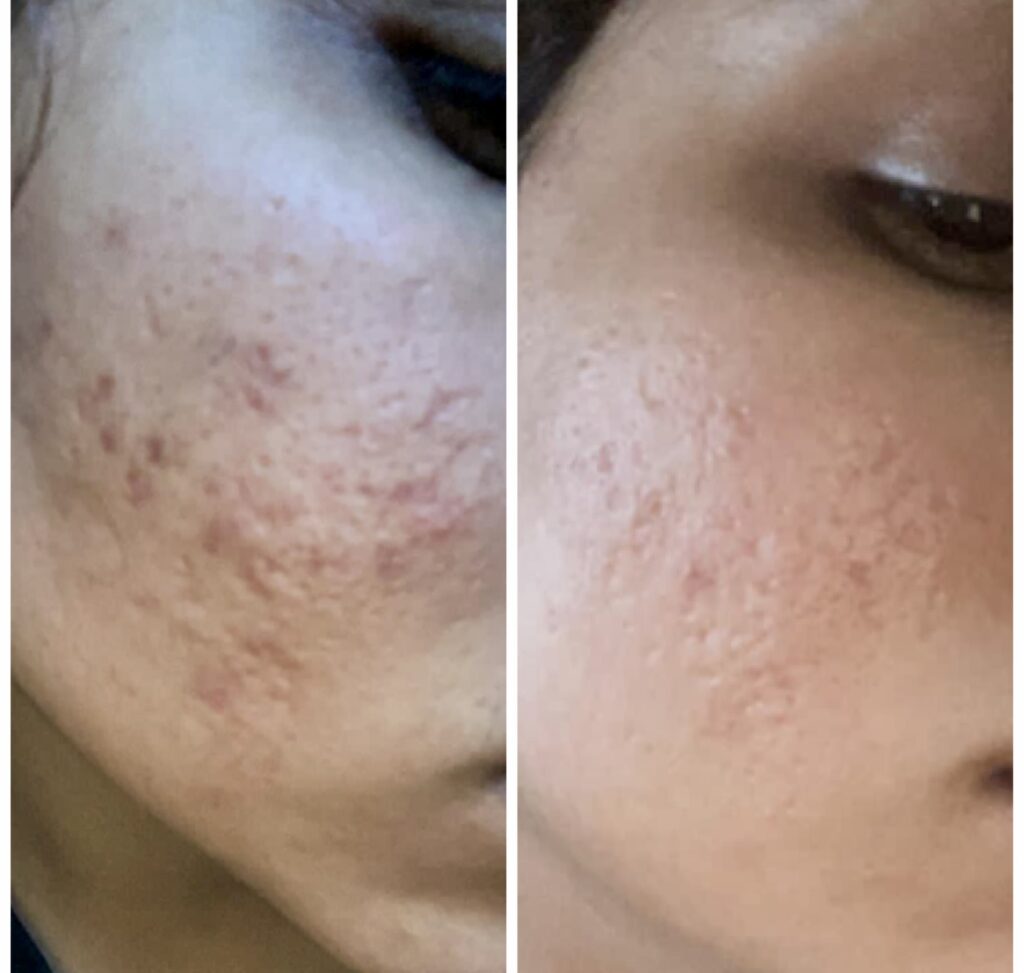
The strongest indication, the one the device is cleared for, and the one with the best evidence. A meta-analysis of twelve randomised controlled trials covering 414 participants found microneedling produced superior scar improvement against comparators, with a lower rate of post-inflammatory hyperpigmentation than the alternatives.5
Scar morphology decides the plan, and not every scar is a needling scar.
- Rolling scars — broad, shallow, tethered from below. These respond best, and this is where needling combined with subcision does most of its work.
- Boxcar scars — defined edges, flat floor. Respond reasonably; depth and pass density matter.
- Ice-pick scars — narrow, deep, tracking down. A needle passing beside a tract does not treat the tract. These are usually a TCA CROSS problem, sometimes a punch problem, and I will tell you if that is what you have.
I want to be careful here: there is no verified head-to-head randomised trial of microneedling against subcision or against TCA CROSS. These are complementary tools chosen by scar morphology, and any clinic claiming needling is the answer for ice-pick scarring is claiming something the literature does not support.
Pigmentation
As set out earlier: an adjunct to topical therapy, more reasonable in post-inflammatory pigmentation than in active melasma, and approached with genuine caution in higher phototypes during the summer. If you have melasma, read above before you book.
Skin quality, fine lines and texture
A systematic review and meta-analysis of 21 studies covering 723 patients reported 83% patient satisfaction for facial rejuvenation, with adverse effects that were transient and uncommon — erythema in 6.8%, scaling 1.7%, burning 1.5%.26 The histological basis is the collagen and elastin work described in above.1
This is a real indication with a modest effect size. It is not a substitute for volume replacement, it does not lift anything, and if what is bothering you is descent rather than skin quality, the honest answer is a different page.
Skin Types IV to VI: The Argument For, Stated Properly
Section intro:
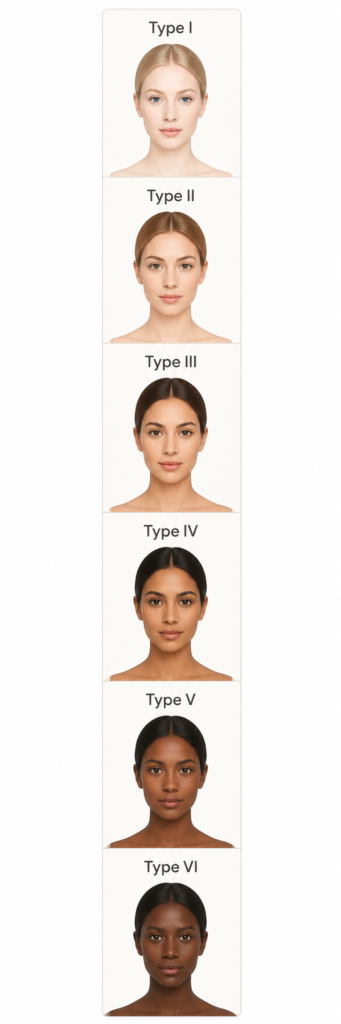
Most of my patients have phototypes in the IV to VI range, which changes the calculation in a way that is rarely explained.
The clearest data comes from a split-face study in skin of colour comparing fractional CO₂ laser against microneedling for atrophic acne scars in the same patients.7 The results cut both ways, and both matter:
|
|
Fractional CO₂ laser |
Microneedling |
|
Improvement in scar grade |
32.9% |
9.3% |
|
Improvement in rolling scars |
42.9% |
16.2% |
|
Post-inflammatory hyperpigmentation |
30% |
6.67% |
Read that table honestly and it says two things at once. The laser is roughly three times more effective. The needling is roughly four to five times safer on pigmentation. In a phototype I patient in a cool climate, that trade favours the laser. In a phototype V patient in Dubai, for whom a hyperpigmented cheek would be a worse outcome than the scar she came in with, it frequently does not.
A separate randomised split-face study of facial rejuvenation found the same pattern outside scarring — CO₂ laser was significantly better on wrinkles, UV spots, elastin and epidermal thickness, and on patient satisfaction.28 Microneedling’s advantage is safety and downtime. It is not efficacy, and I am not going to tell you otherwise so that you book the gentler treatment.
The Course, and What It Actually Involves
Assessment first. Skin type, the diagnosis behind what you are seeing, scar morphology if relevant, current topicals, photo-protection, recent isotretinoin, herpes history, and what the skin has already had done to it. The plan — depth, interval, number of sessions, adjunct — is written at that appointment, not at the first treatment.
|
Indication |
Typical course |
Interval |
|
Skin quality and texture |
4–6 sessions |
2–4 weeks |
|
Atrophic acne scarring |
4–6 sessions, often with a superficial peel within the same course |
4 weeks |
|
Pigmentation (as an adjunct) |
Assessed at 3 sessions before committing further |
4 weeks |
On the day. Topical anaesthetic for around 30 minutes; skin cleansed and prepared; the treatment itself takes 20 to 40 minutes depending on the area. Depth is set by region and by indication and adjusted across the face — the skin over the mandible is not the skin under the eye.
Afterwards. Expect erythema resembling moderate sunburn for 24 to 48 hours, a sensation of tightness, and sometimes pinpoint bleeding on deeper settings. Mild flaking around day three to five. Most patients are presentable at 48 hours and I would still rather you did not schedule this two days before an event.
The aftercare that actually matters
- Nothing on the skin for the first 12 hours other than what I give you. The channels are open; this is the window §6d is about.
- No actives — retinoids, acids, vitamin C — for five to seven days.
- Rigorous photo-protection. This is not a cosmetic recommendation in this climate. Sun exposure in the days after treatment is one of the identified risk factors for post-inflammatory pigmentation.15
- No sauna, steam, hot yoga or swimming pools for 48 hours.
- No makeup for 24 hours.
- Do not pick the flaking.
Complications
Section intro:
Microneedling is a procedure that breaks the skin thousands of times. It deserves a real complications section.
Expected in most patients
- Erythema for 24–48 hours, sometimes longer on deeper settings
- Tightness, mild swelling, pinpoint bleeding during treatment
- Light flaking from around day three
Recognised and usually self-limiting
- Bruising, particularly around the eyes and on thinner skin
- Milia — recognised, not quantified in the literature
- Transient dryness and sensitivity
The ones that need naming
A systematic review of 85 articles found most adverse events transient and resolving within seven days, but identified two that persist: post-inflammatory hyperpigmentation and tram-track scarring — and named active infection and darker skin phototype as risk-elevating factors.18 A separate review of 51 studies covering 1,029 patients reached the same broad conclusion on transience.19
- Post-inflammatory hyperpigmentation. The complication that matters most in this patient population. Risk rises with phototype, with treatment depth, with sun exposure afterwards and with treating active melasma.15,18
- Tram-track scarring — linear marks following the pass direction, from excessive depth or pressure. A technique complication.
- Granulomatous reaction to a product applied during the procedure. See §6d. Some cases have been refractory to treatment.20
- Infection, including herpes simplex reactivation in a patient with a history. Prophylaxis where indicated.
- Bloodborne infection — not from the needling, from the practice around it. See the box in §5b.
What reduces these: correct indication before correct technique, depth chosen per region, a sterile single-use cartridge, restraint about how much to do in one session, and a considered decision about what touches the skin afterwards. Careful practice lowers the probability of everything on this list. It does not remove any of it, and a page implying otherwise is advertising rather than consenting.
Combining Microneedling With Other Treatments
The same rule as everywhere else in my practice: I combine treatments when I can identify two different problems.
- Microneedling + superficial peel — two findings: scarring and surface irregularity or pigment. Sequenced within a course, not stacked in one appointment. The best-evidenced combination on this page.6,8,9
- Microneedling + topical depigmenting therapy — two findings: pigment and a delivery problem. The topical is the treatment; the needling is the route.15,16
- Microneedling alongside biostimulators or threads — different layers, different problems: skin quality versus structure or descent. Sequenced, never same-day. → Thread Lift
And the counter-case, which I apply here as firmly as anywhere: where I can identify only one problem, I treat one problem. A combined plan for a single finding is a larger invoice and a loss of the ability to know which part worked


Testimonials




































We’ve Got You Covered!
FAQs
It creates thousands of controlled micro-channels into the dermis without removing the epidermis, and the skin responds by laying down new collagen and elastin. This has been measured on biopsy rather than inferred: serial punch biopsies across a six-session course showed significant increases in collagen types I, III and VII, increased tropoelastin, reduced damaged elastin, and a thicker epidermis. The barrier reseals within hours, which is why the downtime is short compared with ablative treatments.
For skin quality, usually four to six at two to four week intervals. For atrophic acne scarring, four to six at four-week intervals, often with a superficial peel within the same course. Those are the intervals the published studies used, and a single session will not reproduce published results. Collagen remodelling continues for months after the last session, so the result should be judged at three months rather than at four weeks.
In the ways that matter to you, yes. The device I use has been through a US FDA 510(k) clearance, which documents 16 surgical-grade 33-gauge needles, a calibrated depth range of 0.2 to 3.0 mm, and a sterile single-use cartridge that is electronically locked out after use so it cannot be reused. The FDA has stated it is aware of microneedling devices being sold that it has not reviewed, and that none is authorised for over-the-counter sale; Health Canada has advised against an entire widely sold range as unauthorised, citing infection and cross-contamination risk. I will not quote you the manufacturer’s comparative percentages, because no published methodology exists behind them.
Redness resembling moderate sunburn for 24 to 48 hours, tightness, and sometimes pinpoint bleeding during the treatment on deeper settings. Light flaking from around day three to five. Most patients are comfortable in public at 48 hours. Rigorous sun protection afterwards is not optional in this climate — sun exposure in the days following treatment is an identified risk factor for post-inflammatory pigmentation.
For atrophic scarring, yes — a meta-analysis of twelve randomised trials covering 414 participants found superior scar improvement against comparators. But scar morphology decides the plan. Rolling scars respond best. Boxcar scars respond reasonably. Ice-pick scars usually need TCA CROSS or a punch technique, because a needle passing beside a narrow tract does not treat the tract. The published results also come mostly from combinations — needling combined with a superficial peel outperforms needling alone.
It can assist, and it can also make it worse, and you should have both halves. Microneedling-assisted delivery of tranexamic acid has good trial evidence in melasma, performing comparably to standard topical therapy. But in a blinded four-arm randomised trial, microneedling with tranexamic acid alone gave a 13% reduction in severity while a topical formula alone gave 57% — and post-inflammatory hyperpigmentation occurred in 28% of the microneedling arm, associated with darker phototypes and warmer seasons. My position is that microneedling is an adjunct in pigmentation, not a treatment for it, and in active melasma in a higher phototype during summer I will usually stabilise it topically first.
For efficacy, generally the laser. For pigmentary safety in darker skin, generally the microneedling. A split-face study in skin of colour found fractional CO₂ produced 32.9% improvement in scar grade against 9.3% for microneedling — but post-inflammatory hyperpigmentation in 30% of laser-treated sides against 6.67% of needled sides. Roughly three times the effect against four to five times the pigmentary risk. Which side of that trade is right depends on your phototype, your scarring and what you would find harder to live with.
What is applied during the session is chosen by diagnosis: tranexamic acid or vitamin C for pigment where indicated, hyaluronic acid-based solutions for hydration and texture, and for scarring the work is done by depth and by a peel within the course rather than by a serum. On bringing your own — usually no, and there is a reason. A systematic review of biopsy-proven granulomatous reactions after microneedling found topical vitamin C application implicated in the majority of reported cases, and there are case reports involving multi-ingredient botanical products, one of which proved refractory to treatment. A product formulated to sit on the skin has not been shown to be safe two millimetres inside it.
No, and the reasons are on this page rather than hidden. A PRP preparation is whatever was in your blood that morning — platelet counts fluctuate, so the dose is not controlled, and the preparation carries the inflammatory mediators circulating at the time, including the pro-fibrotic isoform of TGF-β, which is the opposite of the healing response microneedling is relied on to produce. Beyond that, the growth factors platelets release act over hours, while the collagen remodelling you are actually paying for develops over three months. I would rather use something purified and quantified, where I can tell you what it is and how much of it there is. That is a position rather than a verdict — PRP has published data behind it and reasonable physicians use it — but you should know it is a treatment I have considered and declined, not one I simply do not stock.
Redness, tightness, pinpoint bleeding and flaking are expected rather than complications. Beyond those: bruising, milia, transient sensitivity, and — the two that can persist — post-inflammatory hyperpigmentation and tram-track scarring from excessive depth or pressure. Less commonly, granulomatous reaction to a product applied during the procedure, infection, or herpes reactivation in a patient with a history. There is also a bloodborne infection risk that has nothing to do with the needling itself and everything to do with whether cartridges are single-use and the setting is a licensed medical one.
The old six-month rule is no longer supported by the evidence. A formal consensus review and a 2025 systematic review of 34 studies covering 1,563 patients both found insufficient evidence to justify delaying resurfacing procedures — needling included — after isotretinoin. I still treat the timing as an individual judgement rather than a blanket all-clear, because most of that evidence comes from lasers and peels rather than from microneedling trials. But if you were told to wait six months, that advice is out of date.
Generally not in the active area. Treat the acne first. Recent work suggests needling is not strictly contraindicated in active acne, but passing needles repeatedly through inflamed follicles is not a sequence I am willing to defend, and scarring is easier to prevent than to treat.
References
Every DOI below was verified to resolve to the paper cited. Regulatory sources are linked inline in the body text rather than numbered.
- El-Domyati M, Barakat M, Awad S, Medhat W, El-Fakahany H, Farag H. Multiple microneedling sessions for minimally invasive facial rejuvenation: an objective assessment. Int J Dermatol. 2015;54(12):1361–1369. org/10.1111/ijd.12761
- Aust MC, Fernandes D, Kolokythas P, Kaplan HM, Vogt PM. Percutaneous collagen induction therapy: an alternative treatment for scars, wrinkles, and skin laxity. Plast Reconstr Surg. 2008;121(4):1421–1429. org/10.1097/01.prs.0000304612.72899.02
- Aust MC, Reimers K, Gohritz A, et al. Percutaneous collagen induction. Scarless skin rejuvenation: fact or fiction? Clin Exp Dermatol. 2010;35(4):437–439. org/10.1111/j.1365-2230.2010.03779.x
- Atiyeh BS, Abou Ghanem O, Chahine F. Microneedling: percutaneous collagen induction (PCI) therapy for management of scars and photoaged skin — scientific evidence and review of the literature. Aesthetic Plast Surg. 2021;45:296–308. org/10.1007/s00266-020-01927-4
- Shen Y-C, Chiu W-K, Kang Y-N, Chen C. Microneedling monotherapy for acne scar: systematic review and meta-analysis of randomized controlled trials. Aesthetic Plast Surg. 2022;46(4):1913–1922. org/10.1007/s00266-022-02845-3
- Li H, Jia B, Zhang X. Comparing the efficacy and safety of microneedling and its combination with other treatments in patients with acne scars: a network meta-analysis of randomized controlled trials. Arch Dermatol Res. 2024;316(8):505. org/10.1007/s00403-024-03256-x
- Agrawal K, Belgaumkar VA, Chavan RB, Pradhan SN. Evaluating the pros and cons of fractional CO2 laser versus microneedling in atrophic acne scars in the skin of color: a split face study. Indian Dermatol Online J. 2024;15(6):942–948. org/10.4103/idoj.idoj_96_24
- El-Domyati M, Abdel-Wahab H, Hossam A. Microneedling combined with platelet-rich plasma or trichloroacetic acid peeling for management of acne scarring: a split-face clinical and histologic comparison. J Cosmet Dermatol. 2018;17(1):73–83. org/10.1111/jocd.12459
- Dayal S, Kaur R, Sahu P. Efficacy of microneedling with 35% glycolic acid peels versus microneedling with 15% trichloroacetic acid peels in treatment of atrophic acne scars: a randomized controlled trial. Dermatol Surg. 2022;48(11):1203–1209. org/10.1097/DSS.0000000000003556
- Serrano G, Almudéver P, Serrano JM, et al. Microneedling dilates the follicular infundibulum and increases transfollicular absorption of liposomal sepia melanin. Clin Cosmet Investig Dermatol. 2015;8:313–318. org/10.2147/CCID.S77228
- Feng X, Su H, Xie J. The efficacy and safety of microneedling with topical tranexamic acid for melasma treatment: a systematic review and meta-analysis. J Cosmet Dermatol. 2024;23(1). org/10.1111/jocd.15965
- He S, Xue S, Chen W, Diao P, Li E, Zhao J. Efficacy of microneedle as an assisted therapy for melasma: a meta-analysis and systematic review of randomized controlled trials. Aesthetic Plast Surg. 2025;49(6):1755–1769. org/10.1007/s00266-024-04395-2
- Zaky MS, Obaid ZM, Khalil EA, Elsaie ML. Microneedling-assisted topical tranexamic acid solution versus 4% hydroquinone for treating melasma: a split-face randomized study. J Cosmet Dermatol. 2021;20(12). org/10.1111/jocd.14440
- El Attar Y, Doghaim N, El Far N, El Hedody S, Hawwam SA. Efficacy and safety of tranexamic acid versus vitamin C after microneedling in treatment of melasma: clinical and dermoscopic study. J Cosmet Dermatol. 2022;21(7):2817–2825. org/10.1111/jocd.14538
- Aghdam SB, Pour Mohammad A, Hosseini-Baharanchi FS, et al. Efficacy, safety, tolerability and treatment durability of microneedling plus topical tranexamic acid in combination with topical modified Kligman lightening formula for melasma: a four-arm assessor and analyst blinded randomized controlled clinical trial. J Cosmet Dermatol. 2024;23(11):3585–3597. org/10.1111/jocd.16464
- Wu SZ, Muddasani S, Alam M. A systematic review of the efficacy and safety of microneedling in the treatment of melasma. Dermatol Surg. 2020;46(12):1636–1641. org/10.1097/DSS.0000000000002763
- Sadeghzadeh-Bazargan A, Behrangi E, Najar Nobari N, Ghassemi M, Roohaninasab M, Goodarzi A. Systematic review of clinical studies assessing the needling for treatment of melasma: focusing on efficacy, safety, and recurrence rate. J Cosmet Dermatol. 2022;21(5):1857–1873. org/10.1111/jocd.14836
- Chu S, Foulad DP, Atanaskova Mesinkovska N. Safety profile for microneedling: a systematic review. Dermatol Surg. 2021;47(9):1249–1254. org/10.1097/01.dss.0000790428.70373.f6
- Gowda A, Healey B, Ezaldein H, Merati M. A systematic review examining the potential adverse effects of microneedling. J Clin Aesthet Dermatol. 2021;14(1):45–54. PMID 33584968. ncbi.nlm.nih.gov/33584968
- Friedmann DP, Mehta E, Verma KK, Harris R. Granulomatous reactions from microneedling: a systematic review of the literature. Dermatol Surg. 2025;51(3):263–266. org/10.1097/DSS.0000000000004450
- Handal M, Kyriakides K, Cohen J, Hoffman C. Sarcoidal granulomatous reaction to microneedling with vitamin C serum. JAAD Case Rep. 2023;36:67–69. org/10.1016/j.jdcr.2023.04.015
- Heck E, Traboulsi D. A case of a delayed granulomatous reaction on the face following microneedling: a case report. SAGE Open Med Case Rep. 2022;10:2050313X221102489. org/10.1177/2050313X221102489
- Stadelman-Behar AM, Gehre MN, Atallah L, et al. Investigation of presumptive HIV transmission associated with receipt of platelet-rich plasma microneedling facials at a spa among former spa clients — New Mexico, 2018–2023. MMWR Morb Mortal Wkly Rep. 2024;73(16):372–376. org/10.15585/mmwr.mm7316a3
- Spring LK, Krakowski AC, Alam M, et al. Isotretinoin and timing of procedural interventions: a systematic review with consensus recommendations. JAMA Dermatol. 2017;153(8):802–809. org/10.1001/jamadermatol.2017.2077
- Latifaltojar R, Pour Mohammad A, Goodarzi A. Keloid formation and any skin complications in patients treated with isotretinoin and undergone any skin-related procedures. J Cosmet Dermatol. 2025;24(2):e16680. org/10.1111/jocd.16680
- Foppiani JA, Fanning JE, Beltran K, et al. Microneedling for facial rejuvenation: a systematic review. Aesthetic Plast Surg. 2025;49(17):4949–4960. org/10.1007/s00266-025-04972-z
- Hou A, Cohen B, Haimovic A, Elbuluk N. Microneedling: a comprehensive review. Dermatol Surg. 2017;43(3):321–339. org/10.1097/DSS.0000000000000924
- delaO-Escamilla A, Valdez-Zertuche JA, Lara-Arias J, et al. Comparison of microneedling and CO2 laser with adipose-derived stem cells for facial rejuvenation: a randomized split-face study. Int J Dermatol. 2025;64(4):702–711. org/10.1111/ijd.17554
Regulatory sources cited inline: US FDA 510(k) K221070 (DP4 microneedling device) · FDA, Microneedling Devices and Microneedling Devices: Getting to the Point · Health Canada recall and safety alert, Dr. Pen microneedling devices are not authorized for sale, 16 December 2021 · MHRA Medical Device Alert MDA/2019/028, 27 August 2019 · TGA media release, Microneedling device cancelled in Australia, 2019.
