Why I Use Ultrasound Before Every Filler Injection — And Why It Should Matter to You
By Dr. Shiva Faramarzi — Aesthetic & Longevity Physician, Apogee Clinic, JBR Dubai
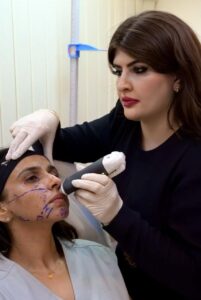
Most aesthetic clinics in Dubai will assess your face visually before injecting filler. I go further. Before every treatment, I map the blood vessels beneath your skin using a Clarius high-frequency ultrasound device — the same technology used in hospital-grade diagnostic medicine, now applied to aesthetic safety.
This is not standard practice in aesthetic medicine. It should be.
The Risk Nobody Talks About Enough
Dermal filler is one of the most commonly performed aesthetic procedures in the world. It is also one of the most technically demanding when it comes to vascular safety.
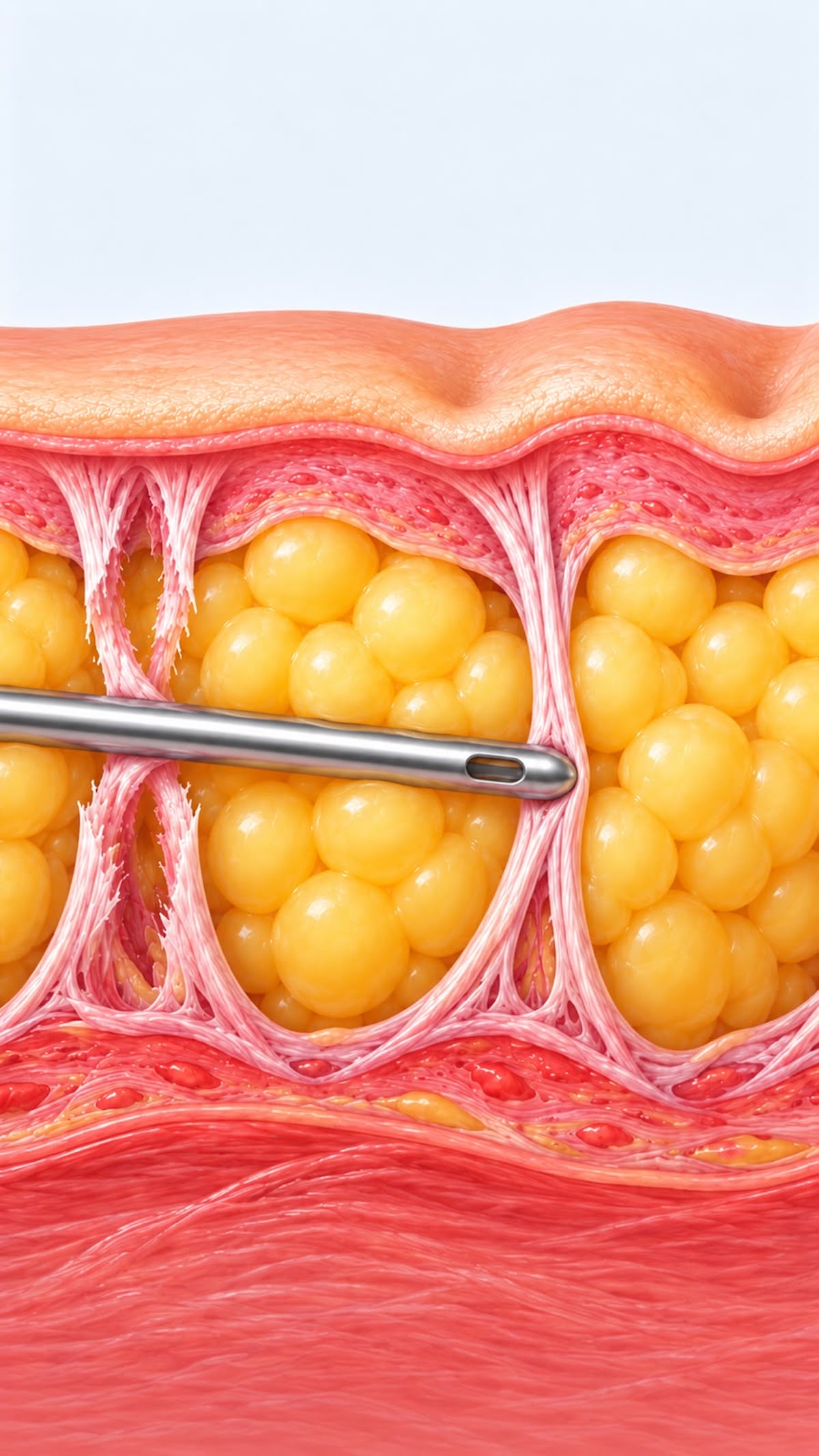
Beneath the surface of your face lies a network of arteries and veins that varies significantly from person to person. Previous filler treatments, inflammation, or natural anatomical variation can shift these vessels into unexpected positions. Injecting into or compressing one of these vessels — even accidentally — can cause a vascular occlusion: a blockage that cuts off blood supply to the surrounding tissue.
In mild cases, this causes bruising and swelling. In severe cases, it can lead to skin necrosis, scarring, or — in the rarest and most catastrophic scenarios — visual complications.
The most dangerous injection zones are areas where major vessels run close to the surface: the temples, the nasolabial folds, the nose, and the periorbital region around the eyes.
What Ultrasound Changes
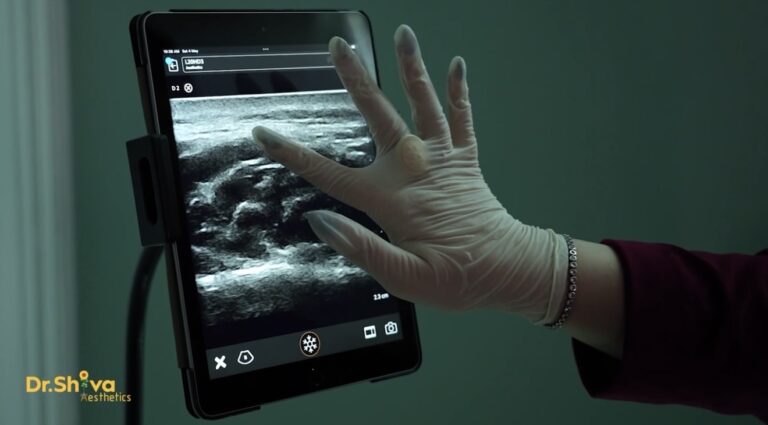
Before I place a single injection, I use the Clarius high-frequency ultrasound probe to visualise what is happening beneath your skin in real time. This allows me to:
- Identify vessel location and depth — so I know exactly where the arteries and veins are running before I inject
- Detect existing filler — previous treatments can be invisible from the outside but clearly visible on ultrasound, including nodules, migration, or granulomas
- Assess tissue structure — understanding the depth and quality of tissue layers helps me choose the right injection plane and technique
- Mark safe injection pathways — I draw a vascular map on the skin so every injection point is planned, not estimated
This transforms the procedure from an educated guess into a guided, evidence-based intervention.
High-Risk Zones I Always Scan
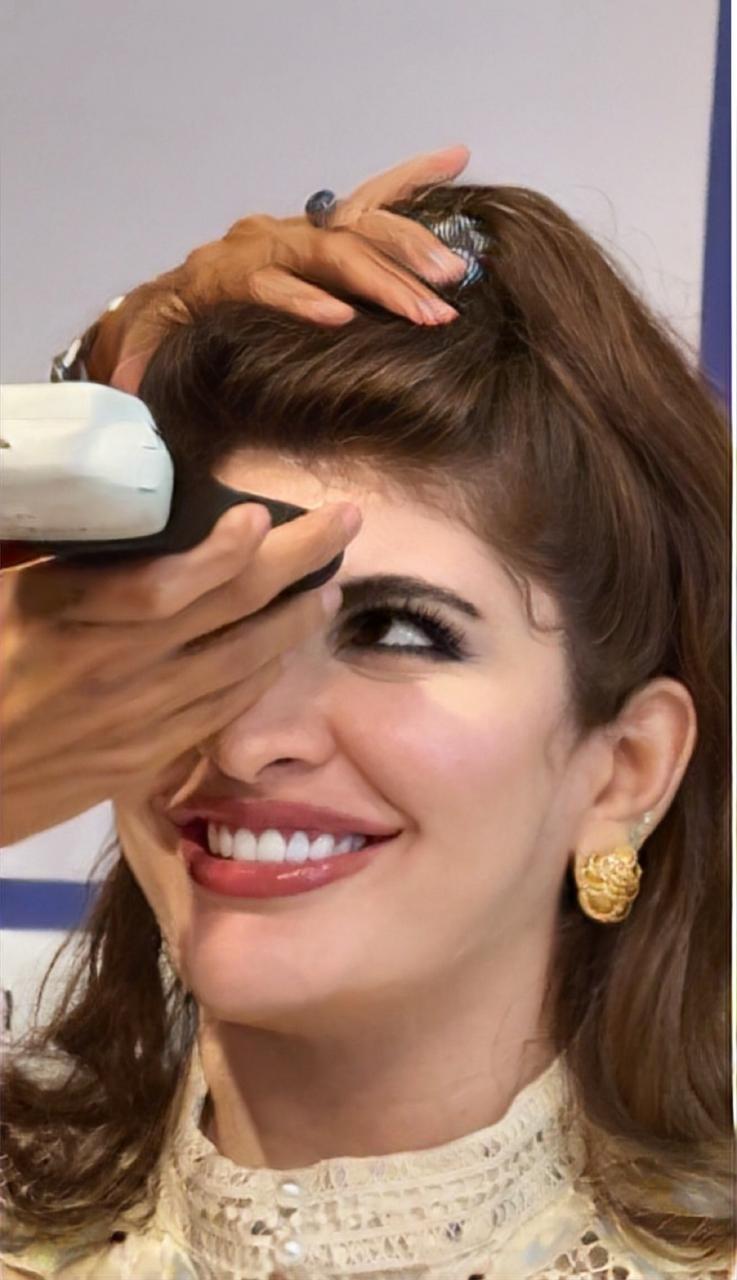
Certain areas of the face carry a significantly higher vascular risk and receive the most detailed ultrasound assessment in my practice:
- The Temples — The superficial temporal artery and its branches run through this area. Inadvertent injection into this vessel has been associated with serious complications including visual disturbance.
- The Nasolabial Folds — A common treatment area with complex vascular anatomy and high variation between patients.
- The Nose (rhinoplasty with filler) — The angular and lateral nasal arteries make non-surgical rhinoplasty one of the highest-risk procedures in aesthetic medicine.
- Under-eye / Tear Trough — Thin skin, close proximity to the orbit, and delicate vessels require precise depth control.
- Areas with Previous Filler — Scar tissue and encapsulated product can displace vessels unpredictably.
Why This Is Still Rare — And Why That Is Changing
Ultrasound-guided aesthetic injection is well-established in the academic literature. Studies published in journals including the Journal of Cosmetic Dermatology have demonstrated that real-time ultrasound guidance significantly improves injection accuracy and reduces vascular event risk.
Despite this evidence, the majority of aesthetic practitioners do not use ultrasound routinely — largely due to the cost of equipment, the learning curve involved, and the additional time it adds to each consultation.
In my practice, I consider this time non-negotiable. The few extra minutes spent mapping your vascular anatomy before treatment is the most important safety investment I can make on your behalf.
What This Means for You as a Patient
When you come to me for filler treatment, you are not receiving a standardised procedure. You are receiving a personalised, image-guided treatment plan built around your individual anatomy.
Questions worth asking any aesthetic practitioner before your treatment:
- Do you use ultrasound to assess my vascular anatomy beforehand?
- Can you identify previous filler product under the skin?
- What is your protocol if a vascular event occurs?
You deserve clear answers to all three.
Book a Consultation
If you are considering filler treatment in Dubai — whether for the first time or after a previous procedure elsewhere — I am happy to discuss your anatomy, your history, and the safest approach for your individual case.
WhatsApp: +971 52 328 6185
Location: Apogee Clinic, JBR, Dubai
Website: drshivaf.com | @drshivaf